2 Days · Private Tour · Egyptologist Guide · No Shopping Stops Updated: June 2026 | ⏱️ 19 min read | […]
🏺 2 Days · Private Tour · Egyptologist Guide · No Shopping Stops
📅 Updated: June 2026 |
⏱️ 19 min read |
💶 Price on Request |
⭐ 4.9/5 rated |
🌍 Aswan · Philae · Abu Simbel
A 2 day Aswan and Abu Simbel tour from Hurghada is the most complete way to explore Upper Egypt from the Red Sea coast — combining the natural beauty of Aswan, the enchanting island temple of Philae, and the monumental rock-cut temples of Abu Simbel in a single private, two-day programme. No rushed single-day dash, no shared coach, and no itinerary built for 40 people: this tour is designed entirely around your group, with a licensed Egyptologist guide from departure to return.
Day 1 takes you south from Hurghada to Aswan, where you visit the Aswan High Dam and Philae Temple before an overnight stay beside the Nile. Day 2 begins with an early morning drive to Abu Simbel — the deepest accessible point in Egypt from the Red Sea coast — for a full visit to both rock-cut temples before the return journey to Hurghada. This guide covers every detail of both days, what makes this route worth the commitment, and all practical booking information.
🏺 Why two days instead of one: Abu Simbel sits 280 km south of Aswan — the only practical way to include it in any itinerary is with an overnight in Aswan first. This structure also transforms Aswan from a logistics stop into a destination in its own right: the High Dam, Philae Temple, and the Nile at Aswan collectively justify the day. The result is not a hurried round trip but a genuine journey through Upper Egypt.
This is a fully private, 2-day, 1-night tour connecting Hurghada on the Red Sea to Aswan and Abu Simbel in Upper Egypt — the southernmost tourist destination accessible by road from the Egyptian Red Sea coast. The tour covers four distinct sites across two days, each with its own historical and architectural character.
Detail
Information
Tour Type
Private — your group only
Duration
2 days / 1 night
Route
Hurghada → Aswan → Philae Temple → overnight Aswan → Abu Simbel → Aswan → Hurghada
Sites Visited
Aswan High Dam, Philae Temple (Isis), Great Temple of Ramesses II, Temple of Nefertari
Guide
Licensed Egyptologist, dedicated to your group for both days
Overnight
1 night in Aswan (hotel category confirmed at booking)
Departure Points
Hurghada, El Gouna, Sahl Hasheesh, Makadi Bay, Soma Bay
Price
Price on Request — contact us for group size and current rates
Tour Highlights
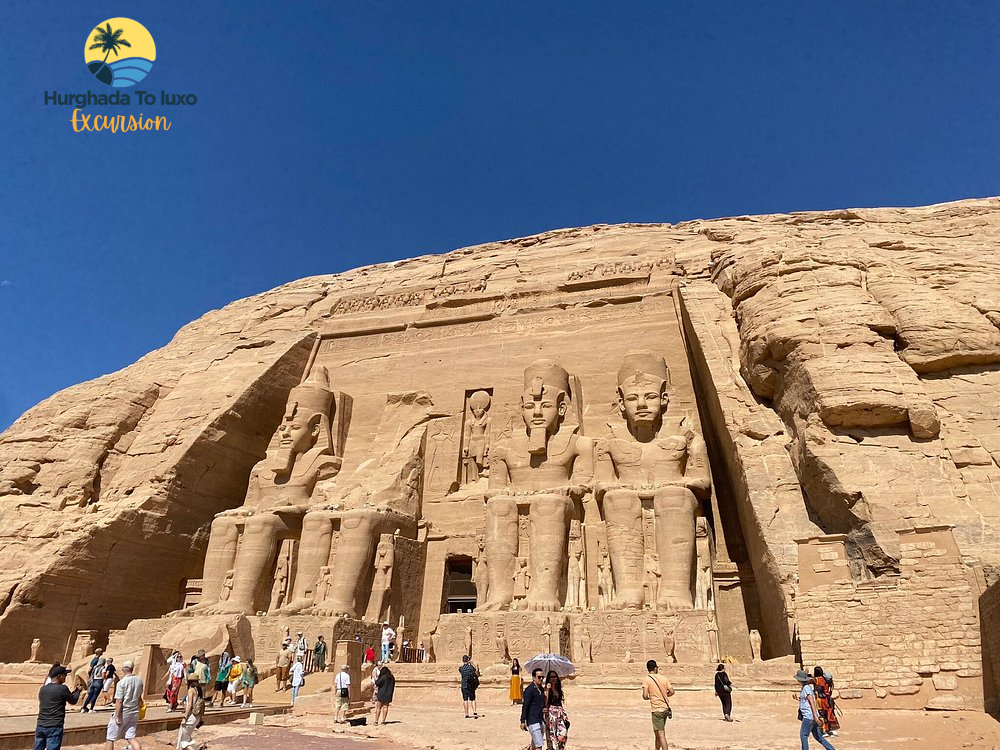
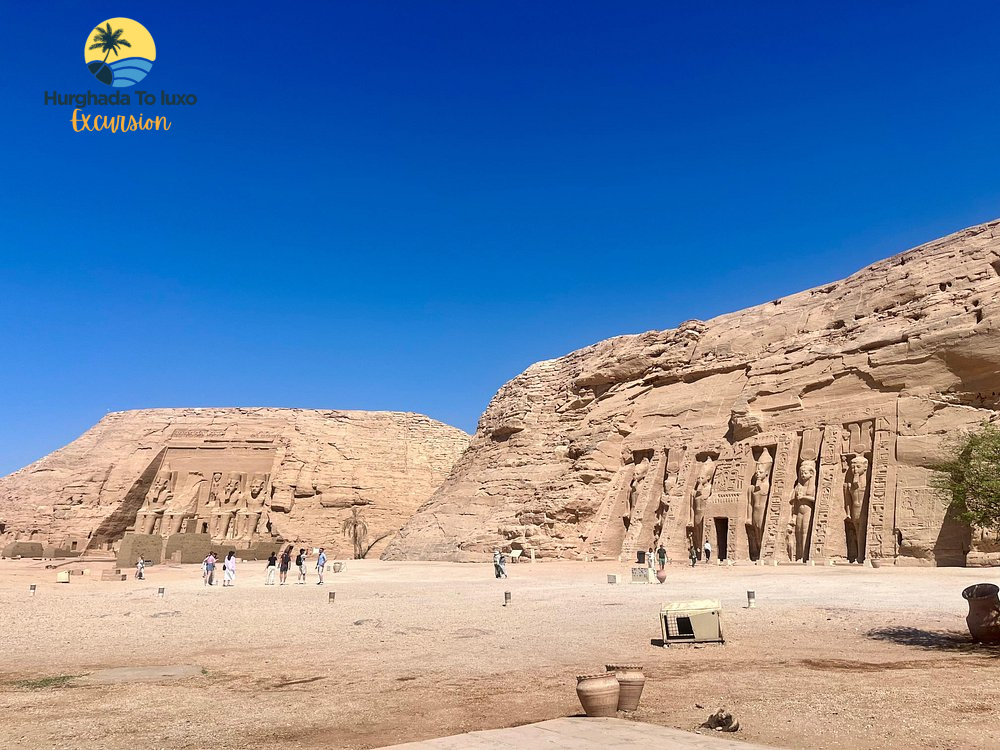
Great Temple of Ramesses II
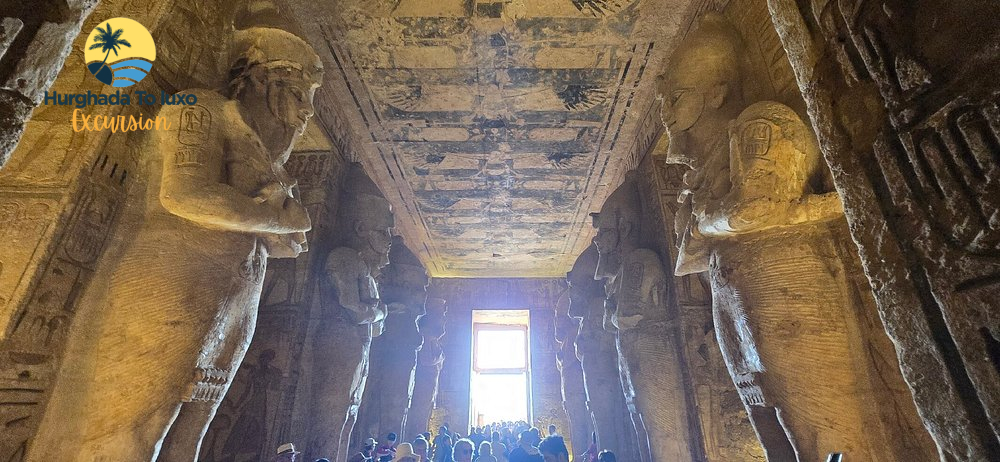
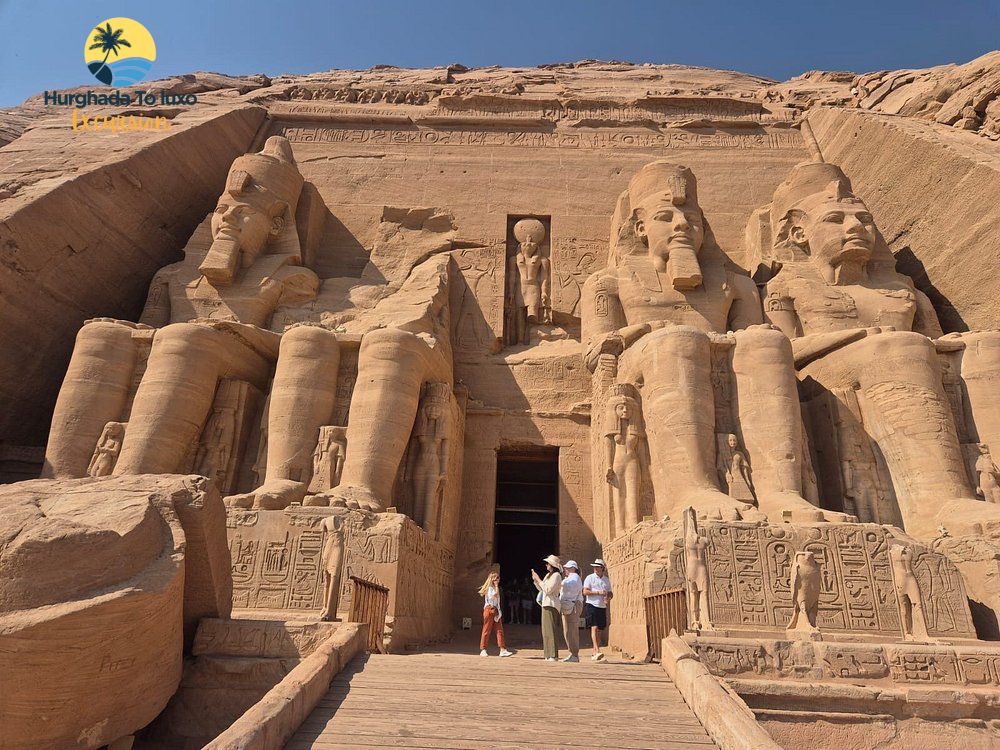
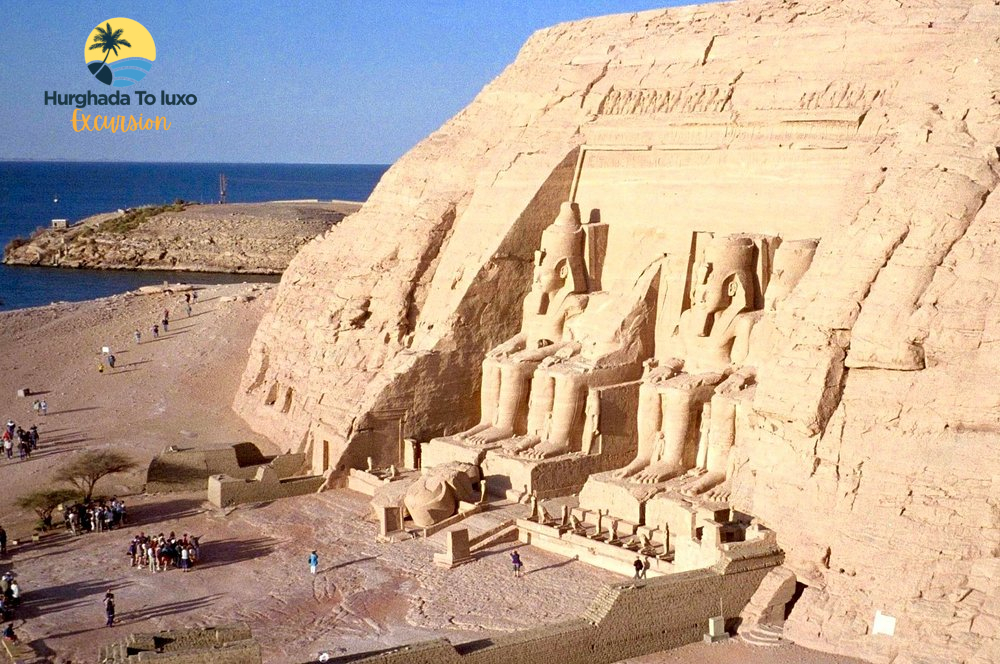
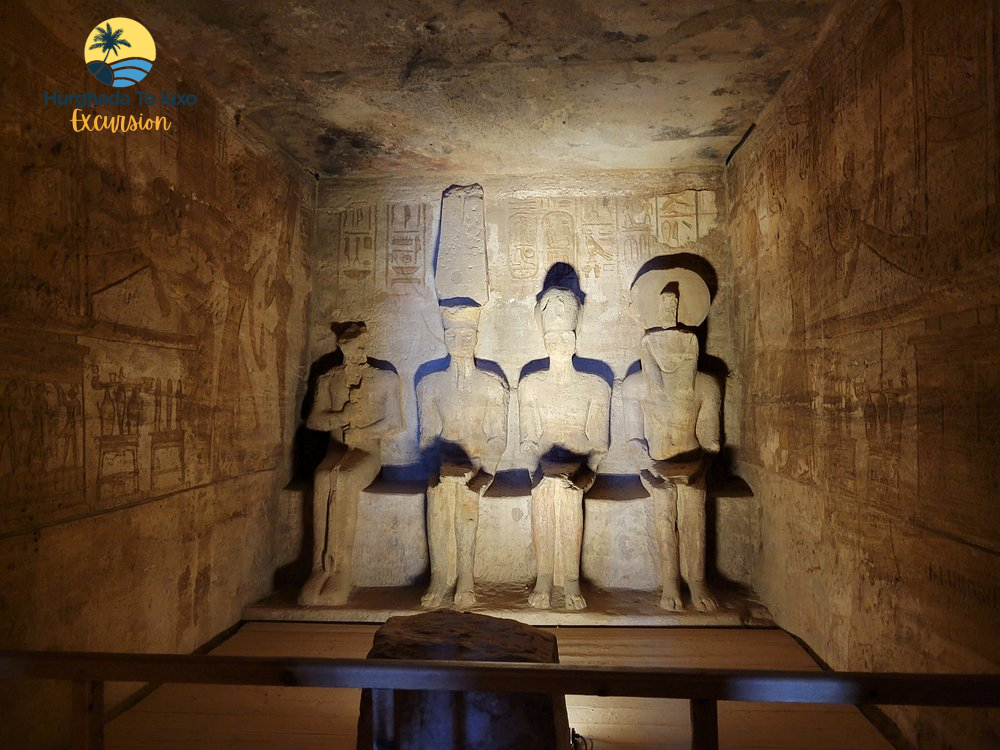
Four 20-metre colossal statues guard the entrance to a rock-cut temple carved entirely into a sandstone cliff. Inside: a hypostyle hall decorated with battle reliefs and a sanctuary that was built to trap two annual shafts of solar light 3,200 years ago.
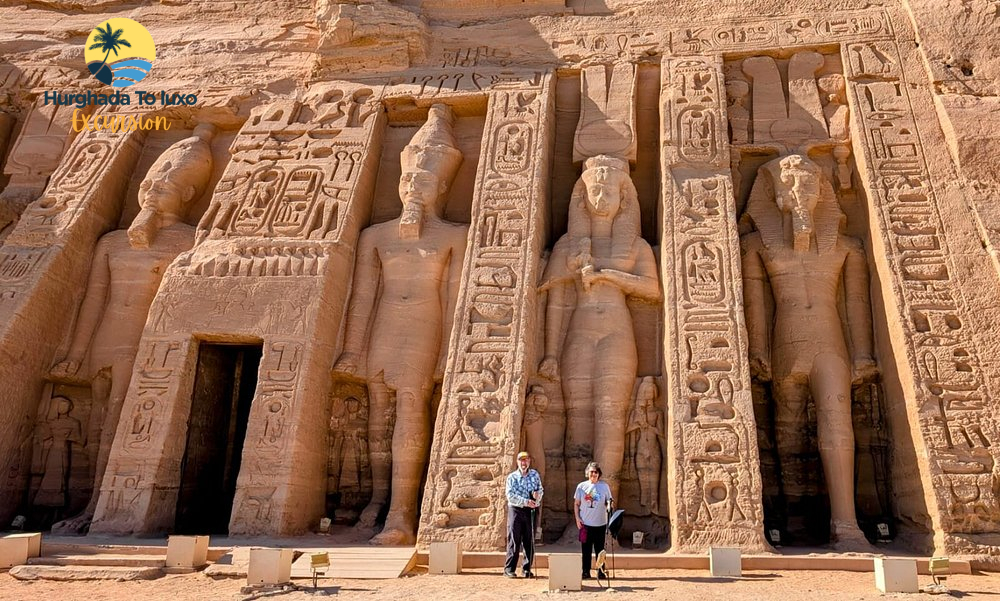
Temple of Nefertari
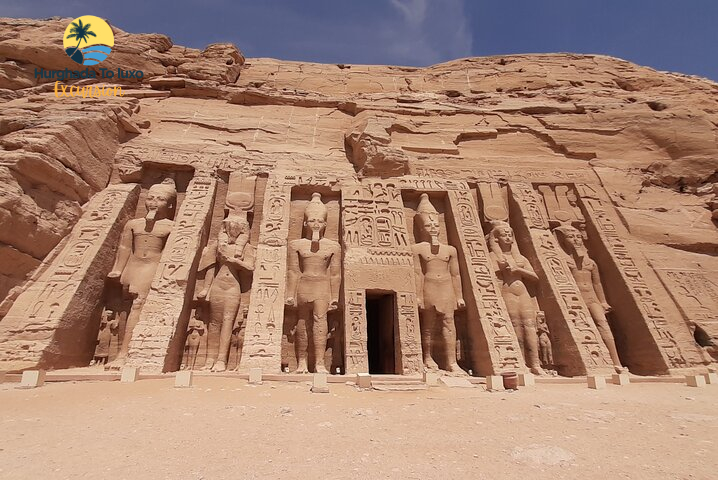
Carved directly beside the Great Temple for Queen Nefertari, Ramesses II’s great royal wife. The only Egyptian temple façade where a queen stands at exactly the same scale as the pharaoh — a historically unprecedented act of devotion.
Philae Temple
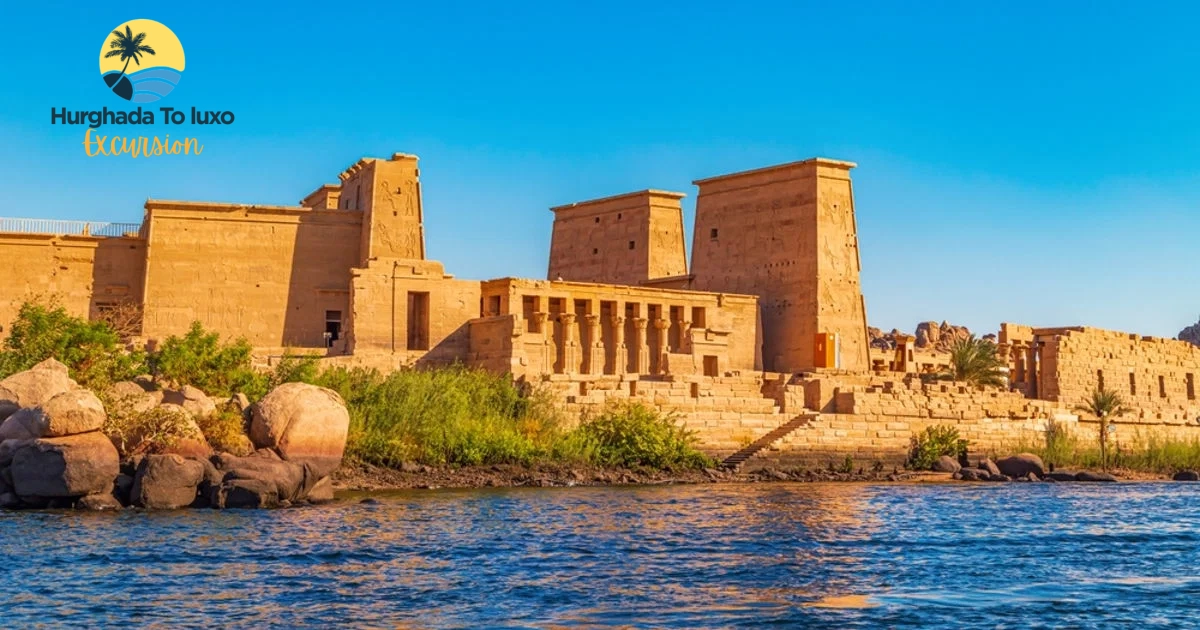
Reached by a short motorboat crossing from the Aswan reservoir, this island temple of the goddess Isis was the last active site of the ancient Egyptian religion — priests carved hieroglyphs here as late as 394 CE. Relocated by UNESCO to save it from Lake Nasser.
Aswan High Dam
One of the 20th century’s defining engineering projects — a dam that transformed Egypt’s economy, created Africa’s largest man-made lake, and directly triggered the international rescue of Abu Simbel and dozens of other Nubian monuments.
The Nile at Aswan
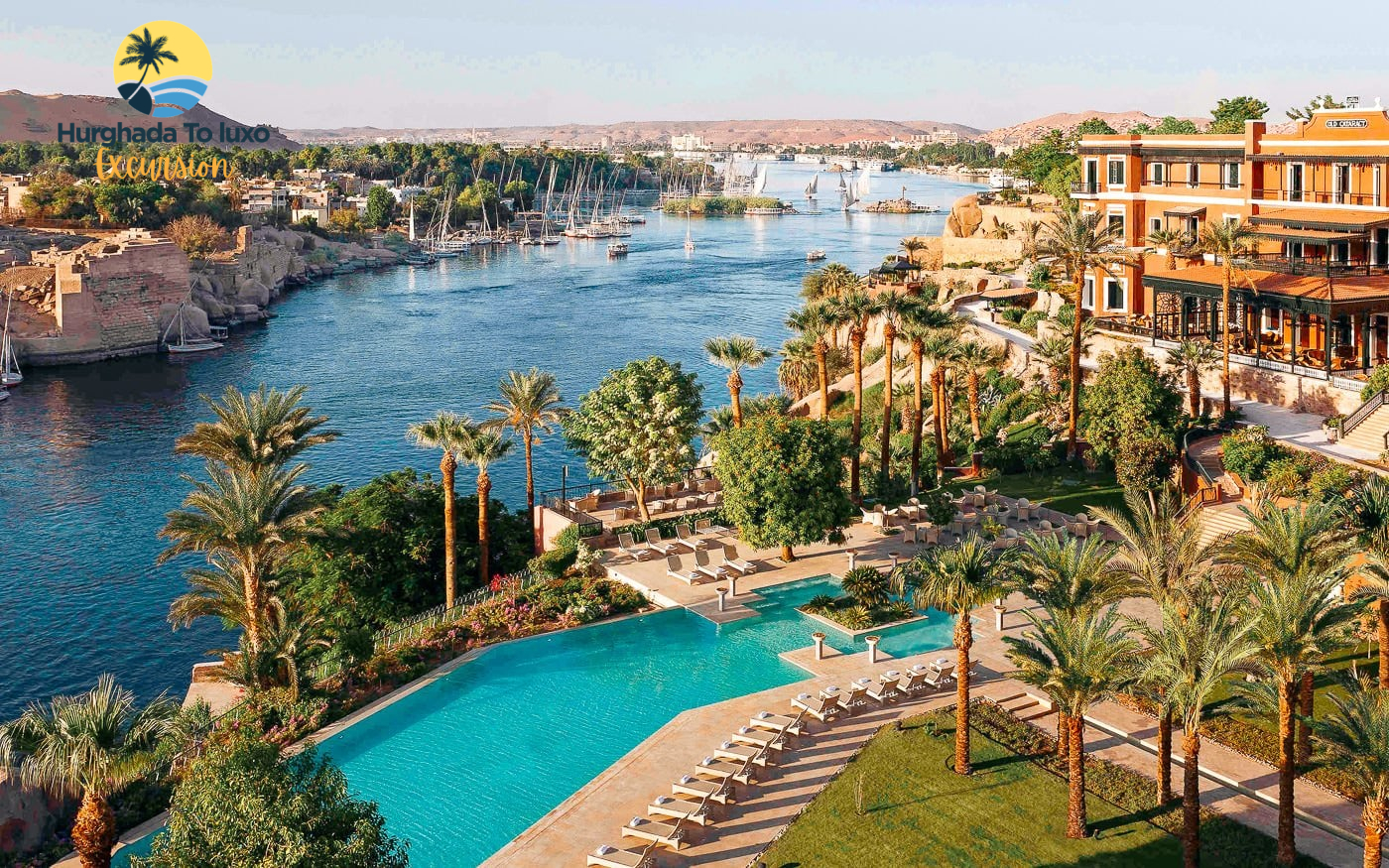
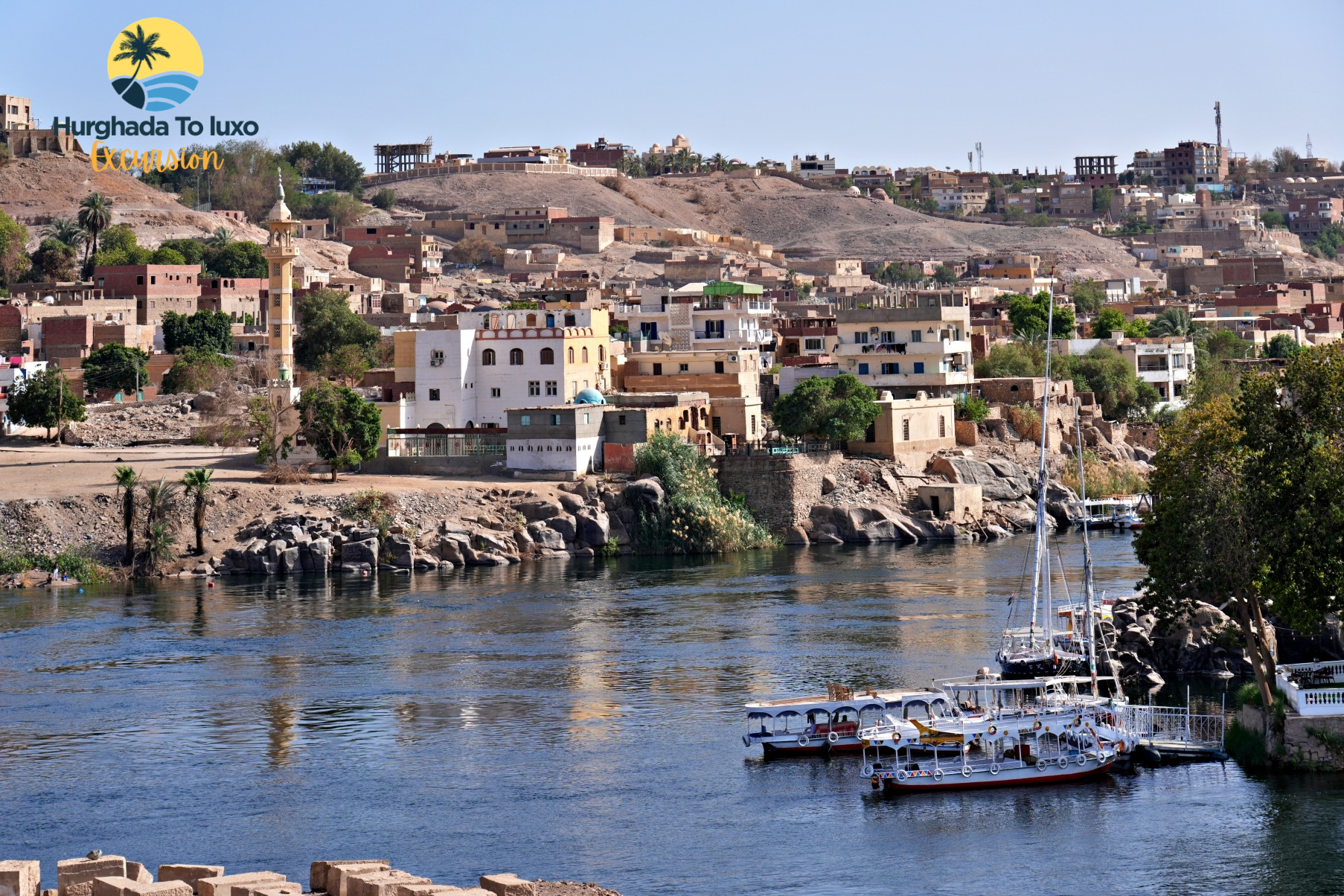
Widely considered the most beautiful stretch of the Nile in Egypt — smooth granite outcroppings rising from the water, traditional felucca sailing boats moored along the corniche, and golden Saharan dunes on the western bank at sunset.
Abu Simbel at First Light
An early morning departure from Aswan puts you at Abu Simbel before the day’s main crowd. The colossal statues catch the low early sun in a way that midday visits simply cannot replicate — and the desert quiet at that hour adds its own dimension to the experience.
The UNESCO Rescue Story
Both Abu Simbel and Philae were physically cut into numbered blocks and relocated uphill before Lake Nasser flooded their original positions. Your guide explains the international rescue operation that became a template for all later large-scale conservation efforts.
Private Egyptologist Guide — Both Days
Your licensed Egyptologist guide is assigned exclusively to your group for the full 2 days — from the drive out of Hurghada to the return. No other travellers, no split attention, and time to answer as many questions as you have.
2 Day Itinerary
The itinerary below covers both days in full, from hotel pickup in Hurghada to hotel drop-off on return. Sites listed are the only sites on this programme — nothing has been added or inflated.
Day 1 — Aswan and Philae Temple
05:00 – 06:00 AM — Pickup at Your Hotel
Private vehicle collects you from your hotel lobby
Your private, air-conditioned vehicle arrives directly at your hotel in Hurghada, El Gouna, Sahl Hasheesh, Makadi Bay, or Soma Bay. Exact pickup time confirmed 24 hours in advance. Bottled water and USB charging on board.
06:00 AM – 12:00 PM — Hurghada to Aswan Drive
~500 km across the Eastern Desert and the Nile Valley
The drive from Hurghada to Aswan covers approximately 500 km and takes 5–6 hours via the desert highway south through the Eastern Desert, eventually crossing into the Nile Valley. Your Egyptologist guide travels with you, using the journey to introduce the history and geography of Upper Egypt, ancient Nubia, and the sites you are about to visit.
12:30 – 13:30 PM — Lunch on Arrival in Aswan
First meal with a view of the Nile at Aswan
Lunch at a quality Nile-view restaurant in Aswan after the long morning drive. Aswan’s Nile is a distinctive and calming sight after hours of desert — granite rock formations rising from the water, palm trees, and the pace of life visibly slower than anywhere on the Red Sea coast. Vegetarian, halal, and child-friendly menus available.
14:00 – 14:45 PM — Aswan High Dam
The dam that created Lake Nasser — and saved Abu Simbel
Completed in 1971, the Aswan High Dam created Lake Nasser — stretching 550 km south into Sudan and submerging dozens of ancient Nubian monuments in the process. This triggered the UNESCO campaign that relocated Abu Simbel and Philae before the waters rose. Your guide contextualises the dam not just as an engineering project but as the direct cause of the extraordinary conservation effort that makes Abu Simbel accessible today.
15:30 – 17:30 PM — Philae Temple ⭐⭐⭐
The Temple of Isis — reached by motorboat across the reservoir
A short motorboat crossing from the Aswan reservoir landing stage brings you to Agilkia Island, where the Temple of Isis at Philae was rebuilt block by block after its original island home was flooded. The crossing itself — low over the calm water, the temple gradually coming into view — is one of the more unexpected pleasures of the entire tour. The temple complex contains the last hieroglyphic inscription known to have been carved anywhere in Egypt, dating to 394 CE — roughly 600 years after the Ptolemaic period began. Your guide walks you through the outer courts, the main hypostyle hall, and the sanctuary, explaining Philae’s unique position as the last functioning ancient Egyptian religious site before Christianity replaced the old faith.
🏨 Overnight in Aswan: After Philae, your driver takes you to your hotel in Aswan — category confirmed at booking. Dinner on Day 1 is not included and is at your own expense. Aswan’s corniche has a good selection of restaurants within walking distance of most hotels. Day 2 begins early — your guide will confirm the departure time during hotel check-in.
Day 2 — Abu Simbel Temples and Return to Hurghada
03:00 – 04:00 AM — Pre-Dawn Departure from Aswan Hotel
The earliest start of your trip — for the best Abu Simbel experience
The departure time from Aswan is determined by the convoy system that private vehicles typically use on the Aswan–Abu Simbel road. Your guide confirms the exact departure time at hotel check-in the evening before. Expect a 03:00–04:00 AM start. This early hour is not merely logistical — arriving at Abu Simbel as the site opens means low morning light on the colossal statues and far fewer visitors than mid-morning.
04:00 – 07:00 AM — Aswan to Abu Simbel Drive
280 km south through the Nubian desert alongside Lake Nasser
The approximately 3-hour drive south from Aswan to Abu Simbel runs alongside Lake Nasser through the Western Desert. In the pre-dawn hours the road is quiet, the stars are exceptional, and the landscape is completely flat — a different Egypt from anywhere else in the country. Your guide typically lets travellers rest or completes the historical briefing on Ramesses II and the temples’ construction.
07:00 – 10:00 AM — Abu Simbel — Both Temples ⭐⭐⭐
Three hours at the Great Temple and the Temple of Nefertari
Three full hours at Abu Simbel — significantly longer than most organised tours allow. Your Egyptologist guide leads you through both temples in sequence.
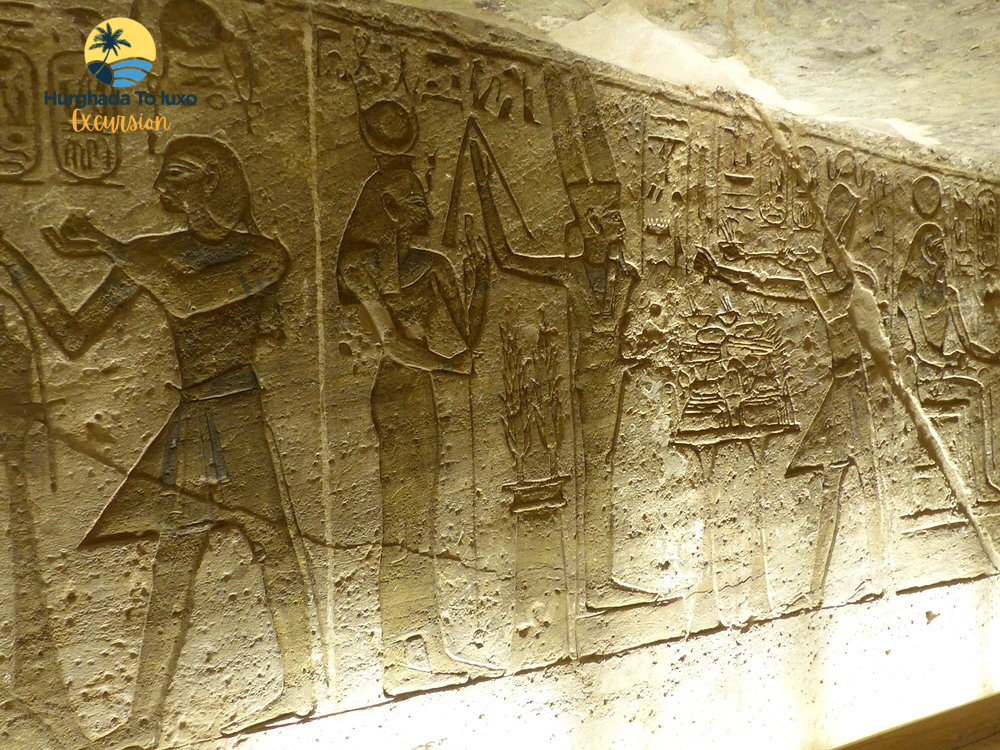
Great Temple of Ramesses II: The four colossal statues at the entrance (three intact, one collapsed in antiquity by an earthquake) are each approximately 20 metres tall. Inside, the hypostyle hall is decorated with painted relief carvings of the Battle of Kadesh — the largest land battle of the ancient world, fought by Ramesses II against the Hittites in 1274 BCE. The innermost sanctuary contains four seated deities, including Ramesses II himself deified, arranged so that the rising sun illuminates them on two specific dates each year. Your guide explains this solar alignment in full detail at the sanctuary itself.
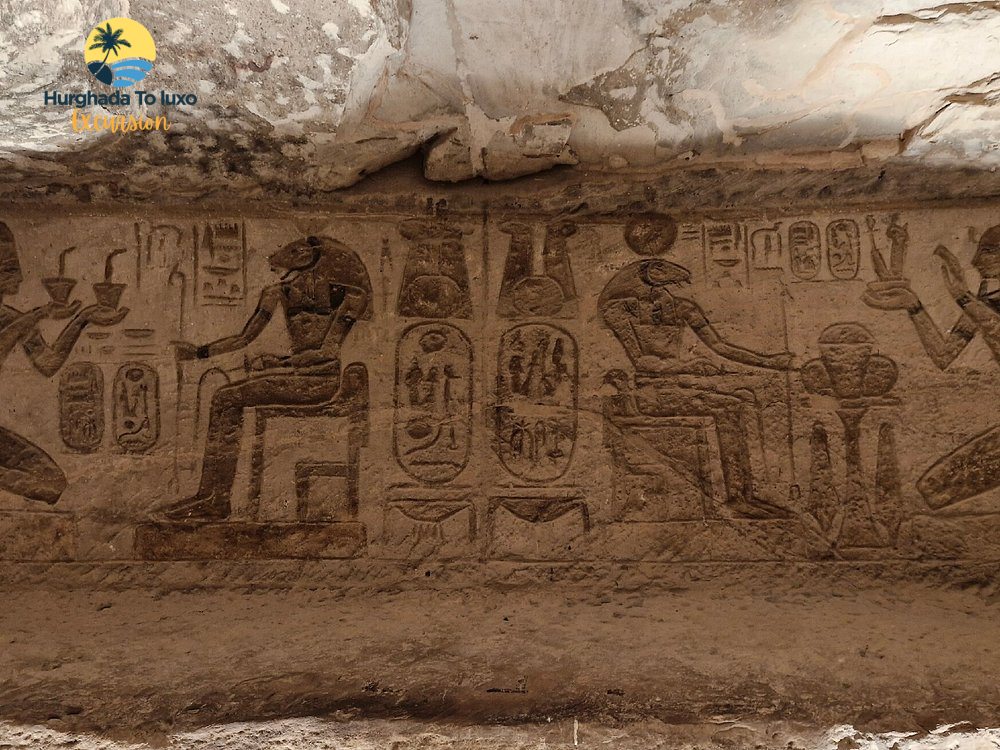
Temple of Nefertari: Smaller in scale but equal in refinement. The entrance is flanked by statues of Ramesses II and Nefertari standing at exactly the same height — an unprecedented gesture in ancient Egyptian royal representation, since queens were conventionally depicted at knee height beside the pharaoh. Inside, the painted walls retain their original colours with exceptional intensity.
10:30 – 11:30 AM — Breakfast / Refreshment at Abu Simbel
A break before the return journey
Light breakfast or refreshments near the Abu Simbel site after the temple visit. A practical break that also gives the pre-dawn crowd a chance to clear before the drive back.
12:00 – 15:00 PM — Return Drive Aswan
Back north along Lake Nasser in full daylight
The 3-hour return drive to Aswan crosses the same desert in full daylight — a completely different visual from the pre-dawn outbound journey. Lake Nasser extends to the horizon on the east side, the desert stretches west, and there is almost nothing else.
15:30 – 16:30 PM — Lunch in Aswan
Final meal before the long drive north
A proper sit-down lunch at a quality Nile-side restaurant in Aswan before the final 5–6 hour drive back to Hurghada. A chance to eat well and rest before the road north.
17:00 PM – 22:30 PM — Aswan to Hurghada Return
Door-to-door return to your Hurghada hotel
Your private vehicle takes you directly from Aswan to your Hurghada hotel — no shared stops, no additional pickups. Approximately 5–6 hours. Arrival back at your Hurghada hotel at approximately 22:00–22:30 PM.
Contact us for current pricing and availability for the 2 day Aswan and Abu Simbel tour from Hurghada.
🗓️ Booking window: This tour requires more advance planning than a standard day trip. The overnight hotel in Aswan, the convoy arrangements for the Aswan–Abu Simbel road, and the availability of a senior Egyptologist guide all require confirmation ahead of time. We recommend booking at minimum 3–4 weeks in advance for standard dates, and significantly earlier for Egyptian public holiday periods and the Abu Simbel Sun Festival dates (22 February and 22 October).
Pickup Information
Day 1 Pickup Location
Your hotel lobby in Hurghada, El Gouna, Sahl Hasheesh, Makadi Bay, or Soma Bay. Your driver meets you at the lobby with a name board.
Day 1 Pickup Time
05:00 – 06:00 AM, confirmed 24 hours in advance. Hotels further south (Soma Bay, Makadi Bay) may have earlier pickups to account for drive time.
Day 2 Aswan Hotel Departure
03:00 – 04:00 AM (confirmed by your guide at Aswan check-in on Day 1 evening). This departure time is set by the convoy system operating on the Aswan–Abu Simbel road.
Day 2 Return Drop-Off
Your original Hurghada hotel — door to door. Estimated return: 22:00 – 22:30 PM.
What to Bring
Small Overnight Bag
Pyjamas or sleepwear, a clean outfit for Day 2, toiletries, your charger, and your original passport (required for hotel check-in). A soft cabin-bag size is ideal.
Warm Layer for Pre-Dawn
The drive from Aswan to Abu Simbel begins at 03:00–04:00 AM in the desert, which is significantly colder than daytime temperatures — particularly in winter months (November–March). A fleece or light jacket is essential.
Sun Protection
SPF 50 sunscreen, a wide-brimmed hat, and UV sunglasses. Abu Simbel sits at a lower latitude than Luxor — midday sun is intense even in winter. Apply before leaving the hotel on Day 2.
Walking Shoes
Both Philae and Abu Simbel involve walking on uneven stone paths and outdoor terrain. Closed-toe walking shoes are strongly recommended for both days.
Camera & Fully Charged Power Bank
Abu Simbel’s colossal statues at low morning light are among the most photographed subjects in Egypt. Ensure full battery charge and empty memory cards before the Day 2 departure. Flash photography is restricted inside the temples.
Original Passport
Required at the Aswan hotel check-in and at security checkpoints on the Aswan–Abu Simbel road. Your driver handles all checkpoint procedures — keep your passport accessible throughout both days.
Insider Tips
Tip 1 — Book early if travelling in school holiday periods or around Egyptian national holidays. Unlike a single-day Luxor trip, this tour requires confirmed hotel accommodation in Aswan. Availability narrows significantly around Egyptian public holidays and during peak European school holiday weeks (Christmas, Easter, summer).
Tip 2 — Ask your guide about the solar alignment at the Great Temple sanctuary. Even on a non-festival day, the sanctuary’s orientation is visible and extraordinary. Your guide demonstrates the alignment geometry on location in the inner hall — understanding why this specific angle was chosen adds an entirely new dimension to what you are looking at.
Tip 3 — The Philae motorboat crossing is more than just logistics. Arriving at the temple from the water, watching it gradually come into view across the reservoir as the light changes, is genuinely atmospheric. Bring your camera for the boat journey itself, not just the temple interior.
Tip 4 — Go to bed early on Day 1. The 03:00–04:00 AM departure for Abu Simbel on Day 2 is non-negotiable. Aim for lights-out by 21:00 at the Aswan hotel, and avoid the temptation to explore the corniche until late on Day 1 evening.
Tip 5 — Ask your guide about the Battle of Kadesh reliefs in the Great Temple hypostyle hall. These carvings — depicting the largest chariot battle of the ancient world, fought by Ramesses II against the Hittites in 1274 BCE — are some of the most detailed military narrative reliefs in ancient Egypt. Most visitors walk past without knowing what they are seeing.
Tip 6 — Visit the Temple of Nefertari after the Great Temple, not before. The contrast between the two — the overwhelming scale of Ramesses II’s temple followed by the more intimate, differently lit space of Nefertari’s — is more effective in that order.
Tip 7 — Aswan has good restaurants on the corniche within walking distance of most hotels. Day 1 dinner is not included, but the corniche area offers a range of options from simple local restaurants to Nile-view terraces — your guide can point you in the right direction when dropping you at the hotel.
Tip 8 — Bring snacks in your overnight bag for the Day 2 pre-dawn drive. The 03:00–04:00 AM departure is before any food facilities at the site or en route are open. A few light snacks from the hotel on Day 1 evening are worth packing.
Tip 9 — If you are travelling with children, the Abu Simbel colossal statues are among the genuinely awe-inspiring experiences in Egypt for younger visitors. The sheer physical scale — 20-metre seated figures carved from a cliff — lands differently from ground level than any photograph suggests. Even children who found the drive tiring typically react strongly to their first sight of the temple façade.
Frequently Asked Questions
Why is a 2-day tour necessary for Abu Simbel from Hurghada?
Abu Simbel is located 280 km south of Aswan and approximately 780 km from Hurghada. A single-day round trip from Hurghada to Abu Simbel by road would require over 16 hours of driving alone — leaving no viable time at the sites. The 2-day structure with an overnight in Aswan is the standard and only practical way to visit Abu Simbel from the Red Sea coast.
Why is the Day 2 departure from Aswan at 3:00–4:00 AM?
The Aswan–Abu Simbel road operates under a convoy system for security reasons — private vehicles join organised convoys that depart at specific early morning hours. This timing also delivers the practical benefit of arriving at Abu Simbel at first light, when visitor numbers are low and the morning sun illuminates the colossal statues in particularly dramatic low-angle light.
What is the difference between this tour and the Abu Simbel Sun Festival tour?
This standard 2-day Abu Simbel tour operates year-round on any available travel date. The Abu Simbel Sun Festival tour is a separate programme tied specifically to the twice-yearly solar alignment dates of 22 February and 22 October, when a shaft of sunlight travels the full length of the Great Temple and illuminates the sanctuary statues. The festival tour includes the alignment event as its primary purpose; this tour focuses on exploring both temples fully at any time of year without dependency on a specific date.
Can I take photographs inside the Abu Simbel temples?
Photography is generally permitted inside both Abu Simbel temples. Flash photography is prohibited to protect the painted surfaces. Specific areas or conditions may restrict photography — always follow your guide’s instructions on site. The exterior of the temples and the surrounding area can be photographed freely.
Is this tour suitable for families with young children?
The main considerations for families are the long driving days (5–6 hours on Day 1, 3 hours in darkness plus 3 hours return on Day 2) and the 03:00–04:00 AM start on Day 2. Children aged approximately 8 and above typically manage these demands well. The colossal statues at Abu Simbel are genuinely awe-inspiring for children of most ages. Please mention the ages and number of children in your group when requesting a quote so we can provide appropriate guidance.
What hotel is included in Aswan?
The hotel category is selected at booking based on your preference and budget — options typically range from comfortable 3-star properties on the Aswan corniche to 5-star Nile-view hotels. The specific property is confirmed when you book. If you have a preference or are celebrating a special occasion, mention it when requesting your quote.
What is the price of the 2 day Aswan and Abu Simbel tour from Hurghada?
Pricing is on request because it varies depending on group size, hotel category, and travel dates. Contact us at [email protected] or via WhatsApp at +20 100 925 5585 with your group size, preferred dates, and departure hotel — we will provide a detailed quote within 24 hours.
Book the 2 Day Aswan and Abu Simbel Tour from Hurghada
Day 1: Hurghada → Aswan High Dam → Philae Temple → overnight Aswan. Day 2: Pre-dawn drive → Abu Simbel Great Temple & Temple of Nefertari → Aswan lunch → Hurghada. Private vehicle, Egyptologist guide, all entrance fees, 2 lunches.
Price on Request — contact us for group size and dates
Abu Simbel is not a site you can see from a distance and feel satisfied. The four colossal statues guarding its entrance are 20 metres tall — twice the height of a London bus — and they were carved into a solid sandstone cliff over 3,200 years ago with hand tools. Inside, the level of craftsmanship and the sophistication of the solar alignment built into the temple’s architecture represent something genuinely extraordinary about ancient Egyptian civilisation.
Getting there from Hurghada takes two days and an early-morning commitment. Most travellers who make that commitment return describing it as the most memorable part of their Egypt trip. Contact us with your travel dates and group size and we will put together your programme.