🏺 2 Days · Private Tour · Aswan · Philae · Nubian Village · Felucca
📅 Updated: June 2026 | ⏱️ 18 min read | 💶 Price on Request | ⭐ 5.0/5 rated | 🌍 Aswan · Philae · Nubian Culture · Nile
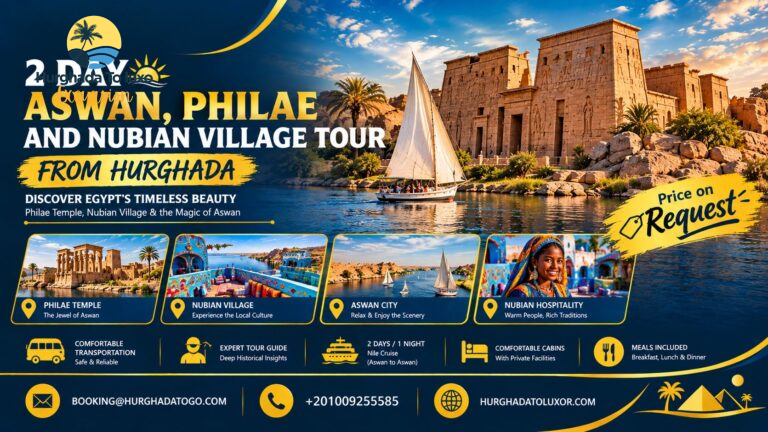
The 2 day Aswan, Philae and Nubian Village tour from Hurghada combines two of the most distinct experiences available in Aswan — the island temple of Philae and an authentic Nubian village visit with a traditional Nile felucca boat ride — in a single private, two-day programme. Day 1 takes you from Hurghada directly to Aswan for Philae Temple and an overnight stay on the Nile. Day 2 begins with the Nubian village, continues with a traditional Nile boat ride through the granite islands of the First Cataract, and then the road return to Hurghada.
What distinguishes this tour from a purely archaeological programme is the balance it strikes between ancient history and living culture. Philae Temple is one of the most important and enchanting sites in Upper Egypt. The Nubian village is something else entirely — a glimpse into one of Africa’s oldest and most distinct cultures, displaced by the waters of Lake Nasser but maintaining its language, architecture, and traditions in the villages immediately north of Aswan. This guide covers both days in full, with complete practical information and everything you need before booking.
🏺 What the Nubian Village adds to a standard Aswan visit: Most Aswan tours focus exclusively on archaeological sites — the High Dam, Philae, occasionally the Unfinished Obelisk. The Nubian village visit offers something that no temple can: the living presence of a people whose history in this region predates the pharaohs. The brightly painted houses, the crocodile-keeper households, the handmade crafts, and the warm hospitality of Nubian families who welcome visitors into their homes give Aswan a human dimension that purely archaeological itineraries miss entirely.
Tour Overview
This is a private, 2-day, 1-night tour that moves from Hurghada to Aswan on Day 1 — covering the Philae Temple visit and settling in for an overnight stay on the Nile — and then explores the living Nubian culture of the Aswan islands on Day 2 before the road return to Hurghada.
| Detail |
Information |
| Tour Type |
Private — your group only, no shared passengers |
| Duration |
2 days / 1 night in Aswan |
| Route |
Hurghada → Aswan → Philae Temple → Aswan overnight → Nubian Village → Nile felucca ride → Hurghada |
| Experiences |
Philae Temple (UNESCO-relocated island temple), Aswan Nubian village, traditional felucca sailboat ride |
| Guide |
Licensed Egyptologist and cultural guide, dedicated to your group for both days |
| Overnight |
1 night in Aswan (hotel category confirmed at booking) |
| Departure Points |
Hurghada, El Gouna, Sahl Hasheesh, Makadi Bay, Soma Bay |
| Price |
Price on Request — contact us with group size and preferred dates |
The Nubian People — Who They Are and Why Aswan
The Nubians are one of Africa’s oldest and most historically significant peoples — a civilisation that predates the pharaohs, produced a series of powerful kingdoms along the Nile south of Aswan, and maintained a distinct language, culture, and artistic tradition across more than 5,000 years. Understanding something of their history transforms the village visit from a curiosity into a genuinely moving cultural encounter.
Ancient Origins
Nubia — the land between Aswan and Khartoum — was home to a series of powerful kingdoms that were at various points rivals, trading partners, and rulers of Egypt itself. The 25th Dynasty of Egypt (approximately 750–664 BCE) was Nubian, and its pharaohs — including Taharqa — are among the most historically significant rulers of the late pharaonic period.
The Displacement
The construction of the Aswan High Dam (completed 1971) created Lake Nasser — and permanently flooded the original Nubian homeland. Approximately 100,000 Nubian people were relocated from their ancestral villages, which now lie beneath the waters of the lake. Most were resettled north of Aswan.
The Villages Today
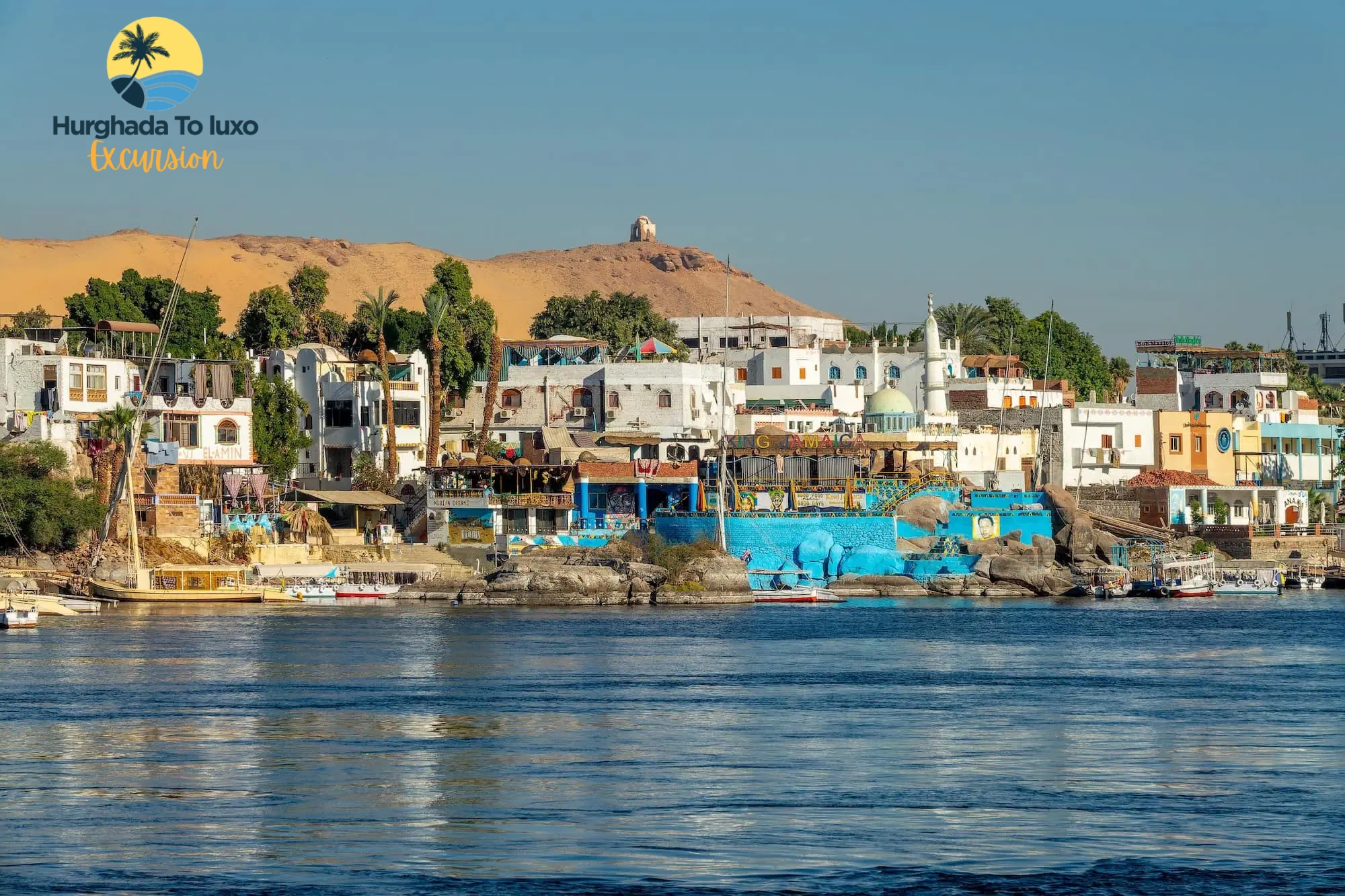
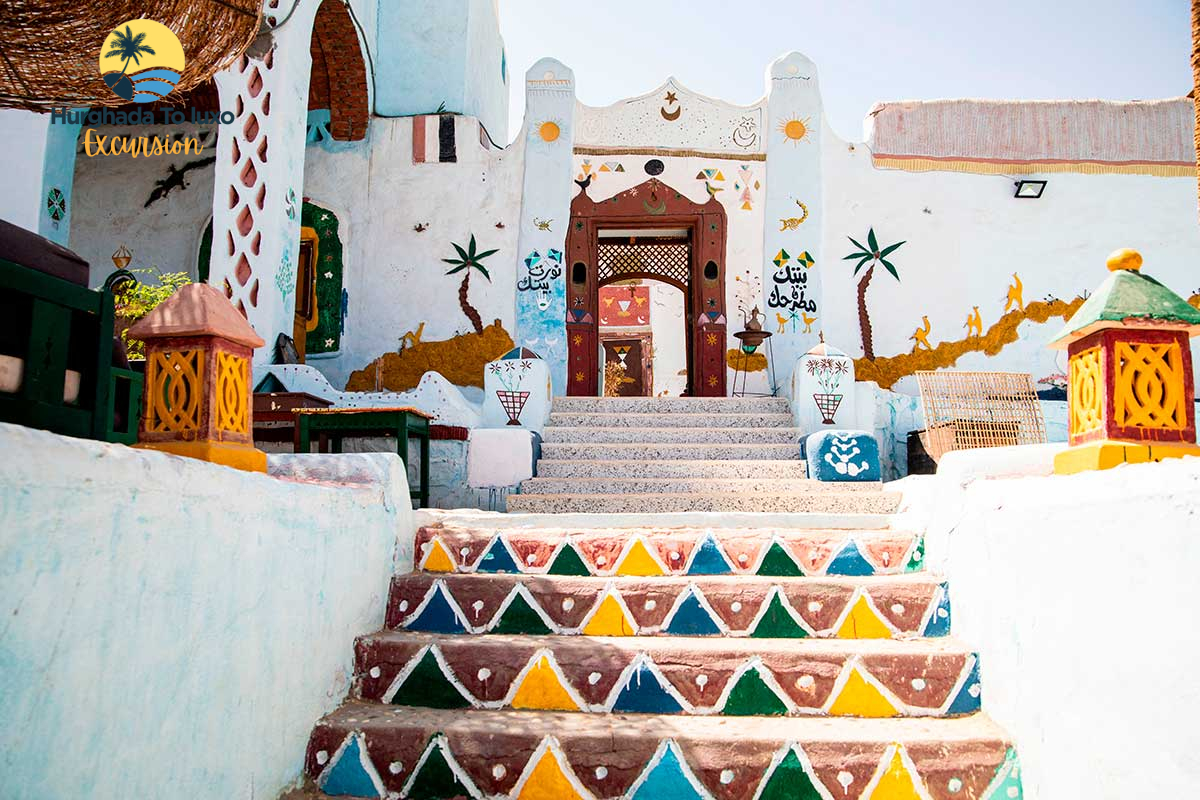
The Nubian villages on the islands and western bank north of Aswan maintain the architectural, artistic, and culinary traditions of the displaced homeland. The brightly painted houses — decorated with geometric patterns, fish, crocodiles, and Hajj pilgrimage motifs — are one of the most visually distinctive forms of vernacular architecture in Egypt.
A Living Language
Nubian is a Nilo-Saharan language entirely distinct from Arabic — one of the few languages in Africa with a continuous written and spoken tradition going back several millennia. It remains in everyday use in the Aswan Nubian communities, spoken alongside Arabic by most residents.
Tour Highlights
Philae Temple — The Island of Isis
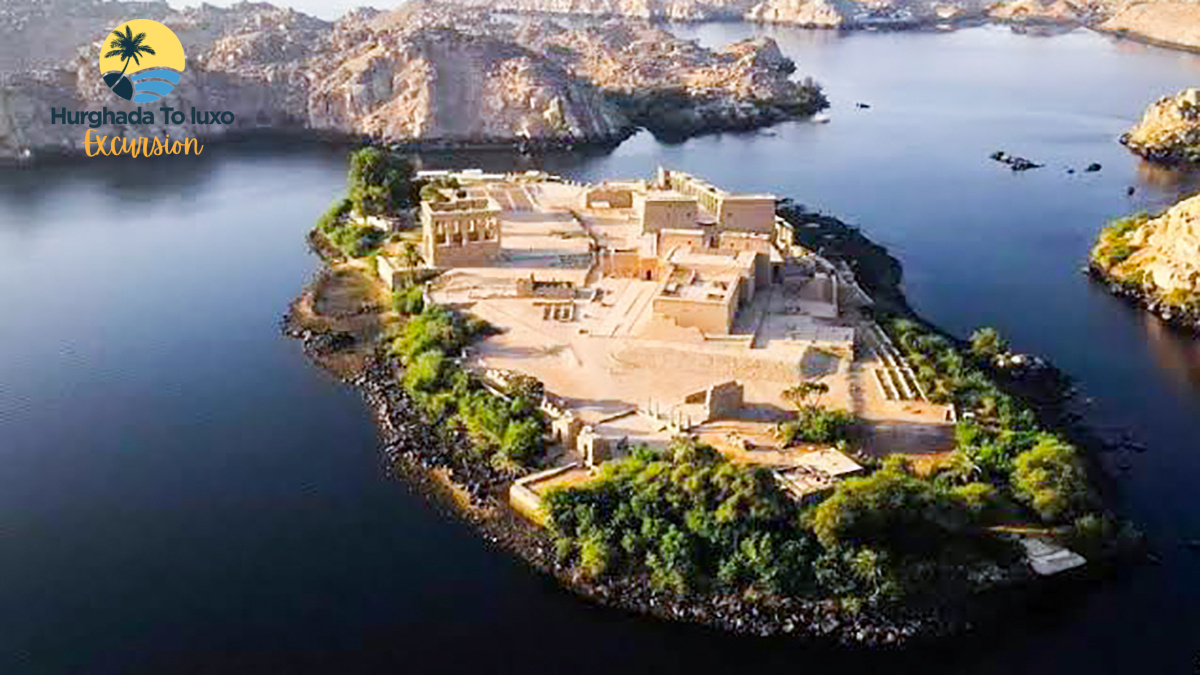
The last site of the ancient Egyptian religion, reached by motorboat across the Aswan reservoir. The Temple of Isis carries the final hieroglyphic inscription ever carved — in 394 CE — approximately 4,500 years after the script was first developed. UNESCO relocated the entire temple complex from its flooded original island between 1972 and 1980.
Nubian Village — Living Culture
Brightly painted houses in ochre, blue, yellow, and terracotta, decorated with fish motifs, geometric patterns, and Hajj pilgrimage scenes. A walk through the village with a local guide — stopping at a Nubian household for tea, meeting the family crocodile, tasting traditional food — is entirely unlike any archaeological site visit.
Nile Felucca Boat Ride
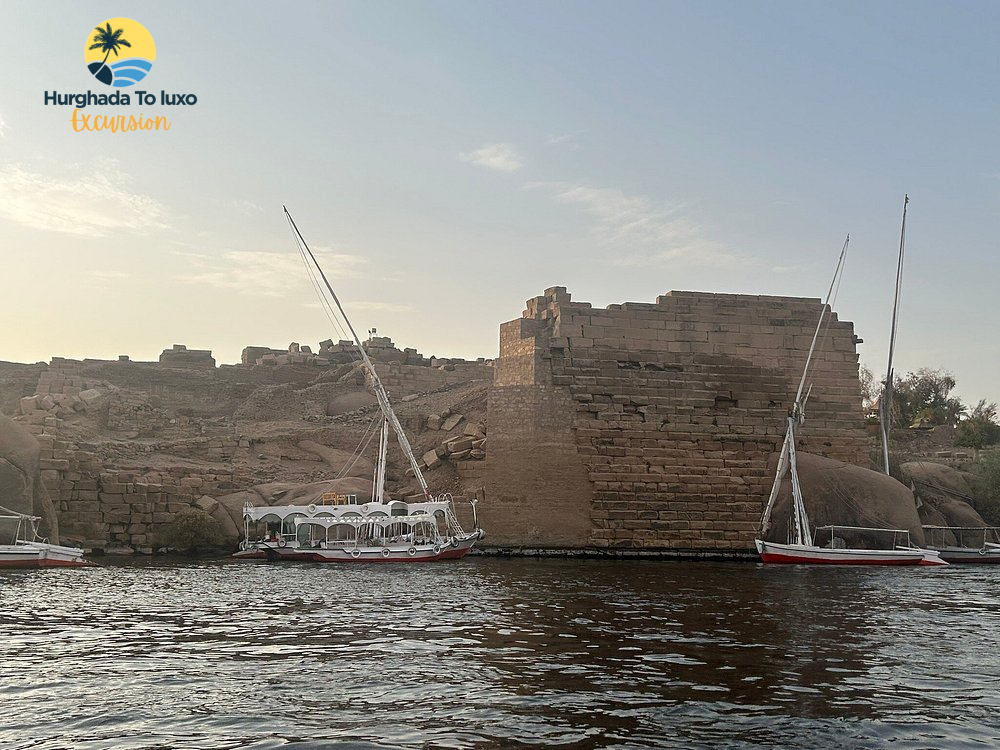
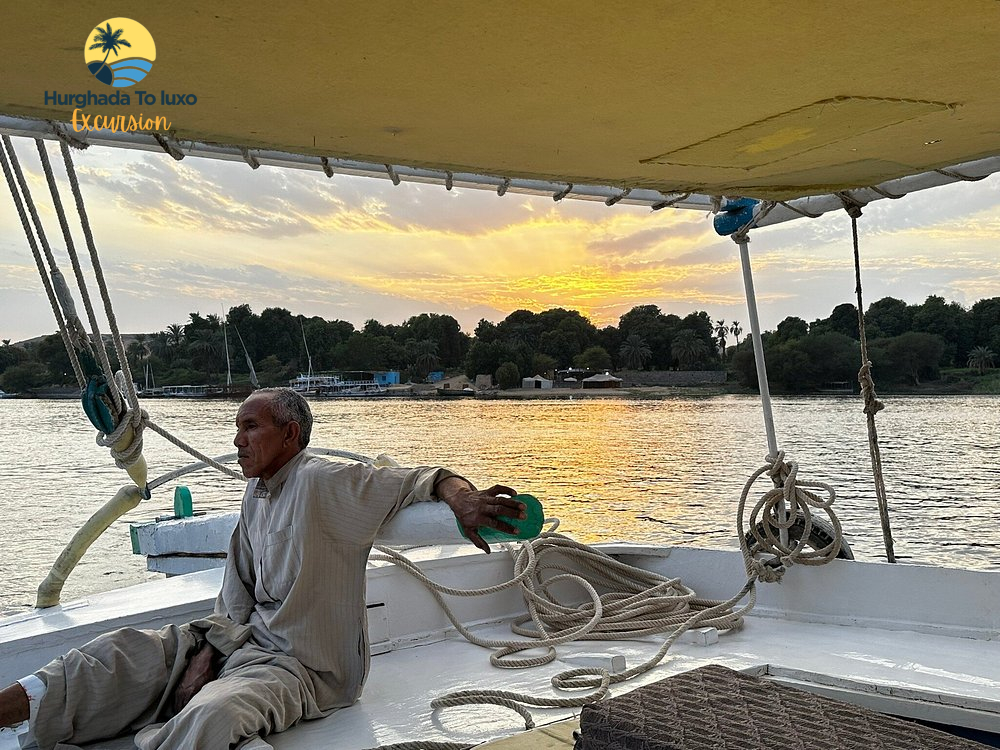
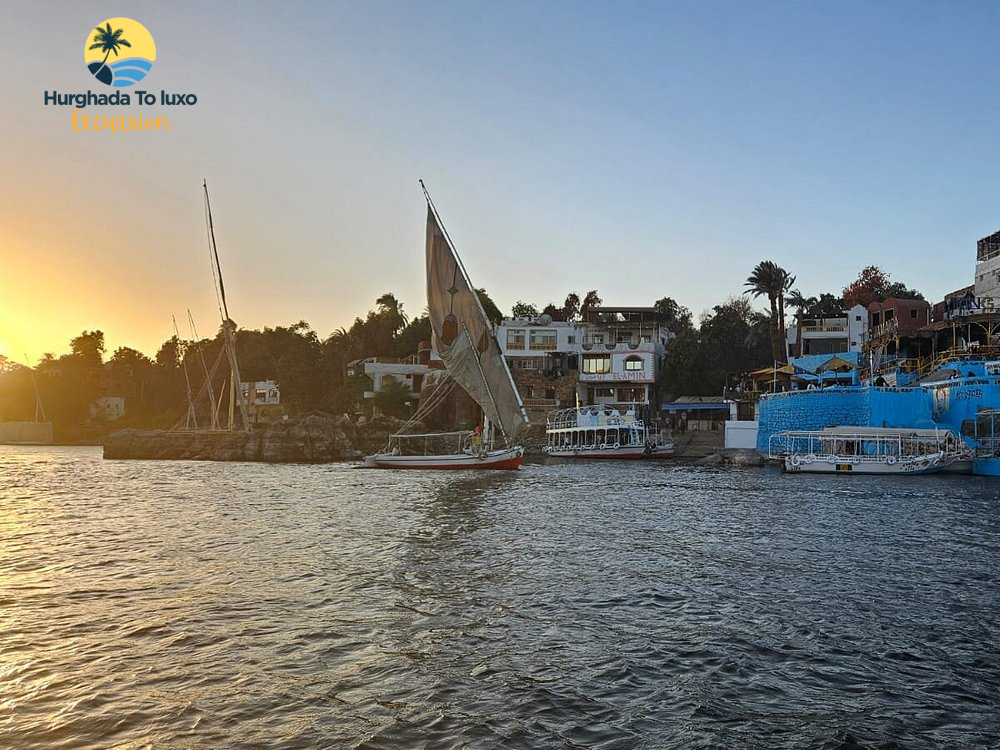
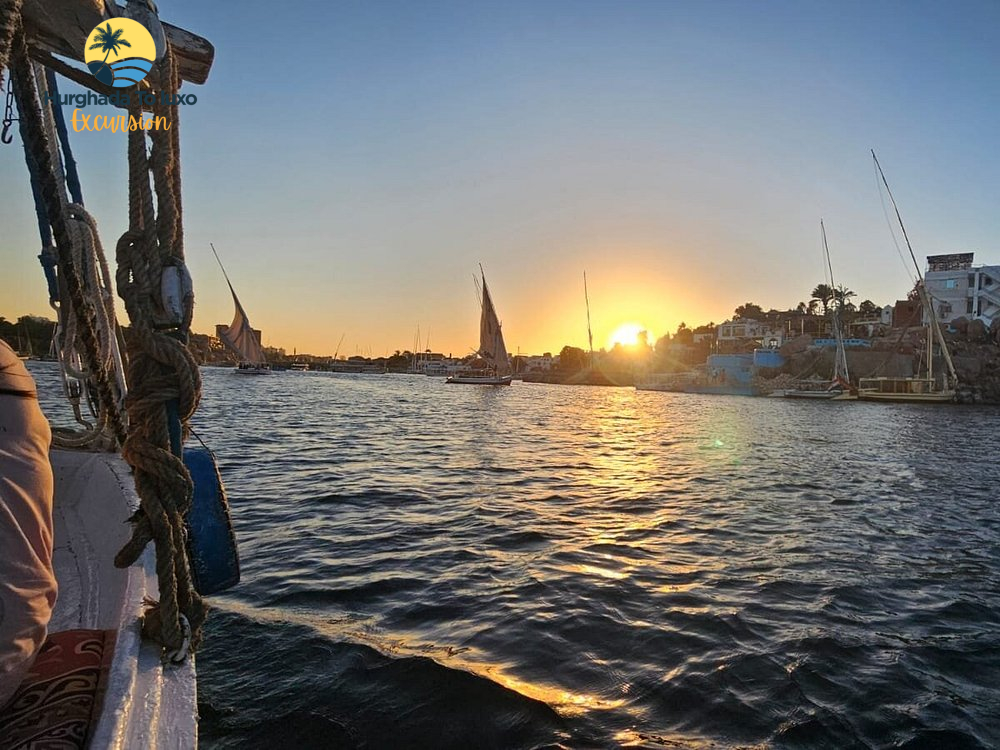
A traditional lateen-sailed felucca gliding through the granite-studded waters of the Aswan First Cataract — between Elephantine Island, Kitchener’s Island, and the scattered rocks that once made this stretch of river the southern boundary of ancient Egypt. One of the most peaceful hours available anywhere in the country.
Aswan Overnight — The Nile at Its Most Beautiful
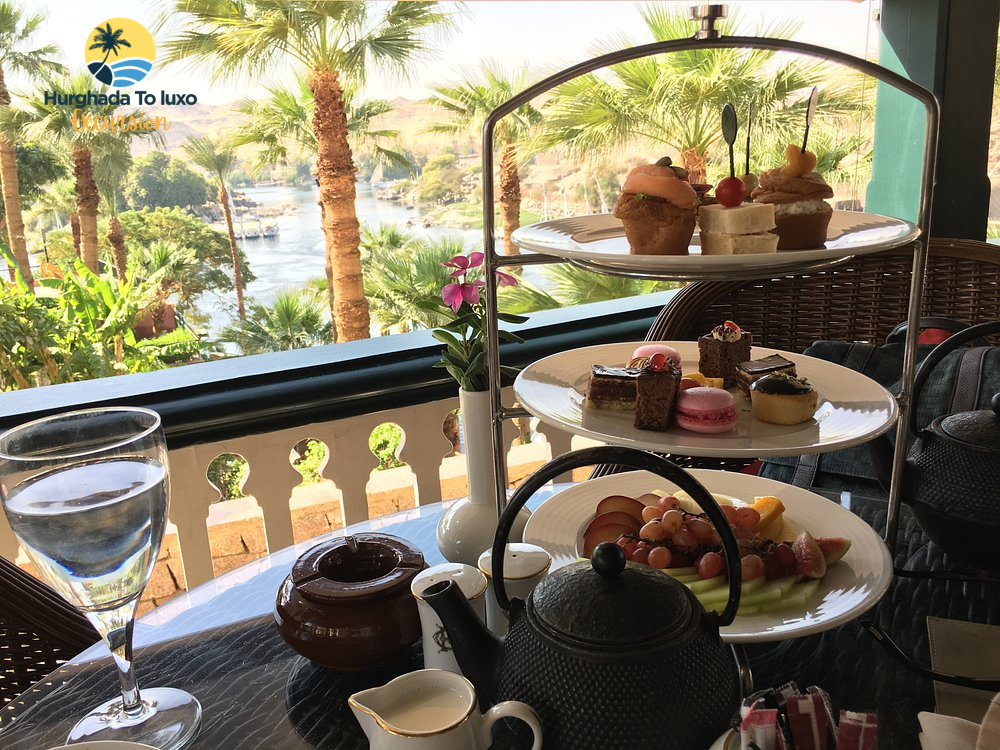
One night in Aswan — widely considered the most visually beautiful stretch of the Nile in Egypt. Smooth granite islands, moored feluccas, the amber dunes of the West Bank, and the sunset over the desert. An evening on the corniche or from a hotel terrace that no day trip can replicate.
The Nubian Crocodile Keeper
Many Nubian village households keep a captive Nile crocodile as a cultural and spiritual practice connected to the veneration of Sobek — the crocodile deity. Meeting and photographing a young Nile crocodile in a village courtyard is one of the more unexpected and memorable moments of any Aswan visit.
Nubian Hospitality and Food
Karkadeh (hibiscus tea — deep crimson, served hot or cold), fresh henna painting, traditional Nubian jewellery and weaving, and the opportunity to sit with a Nubian family in their home — hospitality offered genuinely rather than as a commercial transaction.
The Aswan High Dam (optional)
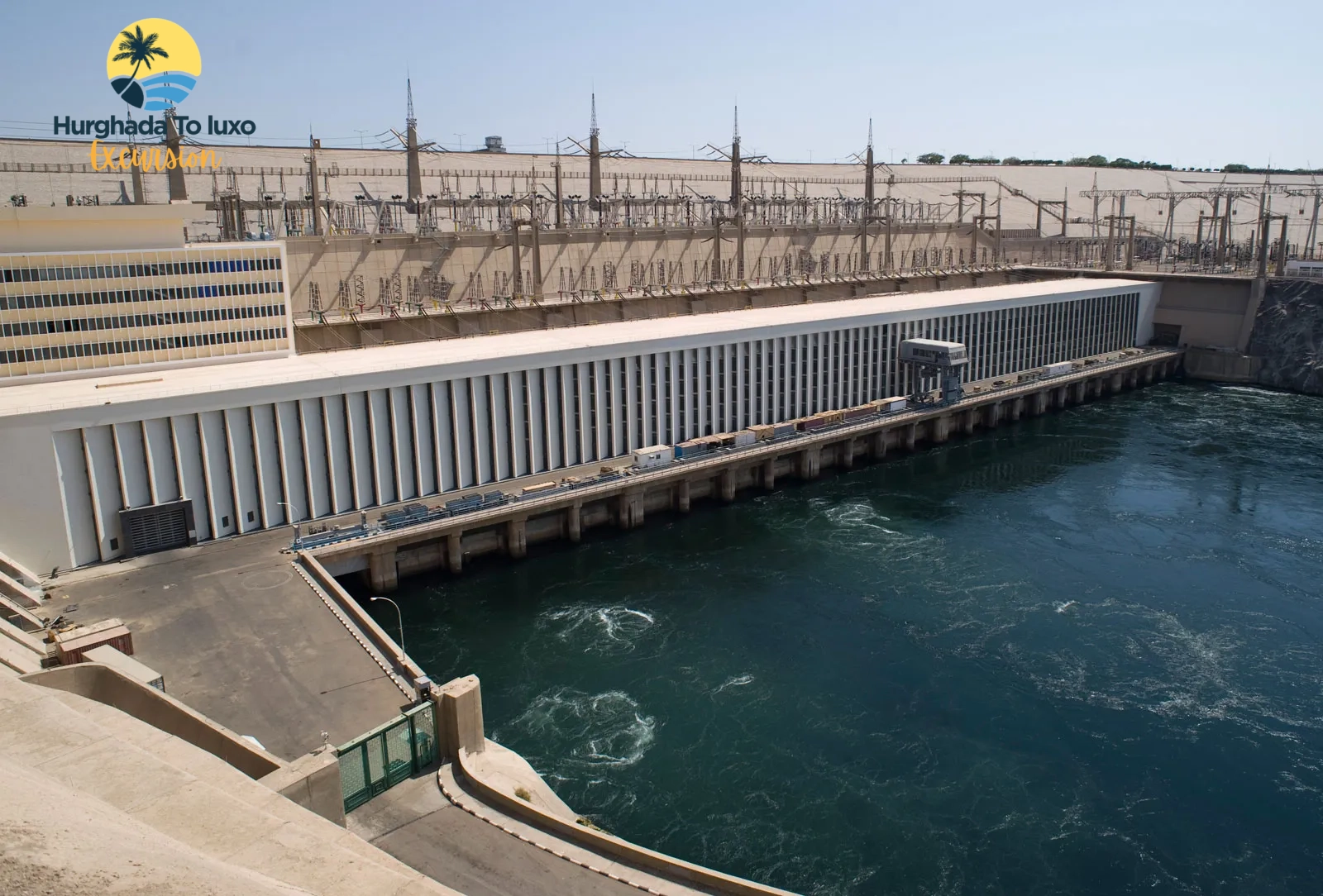
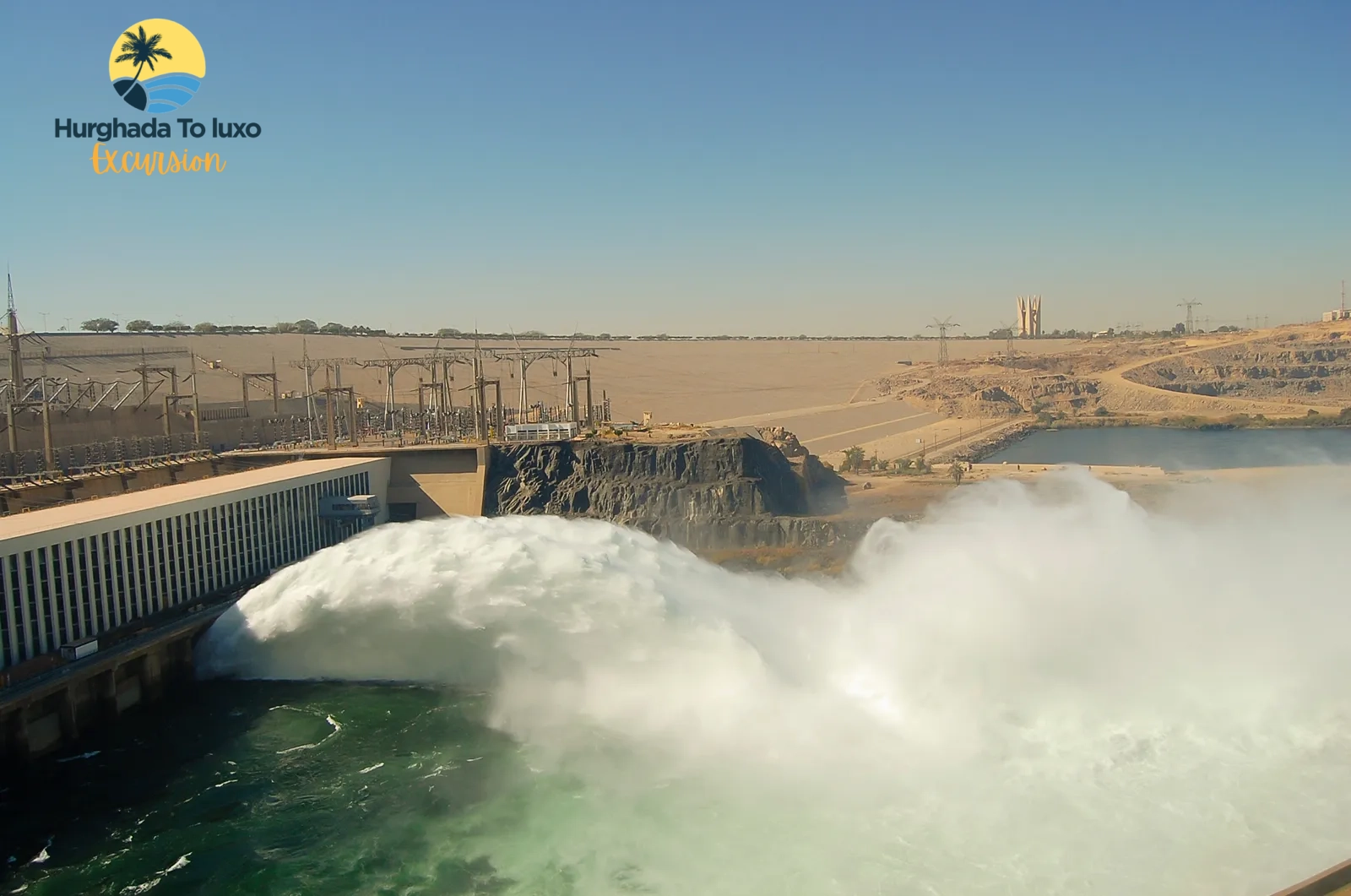
On Day 1, the Aswan High Dam visit contextualises the displacement of the Nubian people whose village you will visit the following morning — the same dam whose construction flooded their homeland and created the reservoir your motorboat crosses to reach Philae.
The Motorboat Crossing to Philae
The short boat crossing to Agilkia Island reveals the temple from the water as it was always meant to be approached — the colonnades and pylons emerging across the reservoir as you close the distance. In the afternoon light this crossing is consistently one of the most photographed moments of any Aswan visit.
2 Day Itinerary
The itinerary below details both days from hotel pickup in Hurghada on Day 1 to hotel drop-off on Day 2 evening. Sites and experiences listed are the only elements on this programme — nothing has been added or inflated.
Day 1 — Hurghada to Aswan · Philae Temple · Aswan Overnight
06:00 – 07:00 AM — Pickup at Your Hurghada Hotel
Private vehicle · Guide on board from departure
Your private, air-conditioned vehicle arrives at your hotel lobby in Hurghada, El Gouna, Sahl Hasheesh, Makadi Bay, or Soma Bay. Your dedicated Egyptologist and cultural guide is on board from the first moment of Day 1. Bottled water and USB charging throughout. Exact pickup time confirmed 24 hours in advance.
07:00 AM – 12:30 PM — Hurghada to Aswan Drive
~500 km across the Eastern Desert and Nile Valley
The approximately 5–6 hour drive south crosses the Eastern Desert highway to Aswan. Your guide uses this journey to brief you on the Nubian history, the story of Lake Nasser and the displacement it caused, the UNESCO rescue of Philae, and the cultural context of the village visit the following morning. The drive is longer than the Hurghada–Luxor route — Aswan is the southernmost major tourist destination in Egypt, approximately 500 km from Hurghada — and a comfortable journey in a private vehicle with regular breaks.
12:30 – 13:30 PM — Lunch on Arrival in Aswan
First meal beside the Aswan Nile
Lunch at a quality Nile-view restaurant in Aswan after the long morning drive. The Aswan Nile is immediately and dramatically different from Luxor — granite islands rising from the water, the landscape suddenly dry and geological rather than agricultural. A proper rest and meal before the afternoon programme. Vegetarian, halal, and child-friendly options available.
14:00 – 14:45 PM — Aswan High Dam
The dam that created the reservoir and displaced a people
A visit to the Aswan High Dam before Philae creates a specific narrative logic for the two-day programme: the dam that created Lake Nasser flooded the original sites of both Philae (seen this afternoon) and the Nubian homeland (whose people you will visit tomorrow). Understanding the dam’s scale and its human and cultural consequences gives everything that follows on Days 1 and 2 a coherent and meaningful context.
15:30 – 17:30 PM — Philae Temple ⭐⭐⭐
The last site of the ancient Egyptian religion — reached by motorboat
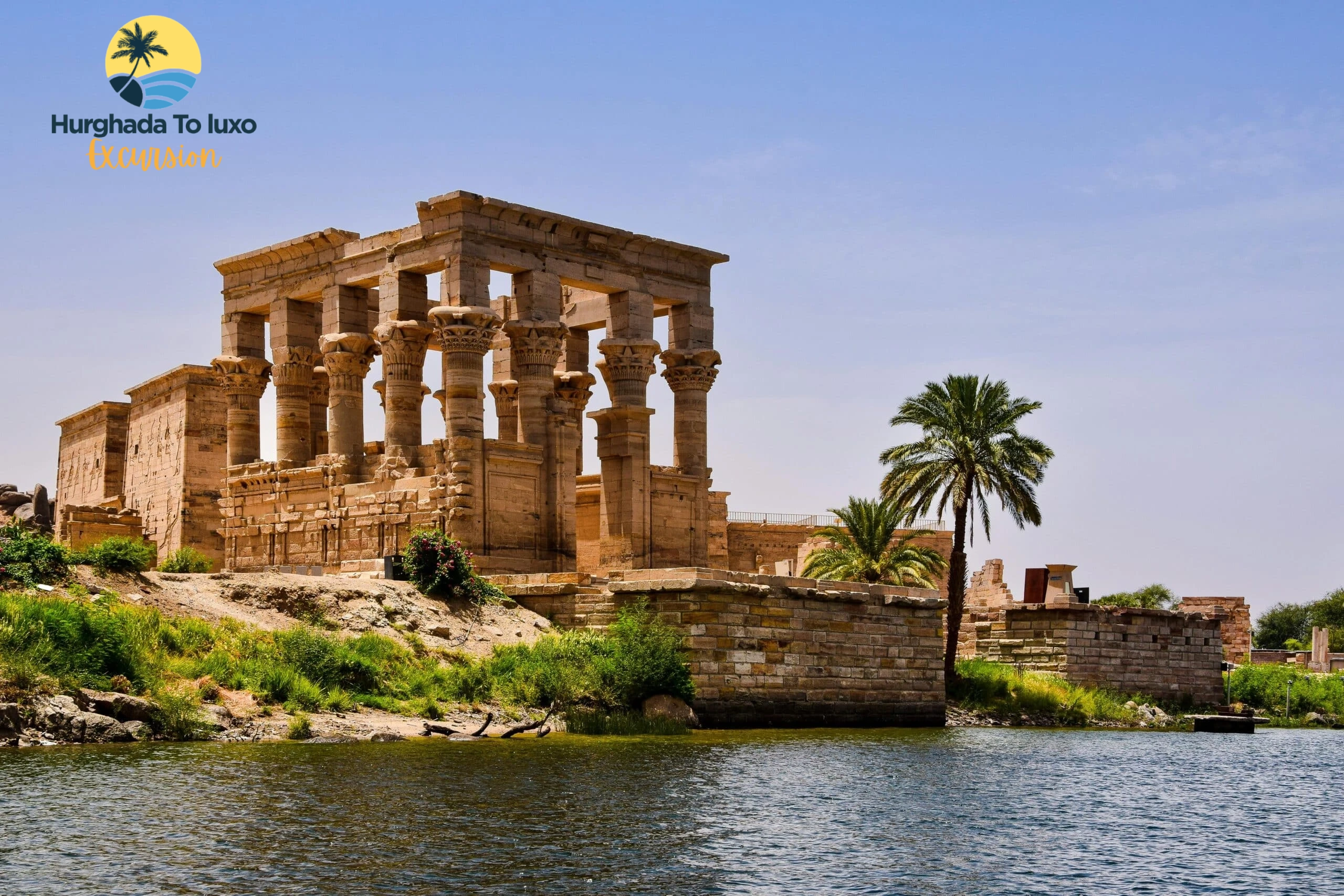
A short motorboat crossing from the Aswan reservoir landing stage to Agilkia Island — the temple’s pylons and the Kiosk of Trajan’s columns coming into view across the water as you approach in the afternoon light. The crossing in the late afternoon, with the western sun catching the sandstone and the water reflecting the sky, is one of the most photographed moments of any Aswan visit.
The Temple of Isis at Philae was dismantled into 47,000 numbered blocks and reassembled on Agilkia Island by UNESCO between 1972 and 1980 — the same international rescue programme that saved Abu Simbel. Its original site on Philae Island now lies permanently beneath the reservoir. The temple was actively used as a religious site until 550 CE, over a thousand years after the Ptolemaic period ended — and the final hieroglyphic inscription on its walls, carved in 394 CE, is the last known use of the ancient script anywhere in the world.
Your guide leads a full 2-hour visit: the Outer Court with its double colonnade, the Birth House celebrating the divine birth of Horus, the main Hypostyle Hall decorated with Ptolemaic and Roman-era reliefs, the inner sanctuary of Isis, and the Kiosk of Trajan — the open-sided colonnaded pavilion on the island’s southern point that has become the defining image of Philae and is best photographed from the boat on the return crossing.
18:30 PM — Aswan Hotel Check-in · Night 1
One night on the most beautiful stretch of the Nile in Egypt
Check-in at your Aswan hotel — category confirmed at booking. Dinner on Day 1 evening is not included and is at your own expense. The Aswan corniche is typically a 5–10 minute walk from most hotels and has good restaurant options from casual riverside spots to quality Egyptian cuisine. The Nile at Aswan at night — the illuminated granite islands, the silhouetted feluccas, the amber light on the West Bank dunes — is one of the most beautiful evenings available anywhere in Egypt.
🏨 Night 1 — Aswan: The overnight is what makes Day 2’s relaxed Nubian village visit and felucca ride possible — you begin the day already in Aswan rather than driving from Hurghada first. Day 2 begins at a comfortable morning hour, with breakfast at the hotel before the village programme begins.
Included and Excluded
✅ What Is Included
✓ Private round-trip road transport (Hurghada → Aswan Day 1 · Aswan → Hurghada Day 2)
✓ 1 night hotel accommodation in Aswan (category confirmed at booking)
✓ Licensed Egyptologist and cultural guide — dedicated to your group for both days
✓ Aswan High Dam visit (Day 1)
✓ Philae Temple entrance + motorboat crossing to the island (Day 1)
✓ Felucca transfer to and from the Nubian village (Day 2)
✓ Nubian village guided visit including household welcome and karkadeh tea (Day 2)
✓ 1-hour private felucca Nile boat ride through the First Cataract islands (Day 2)
✓ 2 lunches (Day 1 Aswan on arrival · Day 2 Nubian village)
✓ Bottled water throughout both days · Zero shopping stops guaranteed
❌ What Is Not Included
✕ Dinner on Day 1 evening in Aswan (at your own expense)
✕ Henna painting at the village (optional — paid directly to the village artist)
✕ Nubian craft and souvenir purchases at the village
✕ Tips for guide and driver (optional — €10–€15 per person across 2 days appreciated)
✕ Tips for the felucca crew (optional — a small tip for the sailor is customary)
Prices and Booking
Price on Request
Price varies by group size, hotel category, and travel dates
Contact us with your group size, preferred dates, and departure hotel — we will provide a detailed quote within 24 hours.
Pickup Information
Day 1 Pickup Location
Your hotel lobby in Hurghada, El Gouna, Sahl Hasheesh, Makadi Bay, or Soma Bay. Your driver meets you with a name board. The guide is on board from this first moment.
Day 1 Pickup Time
06:00 – 07:00 AM, confirmed 24 hours in advance. The Aswan drive is longer than the Luxor drive — approximately 5–6 hours — so an early departure ensures a comfortable arrival in Aswan by lunchtime.
Day 2 Departure — Aswan Hotel
No early departure required. Day 2 begins with breakfast at the hotel followed by the village and felucca programme at a relaxed pace.
Day 2 Return Drop-Off
Your original Hurghada hotel, door to door. Estimated return: 21:00 – 21:30 PM on Day 2.
What to Bring
Small Overnight Bag
One night in Aswan. Pack pyjamas or sleepwear, a change of clothing for Day 2, full toiletries, chargers, and your original passport for hotel check-in. The Day 2 programme is relaxed — comfortable casual clothing is more appropriate than formal or site-specific outfits.
Sun Protection — Both Days
SPF 50 sunscreen, wide-brimmed hat, UV sunglasses. Philae Temple involves significant outdoor time, and the felucca ride and village walk on Day 2 are fully exposed. Aswan’s southern latitude means more intense UV than travellers typically expect even in cooler months.
Respectful Clothing for the Village
The Nubian village is a living community and a Muslim household — modest clothing (covered shoulders, loose trousers or a long skirt) is respectful and expected when entering family homes. Philae Temple also requires shoulders and knees covered.
Camera — Both Days
The Philae motorboat crossing, the Nubian village painted houses, the crocodile courtyard, and the felucca on the First Cataract are all outstanding photography subjects. Always ask permission before photographing people in the village — your guide will facilitate this respectfully.
Cash in EGP for the Village
For henna painting, craft purchases, and small tips. Village artisans do not typically accept card payments. Approximately £20–£30 equivalent is sufficient for optional purchases. June 2026: £1 ≈ 65 EGP.
Original Passport — Keep Accessible
Required for Aswan hotel check-in (Day 1 evening) and at road security checkpoints. Keep it in your day bag, not packed deep in luggage.
Insider Tips
Tip 1 — Visit the Aswan corniche on Day 1 evening after checking in. The Nile at Aswan after sunset — the illuminated granite islands, the moored feluccas, the amber light of the West Bank — is one of Egypt’s most beautiful evenings. It is a 5–10 minute walk from most hotels and requires no guide, no entrance fee, and no planning. Simply walk and sit by the water.
Tip 2 — Always ask your guide before photographing people in the Nubian village. The village is a real community, not a performance space. Most residents are genuinely welcoming and happy to be photographed when asked — but the request itself is an important courtesy. Your guide facilitates this naturally throughout the visit.
Tip 3 — The household crocodile is a young animal, not a large wild crocodile. Nubian families typically keep juvenile Nile crocodiles — usually 30–80 cm long — in a dedicated courtyard space. They are real crocodiles and should be treated with appropriate respect, but they are not the 3-metre animals of the Nile in wilder sections of the river. Children generally find them far more exciting than alarming.
Tip 4 — The felucca ride is best appreciated without checking your phone. One of the defining qualities of the Nile felucca ride is the near-total absence of mechanical noise — wind, water, and the occasional voice from the bank. Put your phone away for at least part of the hour and simply sit with the Nile passing around you. Most travellers who do this describe it as one of the most restful moments of their Egypt trip.
Tip 5 — Try the karkadeh. Hibiscus tea — served hot in winter, cold in summer over ice — is the defining drink of Nubian hospitality. Its flavour is tart, fruity, and genuinely unlike any other tea you will have drunk. It is also known to be beneficial for blood pressure. Accept it wherever it is offered in the village.
Tip 6 — The Philae motorboat crossing in the afternoon light of Day 1 provides the best photography conditions of the visit. The setting sun comes from the west and hits the Kiosk of Trajan directly — the columns in warm light with the water below them. Have your camera accessible on the boat for the approach and the return crossing.
Tip 7 — Listen to the narrative connection between the High Dam, Philae, and the Nubian village. The three stops on this tour are directly causally connected — the dam created the lake, the lake flooded the Nubian homeland and Philae’s original island, and UNESCO’s response saved the temple while the people remained displaced. Your guide makes this connection explicit throughout both days, and understanding it gives the village visit a historical depth that a purely tourism-focused presentation cannot provide.
Tip 8 — Buy directly from village artisans if you are purchasing anything. The craft items sold at the village market — woven baskets, embroidered textiles, hand-painted pottery, silver jewellery — are made by village residents rather than imported from tourist supply chains. Purchasing here supports the community directly. Your guide can help you identify genuine handmade pieces and navigate fair pricing.
Frequently Asked Questions
Is the Nubian village visit a genuine community or a staged tourist experience?
The Nubian villages on the islands and western bank north of Aswan are real, inhabited communities — not purpose-built tourist destinations. The families who welcome visitors genuinely live in the painted houses, speak Nubian as their first language, and maintain cultural practices that predate the pharaonic period. Tourism is one source of income but not the only one, and the hospitality offered — the karkadeh tea, the family courtyard, the crocodile — is an authentic expression of Nubian culture rather than a performance. Our guide ensures visits are conducted respectfully, with the community’s cooperation rather than at their expense.
Is the felucca ride safe? What is it like?
A felucca is a traditional wooden lateen-rigged sailing boat with a wide, stable flat hull and low sides. It is entirely open — no roof, no cabin — and passengers sit on cushioned wooden benches along both sides of the deck. The boat moves at a gentle sailing pace determined by the wind. In the Aswan area the First Cataract waters are calm — not a fast-moving river. The felucca ride is one of the most relaxed and peaceful experiences in Egyptian tourism, suitable for all ages including young children and elderly travellers. Life jackets are available on board.
Why is there an overnight in Aswan rather than returning to Hurghada the same day?
Aswan is approximately 500 km from Hurghada — a 5–6 hour drive each way. A single-day return trip would leave no meaningful time in Aswan itself, particularly for the relaxed, unhurried Day 2 programme of the Nubian village and felucca ride. The overnight also allows the Philae Temple afternoon visit to be done in the correct light — late afternoon, when the motorboat crossing and the temple’s sandstone surfaces are most beautiful — rather than being rushed to allow a same-day return drive. The overnight structure is essential to the programme’s character, not simply a convenience.
Is this tour suitable for families with young children?
Yes — this is one of the most family-friendly multi-day tours available from Hurghada. The Nubian village visit is consistently cited by parents as the most engaging experience of any Egypt trip for younger children: the brightly painted houses, the household crocodile, the karkadeh tea served by a Nubian family, and the felucca ride all work exceptionally well with children of all ages. There are no long temple walks or complex archaeological explanations on Day 2 — it is a day built on direct, sensory experience of a living culture.
What is the price of this tour?
Pricing is on request because it varies based on group size, Aswan hotel category, and travel dates. Contact us at
[email protected] or via WhatsApp at +20 100 925 5585 with your group size and preferred dates — we will provide a detailed quote within 24 hours.
Can I add Abu Simbel to this tour?
Abu Simbel is 280 km south of Aswan and requires an additional day with a pre-dawn 03:00–04:00 AM departure. It cannot be added to the existing 2-day Nubian Village programme without restructuring the tour entirely. If you want to include Abu Simbel alongside a Nubian village visit and Philae, we would recommend the
2-day Aswan and Abu Simbel tour — which focuses on Abu Simbel — and then a separate Nubian village day added to a longer programme. Contact us to discuss combining elements for your specific group and schedule.
Book the 2 Day Aswan, Philae and Nubian Village Tour from Hurghada
Day 1: Hurghada → Aswan High Dam → Philae Temple → overnight Aswan · Day 2: Hotel breakfast → Nubian village (felucca transfer, household welcome, karkadeh, crocodile) → Nubian lunch → 1-hour Nile felucca boat ride → return to Hurghada. Dedicated guide both days. 2 lunches. All entrance fees included.
Price on Request — contact us with your group size and travel dates
Two Days Between the Ancient and the Living
The combination that makes this 2-day tour distinct is not simply Philae plus a village visit — it is the specific relationship between them. The same dam whose construction necessitated Philae’s rescue also flooded the land these village families called home. Seeing both in sequence, with a guide who makes that connection explicit, gives the Nubian village visit a historical weight that a culturally isolated tour of colourful houses and crocodiles cannot carry.
Ancient and living, sacred and domestic, architectural and human — Aswan is the city in Egypt where these contrasts sit closest together. Contact us with your group size and travel dates to receive your personalised quote.