🏺 3 Days · Private Tour · Egyptologist Guide · Luxor + Aswan + Abu Simbel
📅 Updated: June 2026 |
⏱️ 20 min read |
💶 Price on Request |
⭐ 5.0/5 rated |
🌍 Luxor · Aswan · Philae · Abu Simbel
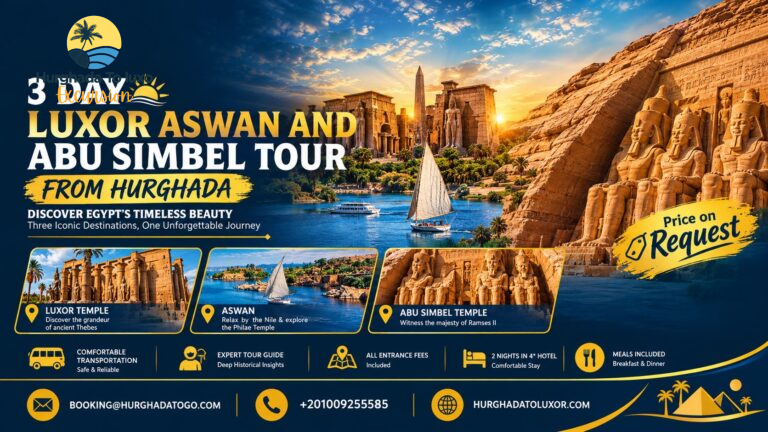
The 3 day Luxor, Aswan and Abu Simbel tour from Hurghada is the most comprehensive Upper Egypt itinerary available from the Red Sea coast — connecting the world’s greatest open-air museum at Luxor, the granite-studded Nile at Aswan, the island temple of Philae, and the rock-cut colossus at Abu Simbel in a single, unhurried private programme. Three days, two overnight stays, and one dedicated Egyptologist guide from your Hurghada hotel door to your return.
Day 1 takes you to Luxor for a full afternoon and evening of the East Bank’s monumental temples. Day 2 moves south to Aswan, with a visit to the High Dam and the enchanting boat crossing to Philae. Day 3 begins before dawn with the drive to Abu Simbel and ends with the long return to Hurghada. No rushed site visits, no shared coaches, and no itinerary built around other people’s priorities — every hour of this programme is designed around your group alone.
🏺 Why three days instead of two: Adding Luxor as Day 1 transforms this from an Aswan-and-Abu-Simbel logistics trip into a complete survey of Upper Egypt’s most significant sites. Karnak Temple, the Valley of the Kings, and the Temple of Hatshepsut belong alongside Abu Simbel in any serious visit to ancient Egypt — and placing Luxor at the start gives you a full afternoon and evening there rather than squeezing it into an already-demanding day. The three-day structure is the right length for this journey.
Tour Overview
This is a fully private, 3-day, 2-night tour that covers the four most significant historical destinations in Upper Egypt accessible from Hurghada — Luxor, Aswan, Philae, and Abu Simbel — in a single logical south-flowing journey before returning north to the Red Sea coast.
| Detail |
Information |
| Tour Type |
Private — your group only, no shared passengers |
| Duration |
3 days / 2 nights |
| Route |
Hurghada → Luxor (overnight) → Aswan → Philae (overnight) → Abu Simbel → Aswan → Hurghada |
| Sites Visited |
Karnak Temple, Valley of the Kings, Temple of Hatshepsut, Colossi of Memnon, Aswan High Dam, Philae Temple, Great Temple of Ramesses II, Temple of Nefertari |
| Guide |
Licensed Egyptologist, dedicated to your group for all 3 days |
| Overnights |
Night 1: Luxor · Night 2: Aswan (hotel categories confirmed at booking) |
| Departure Points |
Hurghada, El Gouna, Sahl Hasheesh, Makadi Bay, Soma Bay |
| Price |
Price on Request — contact us with group size and preferred dates |
Tour Highlights
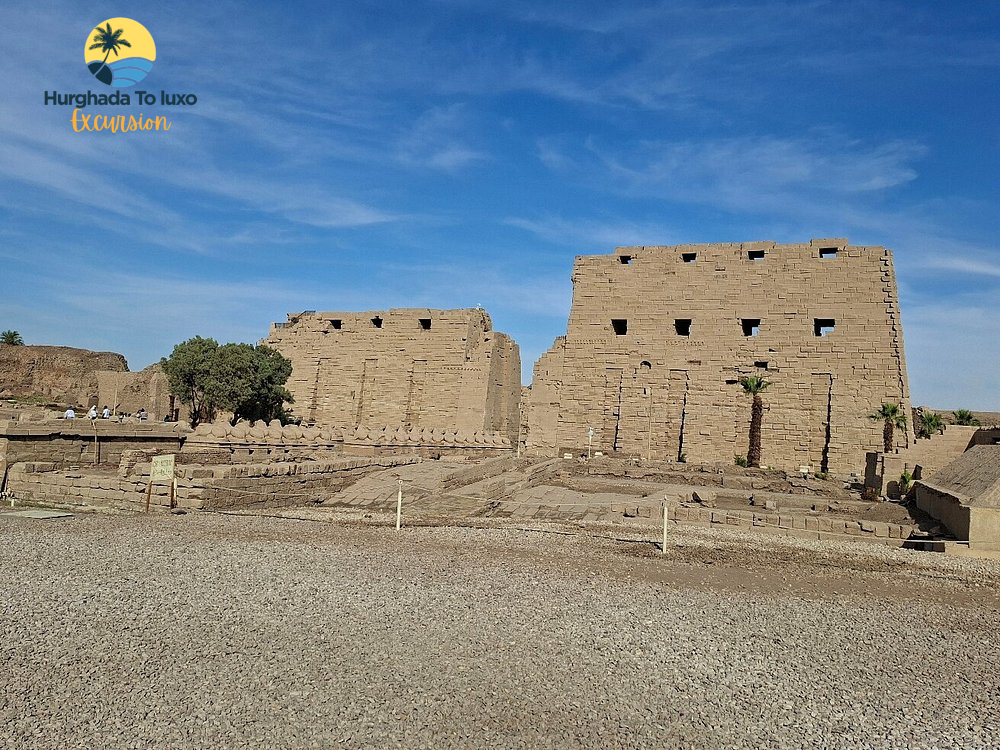
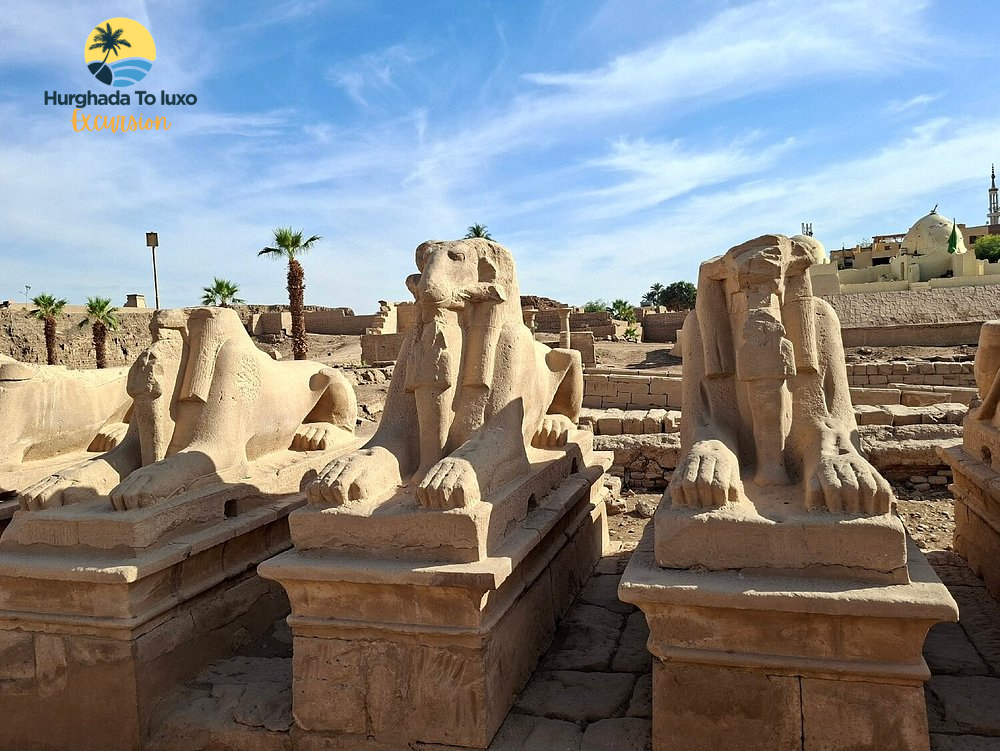
Karnak Temple Complex
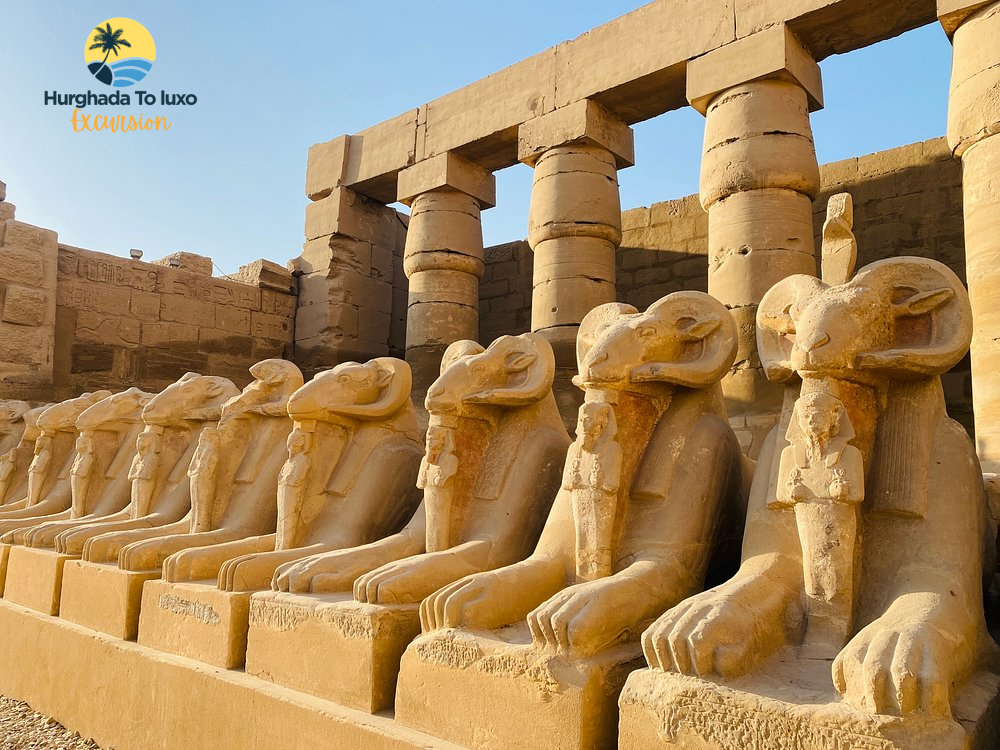
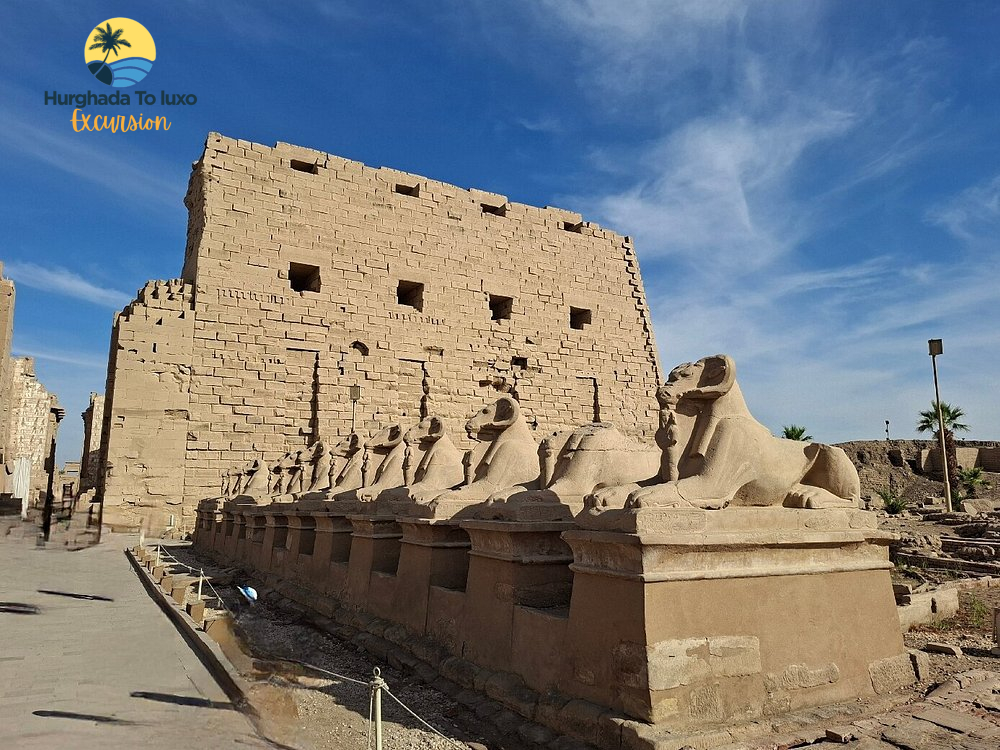
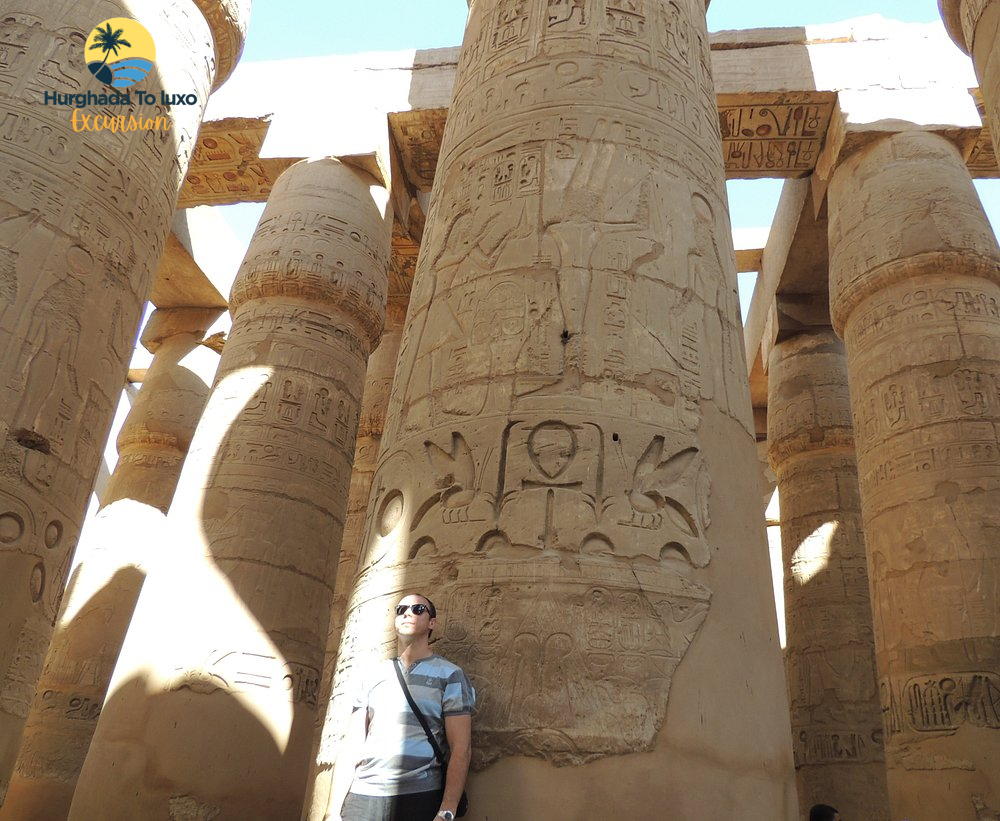
The largest religious structure ever built — 247 acres, 2,000 years in the making, and 30+ pharaohs in its construction. The Great Hypostyle Hall’s 134 immense columns remain the most overwhelming interior space in ancient architecture.
Valley of the Kings
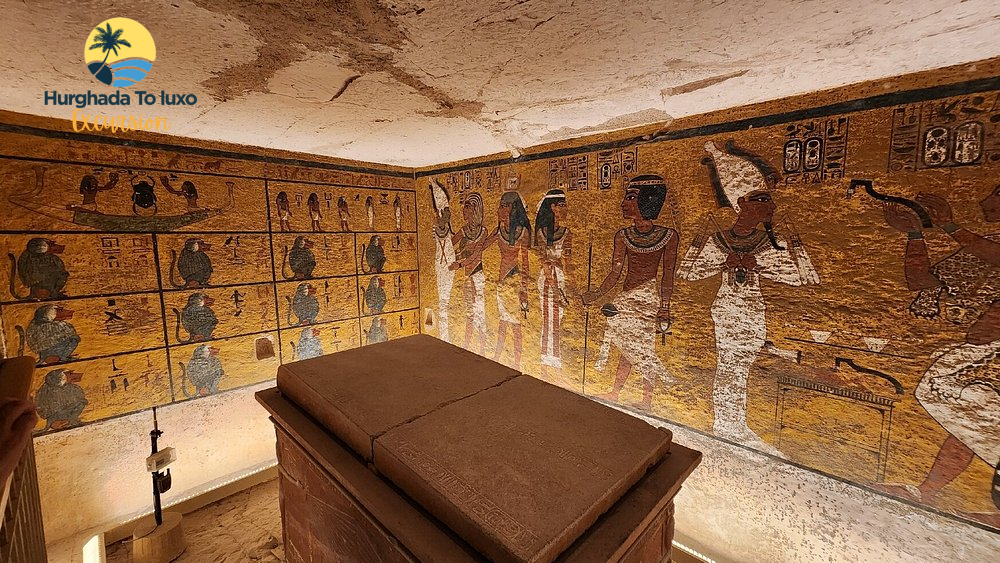
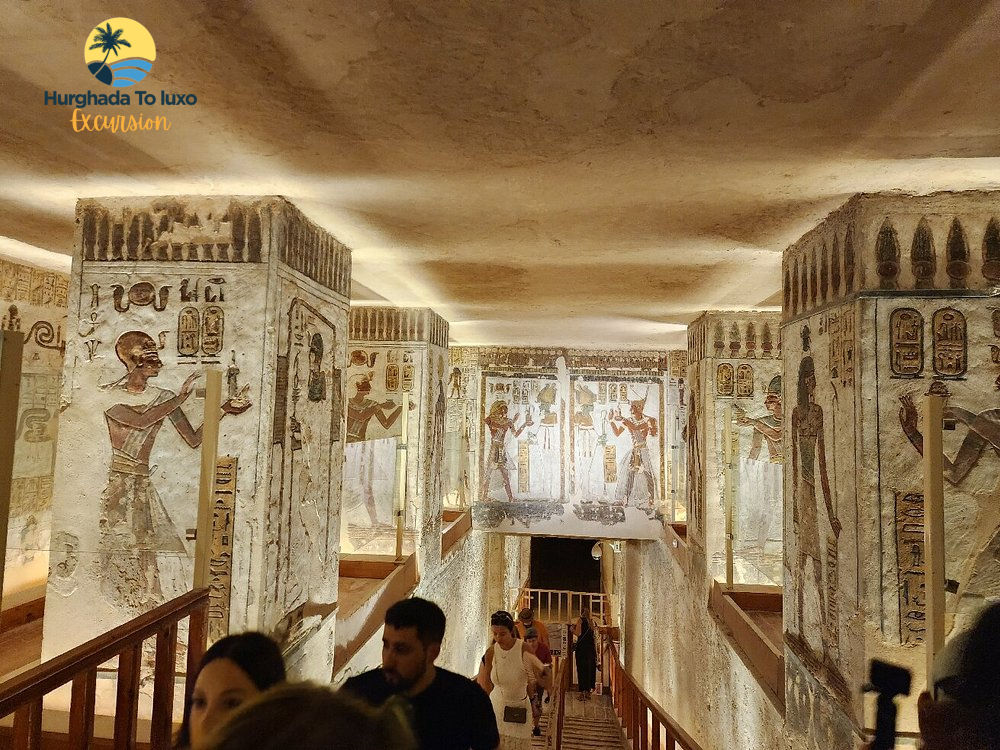
63 royal tombs cut into the limestone of the Theban Hills between 1550 and 1070 BCE. Three included with the standard ticket, with the option to add Tutankhamun’s tomb — the only royal mummy still resting in the valley.
Temple of Hatshepsut
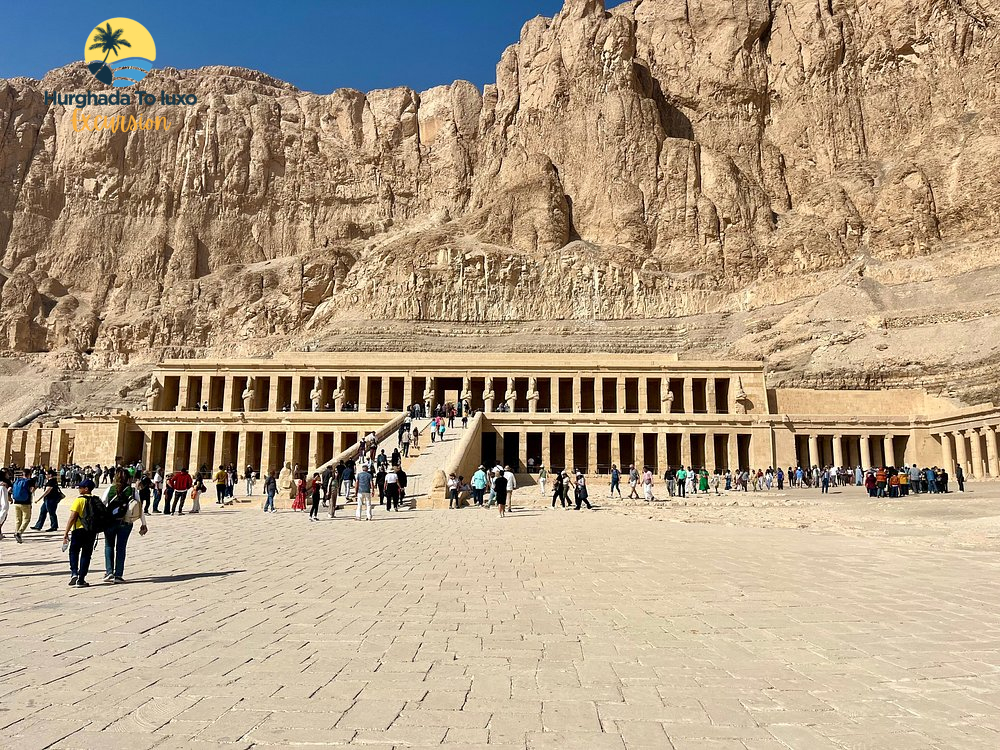
Three colonnaded terraces carved against the Theban cliff face for Egypt’s most powerful female pharaoh. The painted reliefs and the story of Hatshepsut’s deliberate erasure by her successor make this one of the most narratively compelling sites in Luxor.
Colossi of Memnon
Two 18-metre quartzite statues standing in the open field of the Luxor West Bank for over 3,400 years — once the gateway to the largest mortuary temple ever built, now surrounded by fields while archaeologists excavate its vanished foundations.
Aswan High Dam
The dam that reshaped modern Egypt’s economy, created Africa’s largest reservoir, and — by submerging ancient Nubia — triggered the international rescue operations that saved Abu Simbel, Philae, and dozens of other monuments.
Philae Temple
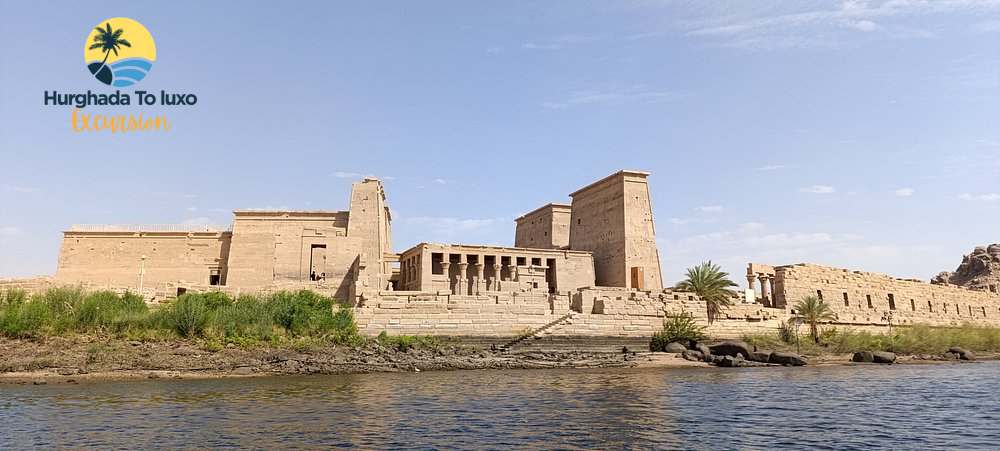
Reached by motorboat across the Aswan reservoir, the Temple of Isis at Philae was the last site where ancient Egyptian religious rituals were performed — its final hieroglyphic inscription dates to 394 CE. Relocated to Agilkia Island by UNESCO in the 1970s.
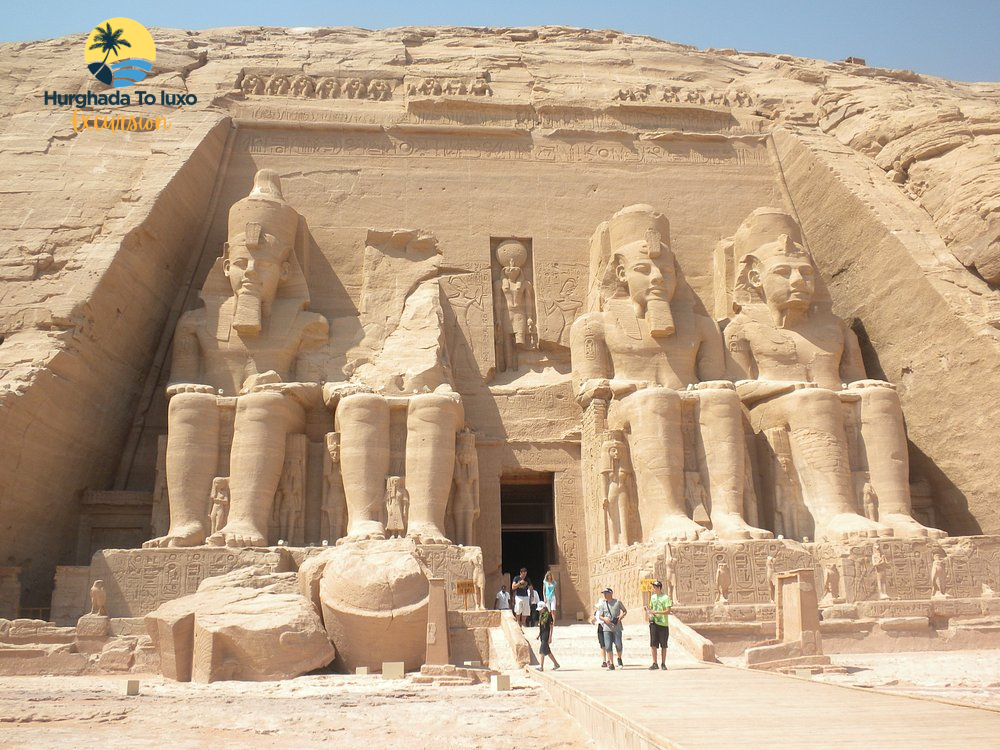
Great Temple of Ramesses II, Abu Simbel
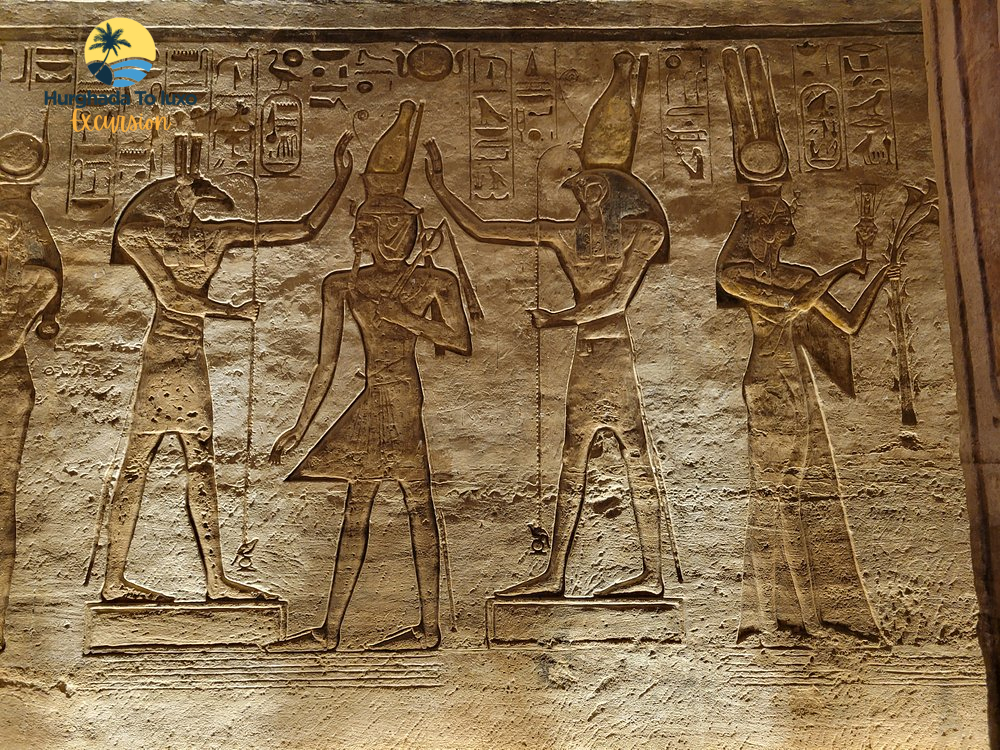
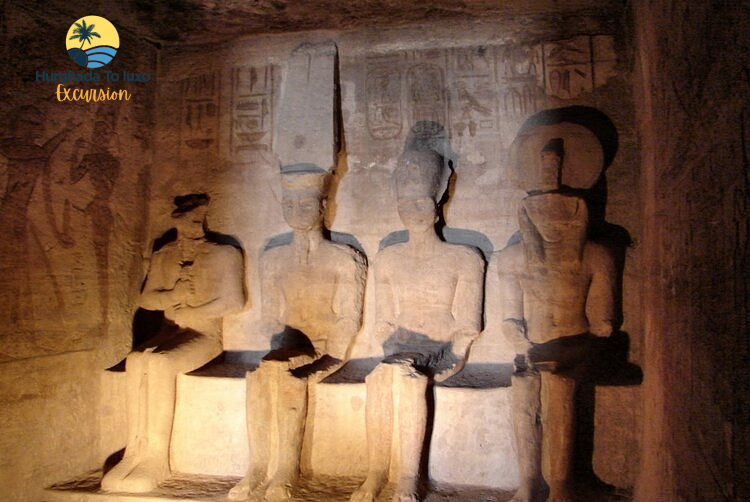
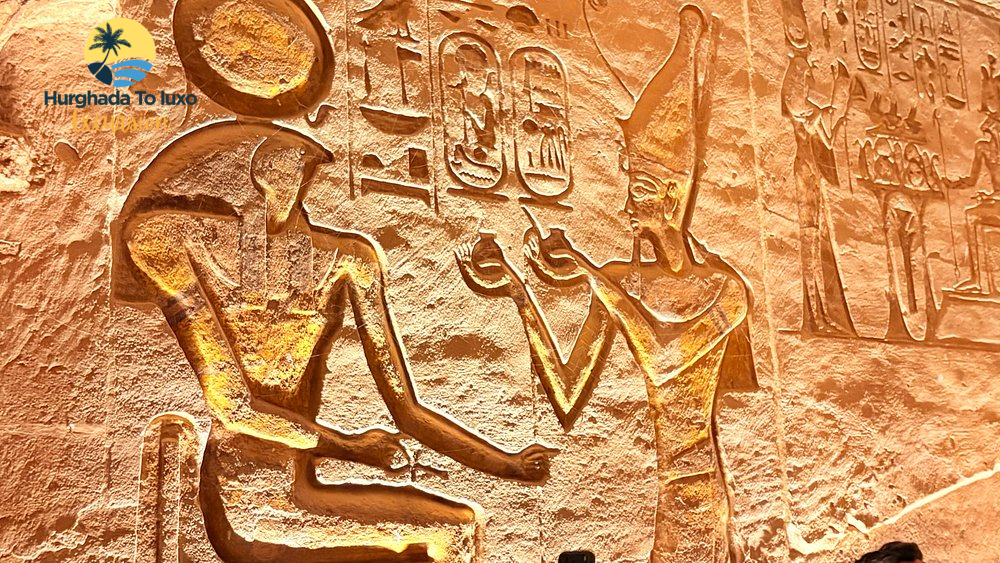
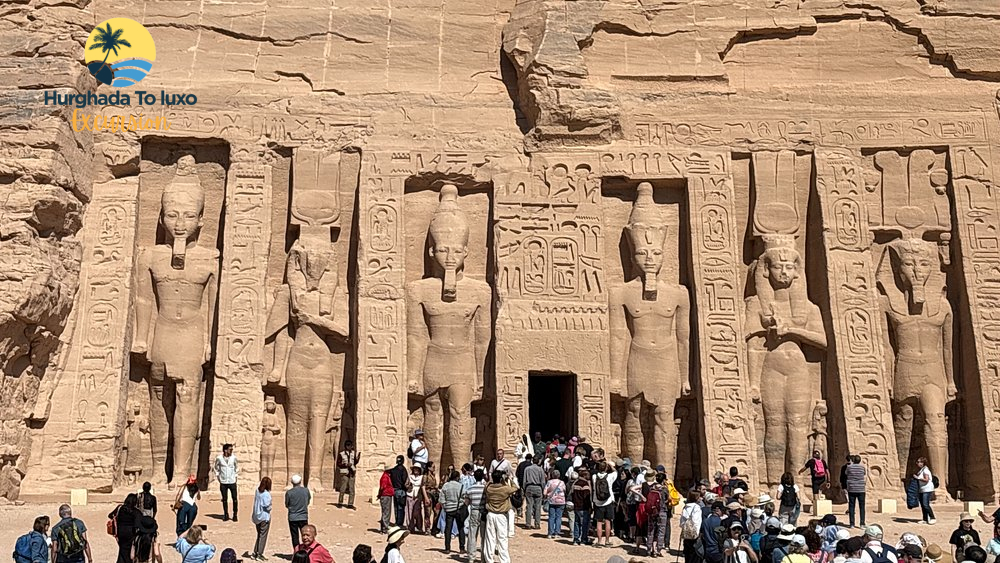
Four 20-metre colossal statues guard the entrance to a temple carved entirely into a sandstone cliff 3,200 years ago — with an inner sanctuary designed to catch two specific shafts of solar light each year. One of the most extraordinary architectural achievements of the ancient world.
Temple of Nefertari, Abu Simbel
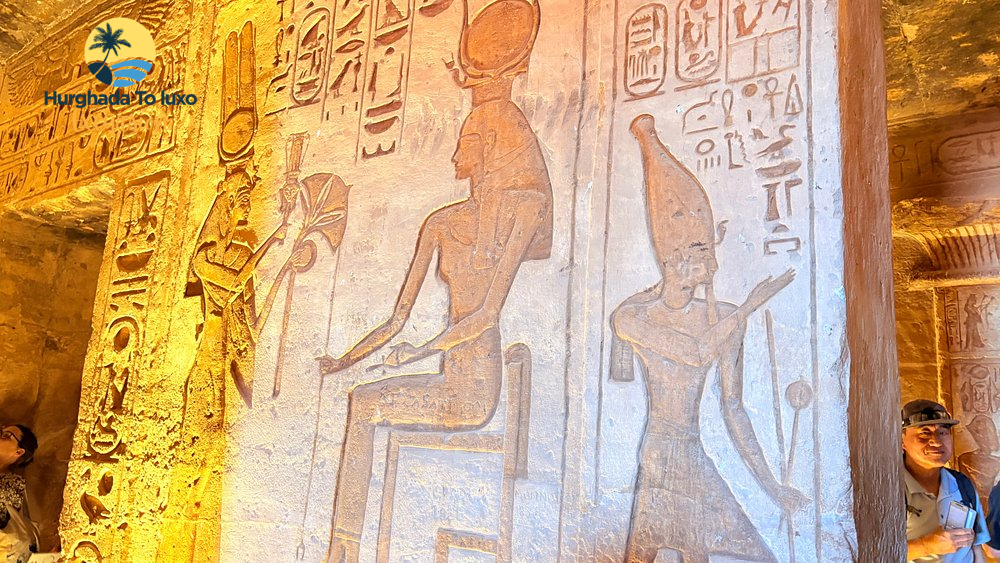
The only ancient Egyptian temple where a queen is carved at the same monumental scale as the pharaoh on the entrance façade — a gesture of devotion from Ramesses II to his great royal wife, unprecedented in Egyptian royal representation.
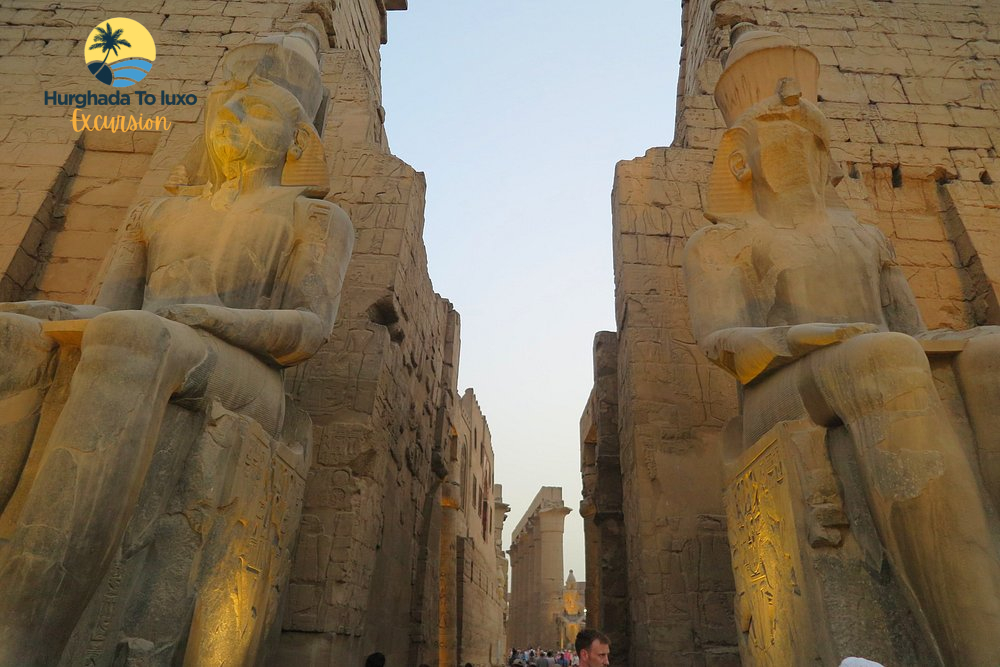
Luxor Temple by Night (Optional)
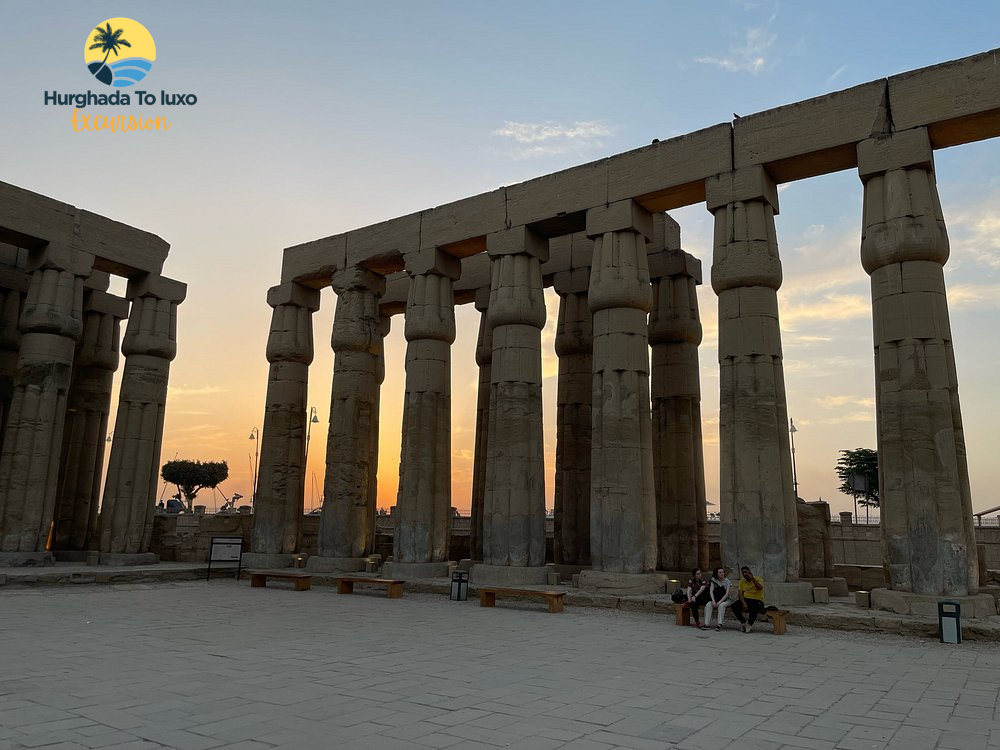
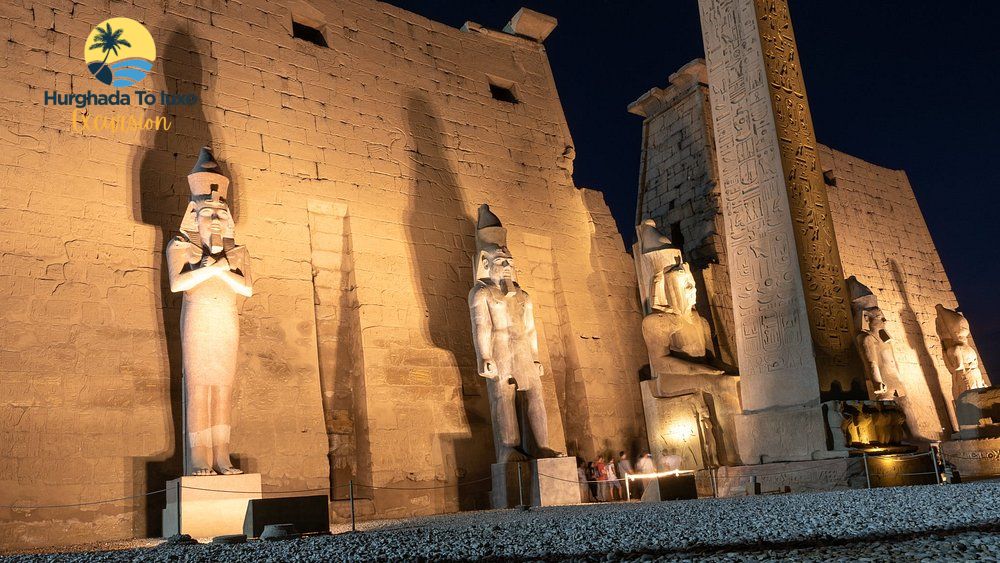
Available on Day 1 evening for overnight guests — Luxor Temple is magnificently illuminated after sunset, its pink granite statues and columns glowing amber against the dark sky. Only accessible to visitors staying in Luxor, which is why overnight is built into Day 1 of this itinerary.
3 Day Itinerary
The itinerary below details all three days, from hotel pickup in Hurghada on Day 1 to hotel drop-off on Day 3 evening. The sites listed are the only sites on this programme — nothing has been inflated or added for appearance.
Day 1 — Luxor Sightseeing and Overnight
06:00 – 07:00 AM — Pickup at Your Hurghada Hotel
Your private vehicle collects you from your hotel lobby
Your private, air-conditioned vehicle arrives at your hotel lobby in Hurghada, El Gouna, Sahl Hasheesh, Makadi Bay, or Soma Bay. Exact pickup time confirmed 24 hours in advance based on your hotel’s distance from the main highway. Bottled water and USB charging on board throughout the tour.
07:00 – 10:00 AM — Hurghada to Luxor Drive
~260 km across the Red Sea Mountains
The approximately 3-hour drive west from Hurghada crosses the Red Sea Mountains via the desert highway before descending into the Nile Valley. Your Egyptologist guide travels with you from the first moment, using this journey to introduce the historical framework of what you are about to see — the New Kingdom, the division of Luxor’s East and West Banks, and the significance of the specific sites on the day’s programme.
10:00 – 10:30 AM — Nile Crossing to the West Bank
Private motorboat to the Theban necropolis
A private motorboat crossing of the Nile to the West Bank — the ancient land of the dead, where the New Kingdom pharaohs chose to be buried because the sun set here each evening. Your guide explains this cosmological reasoning as the Theban Hills come into view across the water.
10:30 – 11:00 AM — Colossi of Memnon
First sight of the West Bank
The two 18-metre quartzite guardians of the West Bank stand in the open fields at the entrance to the necropolis area — your first and immediate encounter with the sheer physical scale of ancient Egyptian royal ambition. A photography stop with your guide explaining their original context as gateway statues to Amenhotep III’s now-vanished mortuary temple.
11:15 AM – 13:15 PM — Valley of the Kings ⭐⭐⭐
Two hours at the royal necropolis
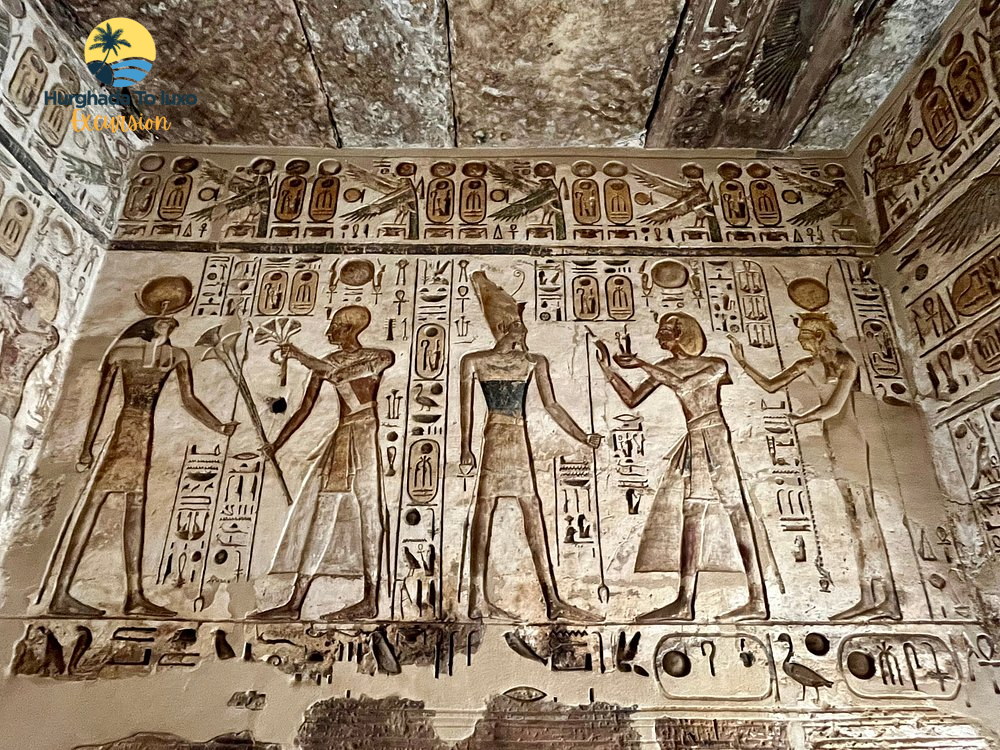
Two full hours at the Valley of the Kings — the burial ground of the New Kingdom pharaohs from Thutmose I to Ramesses XI. Your standard ticket covers 3 tombs, selected by your guide based on which are open and best preserved on your visit date. The painted corridors detail the pharaoh’s journey through the underworld in extraordinary colour and detail. Optional: Tutankhamun’s tomb (~€15 extra, payable on the day) — the only royal mummy still resting in the Valley, in the chamber Howard Carter first entered in 1922.
13:30 – 14:30 PM — Temple of Hatshepsut
The architectural centrepiece of the West Bank
Three colonnaded terraces rise against the sheer face of the Theban limestone cliff at Deir el-Bahari. Your guide narrates the full story of Hatshepsut — who ruled Egypt as pharaoh for 21 years and built this mortuary temple — and the deliberate, systematic erasure of her name and image by her successor Thutmose III, whose chisel marks are still visible in specific places on the walls.
15:00 – 16:00 PM — Nile-View Lunch
A proper break after the West Bank morning
Lunch at a quality Nile-view restaurant in Luxor — Egyptian mezze, grilled dishes, fresh salads, cold drinks. Selected by your guide for quality, never for commission. Vegetarian, halal, and child-friendly menus always available.
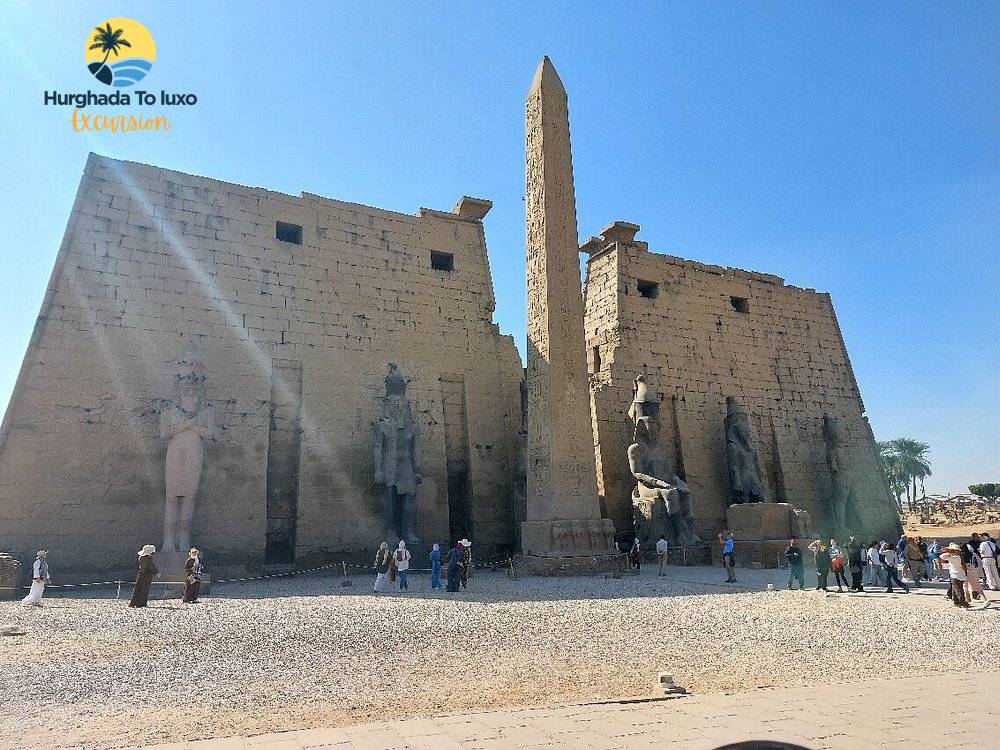
16:30 – 18:30 PM — Karnak Temple Complex ⭐⭐⭐
The largest religious structure ever built — in the best light of the day
Two hours at Karnak in the late-afternoon light — the ideal time to visit. The shadows lengthen between the hypostyle hall’s 134 columns, the Sacred Lake turns copper-gold, and the crowds of the earlier morning have thinned considerably. Your guide covers the layered 2,000-year construction history, pointing out the distinct architectural phases of different pharaohs within a single complex. A complete visit includes the Great Hypostyle Hall, the Obelisk of Hatshepsut, and the Sacred Lake.
19:00 PM — Hotel Check-in in Luxor
Night 1 overnight in Luxor
Check-in at your Luxor hotel — category confirmed at booking. Dinner on Day 1 evening is not included and is at your own expense. Luxor’s corniche and the street adjacent to Luxor Temple offer good options. Optional: Luxor Temple is illuminated after dark and is within walking distance of most Luxor hotels — a strongly recommended evening visit for overnight guests that no day-trip traveller can access.
Included and Excluded
✅ What Is Included
✓ Private round-trip air-conditioned vehicle (Hurghada → Luxor → Aswan → Abu Simbel → Aswan → Hurghada)
✓ Licensed Egyptologist guide — dedicated to your group for all 3 days
✓ 2 nights hotel accommodation (Night 1: Luxor · Night 2: Aswan — categories confirmed at booking)
✓ Valley of the Kings entrance (3 standard tombs)
✓ Temple of Hatshepsut & Colossi of Memnon entrance
✓ Karnak Temple Complex entrance
✓ Nile motorboat crossing (Luxor West Bank)
✓ Aswan High Dam visit
✓ Philae Temple entrance + motorboat crossing to the island
✓ Abu Simbel site entrance — Great Temple of Ramesses II and Temple of Nefertari
✓ 3 lunches (Day 1 Luxor, Day 2 Aswan, Day 3 Aswan on return)
✓ Hotel breakfasts on Day 2 and Day 3 (where included in hotel tier)
✓ Bottled water throughout all 3 days · Zero shopping stops guaranteed
❌ What Is Not Included
✕ Dinners on Day 1 evening (Luxor) and Day 2 evening (Aswan) — at your own expense
✕ Tutankhamun’s tomb (~€15 extra, payable on Day 1 — optional and highly recommended)
✕ Luxor Temple evening visit (free to walk to from most Luxor hotels — entry fee applies on the door)
✕ Day 3 Abu Simbel refreshment stop — light snacks, not a full meal
✕ Tips for guide and driver (optional — €15–€25 per person across 3 days appreciated)
✕ Personal purchases and souvenirs
Prices and Booking
Pricing
Price on Request
Price varies by group size, hotel tier, and travel dates
Contact us with your group size, preferred dates, and departure hotel for a full quote within 24 hours.
🗓️ Booking lead time: This 3-day tour requires confirmed hotel accommodation in both Luxor and Aswan, convoy pre-registration for the Aswan–Abu Simbel road, and a senior guide available for all 3 days. We recommend booking at minimum 4 weeks in advance for standard dates. During Egyptian public holiday periods or school holiday seasons, lead time should be extended to 6–8 weeks. If you are planning around the
Abu Simbel Sun Festival dates (22 February or 22 October), book as early as 3–4 months in advance.
Pickup Information
Day 1 Pickup Location
Your hotel lobby in Hurghada, El Gouna, Sahl Hasheesh, Makadi Bay, or Soma Bay. Your driver meets you at the lobby with a name board.
Day 1 Pickup Time
06:00 – 07:00 AM, confirmed 24 hours in advance. Earlier times may apply for hotels further south.
Day 3 Aswan Departure
03:00 – 04:00 AM from your Aswan hotel, confirmed by your guide at Aswan check-in on Day 2 evening.
Day 3 Return Drop-Off
Your original Hurghada hotel, door to door. Estimated return: 22:30 – 23:30 PM.
What to Bring
A Proper Overnight Bag
Two nights away from your Hurghada hotel. Pack 2 changes of clothing, pyjamas or sleepwear, full toiletries, chargers, and your original passport for hotel check-in in both Luxor and Aswan.
Warm Layer for Day 3 Pre-Dawn
The 03:00–04:00 AM departure from Aswan for Abu Simbel is in cold desert air — particularly in winter months. A fleece or light jacket in your overnight bag is essential specifically for this departure and the outdoor wait at Abu Simbel before sunrise.
Sun Protection for All Three Days
SPF 50 sunscreen, wide-brimmed hat, UV sunglasses. Luxor and Abu Simbel both involve extensive time on exposed outdoor paths. Abu Simbel’s southern latitude means more intense UV even in winter months than travellers typically expect.
Comfortable Walking Shoes — 3 Days
Three full days of walking on uneven stone and gravel paths across multiple sites. Comfortable, closed-toe walking shoes worn throughout are strongly recommended. Do not pack shoes for only one day.
Camera with Large Memory + 2 Power Banks
Three days of photography across some of the most visually extraordinary sites in Egypt demands planning. Ensure 2 fully charged power banks and enough memory for all three days before departure. Hotels will have charging facilities each evening. Flash photography is restricted inside tombs and temples — follow guide instructions.
Original Passport — Accessible Throughout
Required for hotel check-in in Luxor (Day 1 evening), hotel check-in in Aswan (Day 2 evening), and security checkpoints on the Aswan–Abu Simbel road (Day 3). Keep it in your main bag, not packed deep in luggage.
Insider Tips
Tip 1 — Visit Luxor Temple on Day 1 evening. It is a short walk or drive from almost every hotel in Luxor, it is illuminated after dark in warm amber light, and it is one of the most atmospheric sights in Egypt — accessible only to people staying overnight in Luxor, which is exactly why Day 1 overnight is built into this itinerary. The entrance fee is payable at the door; this is not included in the package but costs very little and is strongly recommended.
Tip 2 — Add Tutankhamun’s tomb to Day 1 at the Valley of the Kings. At approximately €15 extra, payable on the day, it is the most frequently regretted omission by travellers who decide against it on the spot. Your guide can arrange it at the Valley of the Kings ticket counter that morning — just confirm the night before if you want to include it.
Tip 3 — The afternoon timing at Karnak on Day 1 is deliberate and not just convenient. The late afternoon light — approximately 16:30–18:00 — is the strongest and most atmospheric of the day at Karnak. The shadows deepen between the hypostyle hall columns, the Sacred Lake catches the copper light, and the crowds are lighter. Visiting Karnak in the morning would miss this window.
Tip 4 — Go to sleep early on Day 2 in Aswan. Day 3 begins at 03:00–04:00 AM. Arriving at your Aswan hotel tired after a full Day 2 and then staying up late for dinner on the corniche is a pattern your guide will politely discourage — for good reason. A brief, early dinner and lights out by 21:00 at the latest is the only sensible approach.
Tip 5 — The Philae motorboat crossing at sunset is one of the most photographed moments of the entire 3-day tour. The timing of the Day 2 afternoon visit typically places you at Philae in the late afternoon — the light on the water and the gradual reveal of the temple as the boat approaches are exceptional for photography. Keep your camera accessible on the boat, not in your bag.
Tip 6 — Flash photography is prohibited inside all tombs at the Valley of the Kings and inside the Abu Simbel temples. Both sites have guards who enforce this consistently. The reason is preservation, not bureaucracy — camera flash genuinely damages painted plaster surfaces that have survived 3,000 years without it.
Tip 7 — Ask your guide to explain the UNESCO rescue timeline across all three sites. The Aswan High Dam (Day 2), Philae (Day 2), and Abu Simbel (Day 3) together tell the complete story of one of history’s largest cultural conservation operations — a story that spans three decades, 23 countries, 50 million dollars, and the relocation of entire temples block by block. Spread across the three days of the tour, it forms a surprisingly coherent and dramatic narrative arc.
Tip 8 — Bring pre-packaged snacks in your overnight bag for Day 3 morning. The 03:00–04:00 AM departure from Aswan is before hotel breakfast and before any food facility en route is available. A few items from the hotel minibar or a supermarket near your Aswan hotel on Day 2 evening are worth the forward planning.
Tip 9 — Pack modest clothing for all three days. Karnak, Hatshepsut Temple, Philae, and the Abu Simbel sites all expect covered shoulders and knees. Bring clothing appropriate for religious sites across all three days of the tour rather than expecting to improvise with a scarf at the entrance.
Frequently Asked Questions
What makes this 3-day tour different from a standard Luxor day trip?
A standard Luxor day trip from Hurghada gives you approximately 5–6 hours across all sites with a same-day return. This 3-day tour gives you 2 full afternoons and evenings at overnight locations, 3 dedicated days with a single Egyptologist guide who builds a connected narrative across all sites, the possibility of Luxor Temple illuminated at night (Day 1 evening), late-afternoon golden-hour timing at Karnak (Day 1), and Abu Simbel at first morning light (Day 3) — none of which are available on any day-trip format. It also includes Aswan and Philae, which no single-day Luxor tour covers.
Why is Day 3’s departure from Aswan at 3:00–4:00 AM?
The Aswan to Abu Simbel road (280 km) operates with a convoy system requiring departure at specific early morning hours. This is a logistics and security protocol managed by Egyptian authorities. The early departure also delivers the most rewarding timing for Abu Simbel itself — arriving at the site as it opens in the low morning light, with far fewer visitors than the mid-morning peak when organised day tours from Aswan typically arrive.
Which hotels are used in Luxor and Aswan?
Hotel categories are selected at booking based on your preferences and budget. Options typically range from comfortable 3-star Nile-view properties to 5-star hotels with full facilities in both cities. The specific hotels are confirmed when you book. If you have a preference for either city — or are celebrating a special occasion — mention it when requesting your quote and we will accommodate where possible.
Can I take photographs inside the Valley of the Kings tombs and Abu Simbel?
Photography is permitted inside the Abu Simbel temples (without flash). Photography is prohibited inside all tombs in the Valley of the Kings — strictly and consistently enforced to protect the painted plaster surfaces. Photography is freely permitted at all exterior areas, the Colossi of Memnon, Hatshepsut Temple, Karnak, Philae (exterior and interior), and the Abu Simbel exterior. Always follow your guide’s instruction on what is permitted at any given moment.
Is this tour suitable for families with children?
This 3-day tour is well-suited to families with children aged approximately 10 and above who can manage long driving days and the 03:00–04:00 AM start on Day 3. The Valley of the Kings, Abu Simbel’s colossal statues, and Karnak’s hypostyle hall are all genuinely extraordinary for children who enjoy history or simply scale. Children aged 5–9 can manage the tour but the Day 3 early departure will disrupt their sleep significantly. Mention the ages of children when requesting your quote.
What is the price of the 3 day Luxor, Aswan and Abu Simbel tour from Hurghada?
Pricing is on request because it varies based on group size, hotel category choices in Luxor and Aswan, and travel dates. Contact us at
[email protected] or via WhatsApp at +20 100 925 5585 with your group size and preferred dates — we will provide a detailed quote within 24 hours.
What is the difference between this tour and the 2-day Aswan and Abu Simbel tour?
The
2-day Aswan and Abu Simbel tour begins in Aswan on Day 1 and focuses on Aswan and Abu Simbel. It does not include any Luxor sites. This 3-day tour adds a full Day 1 at Luxor’s West Bank and Karnak Temple before travelling south to Aswan, adding the Valley of the Kings, Temple of Hatshepsut, Colossi of Memnon, and Karnak to the itinerary. If your Egypt trip includes time in Hurghada and you want to see both Luxor and Abu Simbel in a single programme, the 3-day tour is the right choice.
Book the 3 Day Luxor, Aswan and Abu Simbel Tour from Hurghada
Day 1: Luxor West Bank + Karnak (overnight Luxor) · Day 2: Aswan High Dam + Philae Temple (overnight Aswan) · Day 3: Abu Simbel temples + return to Hurghada. Private vehicle, Egyptologist guide for all 3 days, 2 nights accommodation, all entrance fees, 3 lunches.
Price on Request — contact us with your group size and travel dates
Is Three Days in Upper Egypt Worth It from Hurghada?
The question most travellers ask before committing to a 3-day tour from a beach resort is whether leaving the hotel for that long is worth it. The honest answer, from the travellers who have done it, is consistently yes — and more than yes. The Valley of the Kings, Karnak at golden hour, Philae on the motorboat crossing, and the colossal statues of Abu Simbel at first morning light are not experiences that translate through photographs or hotel-lobby tour brochures. They are places that require presence.
The 3-day structure is not an upsell on a 2-day tour. It is the right duration for this journey — one day each for Luxor, Aswan, and Abu Simbel, connected by a single guide who builds a narrative across all of them. Contact us with your group size and preferred dates and we will build your programme.