🏺 Private Tour · Egyptologist Guide · No Shopping Stops
Hurghada to Dendera and Luxor Private Tour with Guide
📅 Updated: June 2026 | ⏱️ 18 min read | 💶 From €110 / person | ⭐ 4.9/5 rated | 🏺 Dendera + Luxor in One Day
The Hurghada to Dendera and Luxor private tour with guide is one of the most rewarding and underrated excursions available from the Red Sea coast. While most Hurghada day trips head directly to Luxor, this tour adds a dedicated stop at Dendera Temple — one of the best-preserved temple complexes in Egypt, featuring the world-famous Dendera Zodiac and the most intact painted roof of any ancient Egyptian temple still standing.
This complete guide answers every question travellers ask before booking: Is Dendera Temple worth visiting? What is there to see in Dendera? Is Dendera in Luxor? How do I get from Hurghada to Luxor? Whether you are booking this tour for the first time or comparing it with other Luxor excursions, this is the most comprehensive resource available in 2026.
🏺 Why Dendera + Luxor is the ultimate combination: Karnak and Luxor Temple tell the story of the New Kingdom pharaohs (1550–1070 BCE). Dendera Temple was built in the Ptolemaic and Roman periods (300 BCE–200 CE) — giving you 4,000 years of Egyptian temple architecture in a single private day from Hurghada. No group tour offers this combination.
Is Dendera Temple Worth Visiting?
Yes — absolutely and without hesitation. Is Dendera Temple worth visiting? This is the most common question from travellers who have already booked Karnak and Luxor Temple and are wondering whether to add a third stop. The answer is yes — for reasons unique to Dendera that no other Egyptian temple can offer.
🌟
Best-Preserved Roof in Egypt
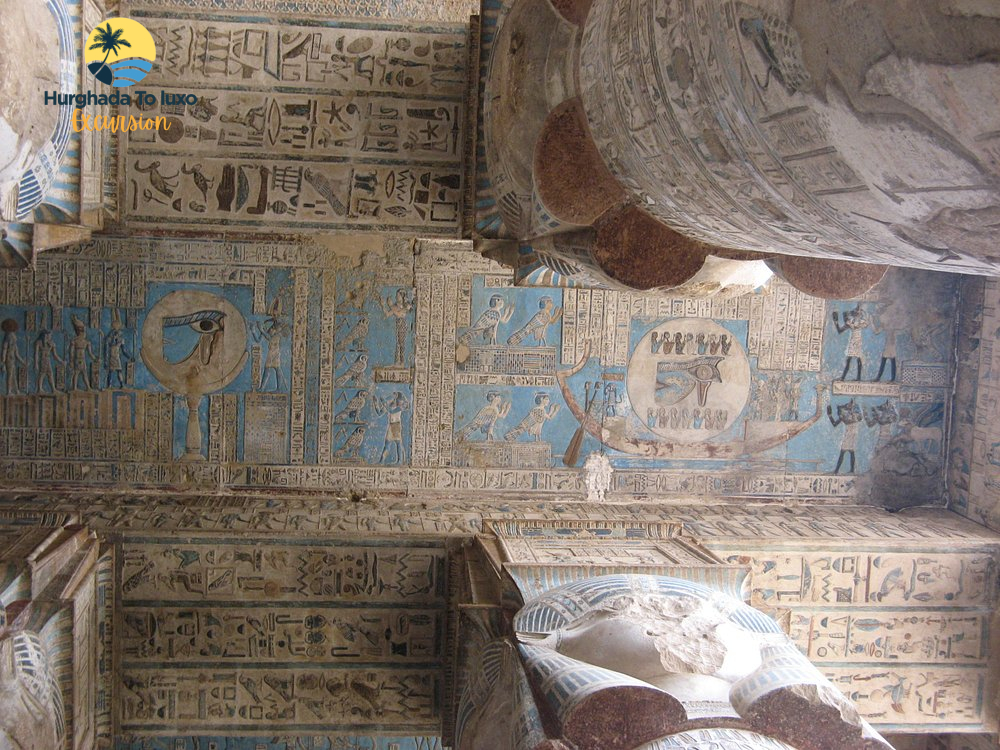
Most Egyptian temples lost their roofs millennia ago. Dendera Temple retains its complete intact roof with painted astronomical ceilings. Walking the roof and looking over the Nile Valley from ancient Egypt is an experience available nowhere else.
⭐
The Dendera Zodiac
The only ancient Egyptian zodiac depicting all 12 signs in circular format, combining Egyptian constellations with Babylonian astronomical knowledge. The original is in the Louvre — the replica in situ is one of the most celebrated artefacts of the ancient world.
🎨
Original Painted Colours
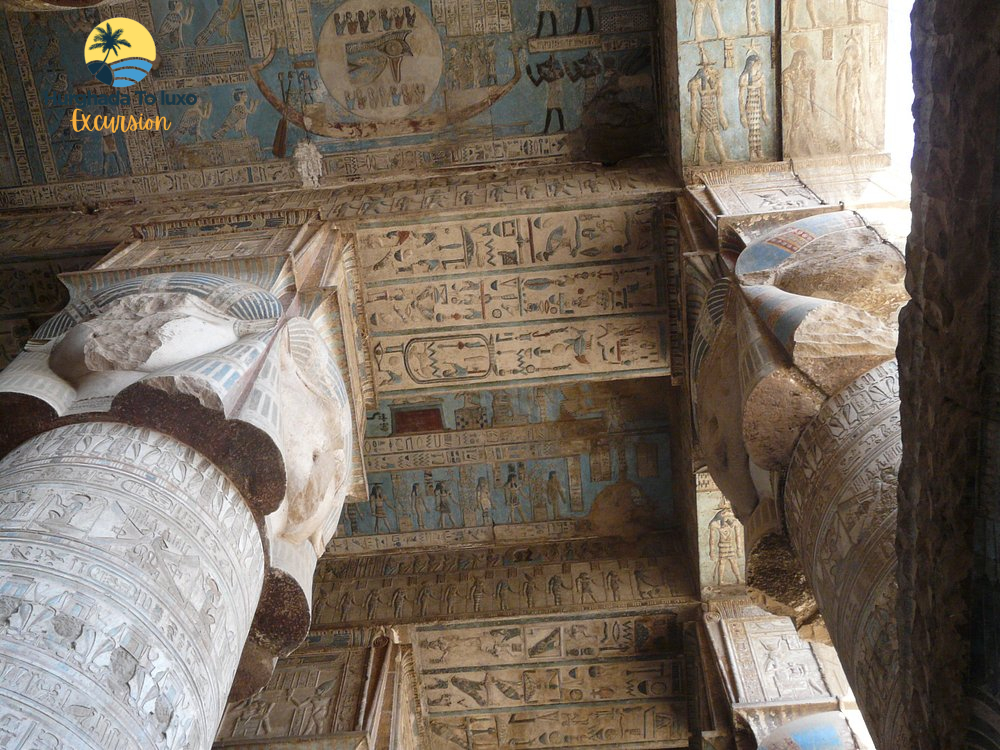
Sections of the ceiling painting retain original vivid pigments — deep blue, gold, and ochre astronomical scenes. The temple was buried under sand for centuries, protecting its colours in a way Karnak’s exposed exterior could not.
😌
Far Fewer Crowds
Dendera Temple receives a fraction of Karnak’s visitors. Group tours from Hurghada rarely stop here. On a private tour, you often have the hypostyle hall almost entirely to yourself — an increasingly rare experience at any major Egyptian site.
🏛️
A Different Period of History
Luxor’s temples date to the New Kingdom (1550–1070 BCE). Dendera was built in the Ptolemaic (300–30 BCE) and Roman (30 BCE–395 CE) periods — showing you the final magnificent chapter of ancient Egyptian temple architecture.
What to See in Dendera, Egypt
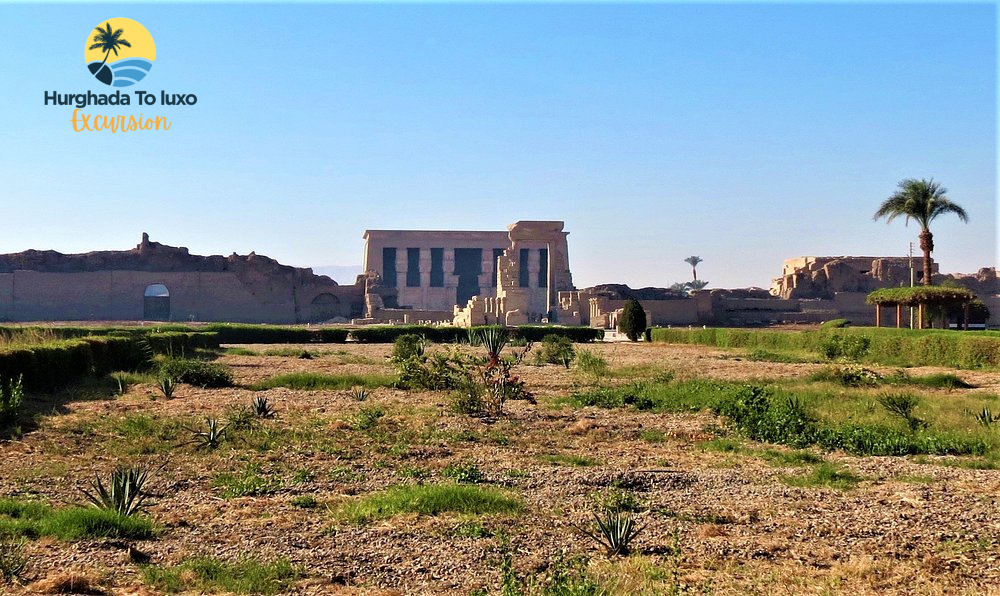
What to see in Dendera surprises most travellers who arrive expecting a single temple. The Dendera Temple complex covers approximately 40,000 square metres and includes multiple structures spanning thousands of years. Here is the complete guide.
🏛️
1. Temple of Hathor — Main Temple
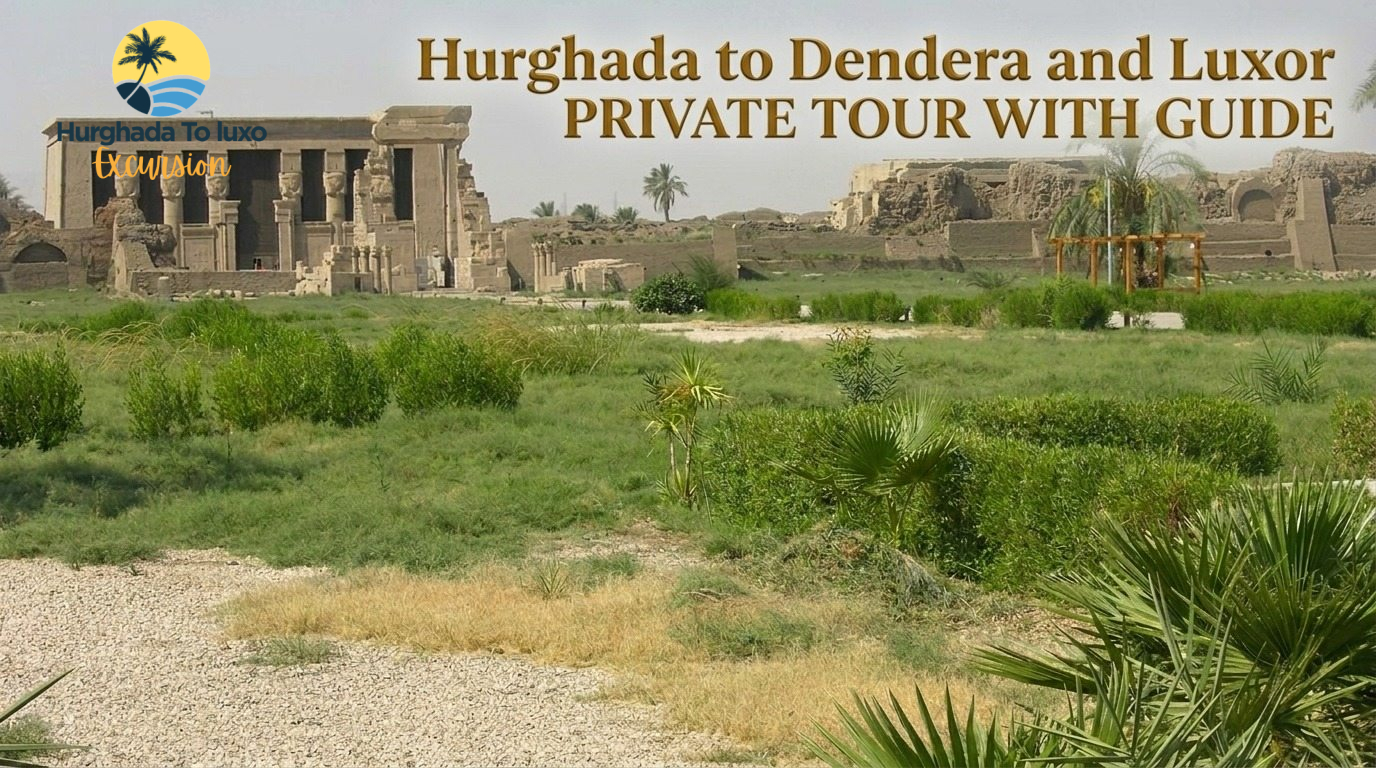
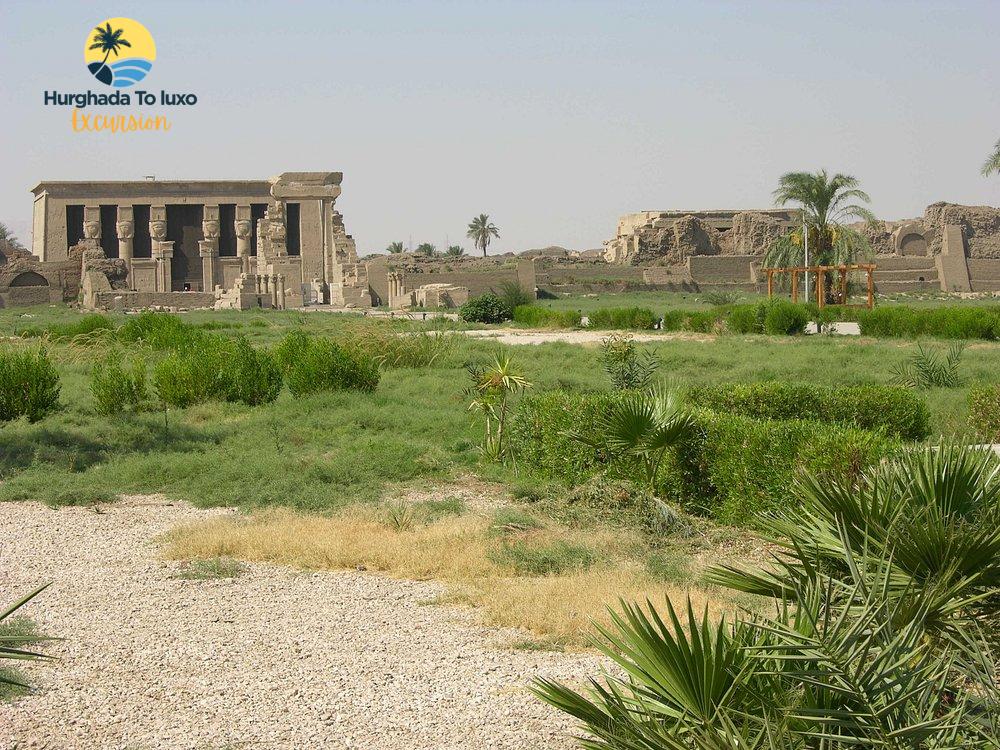
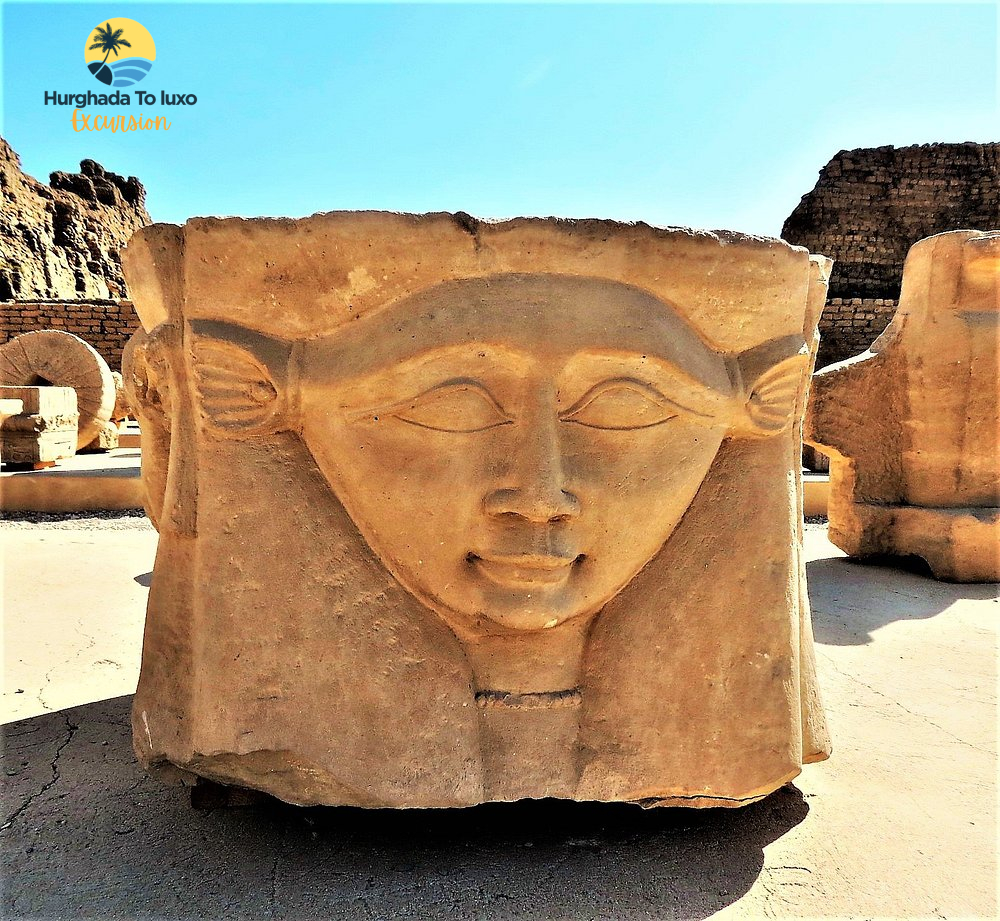
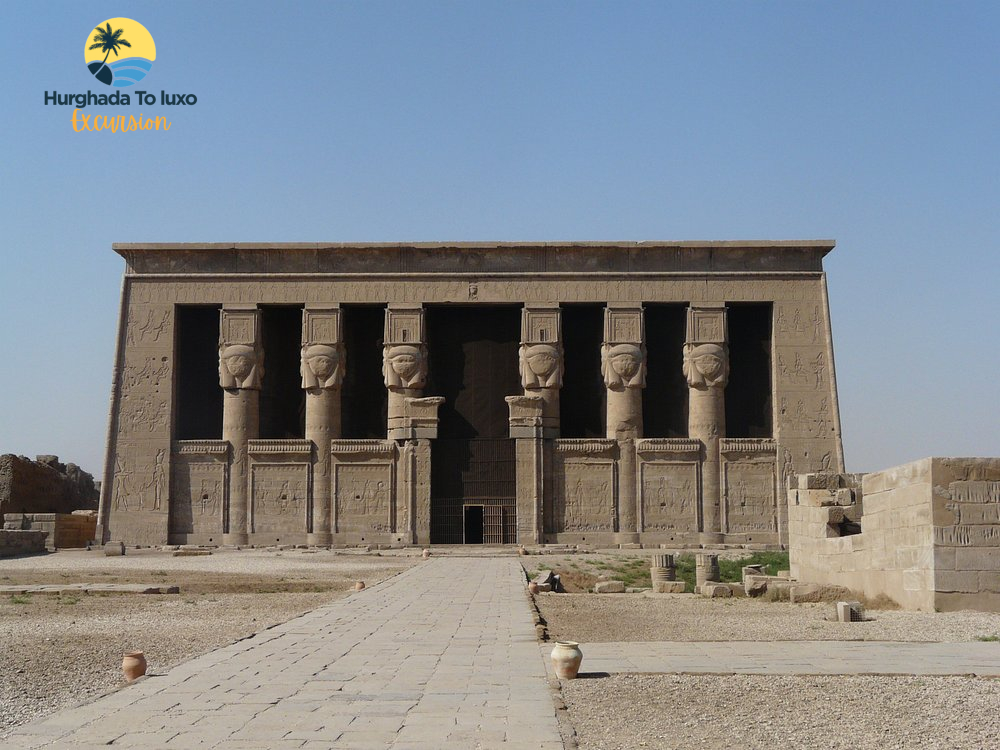
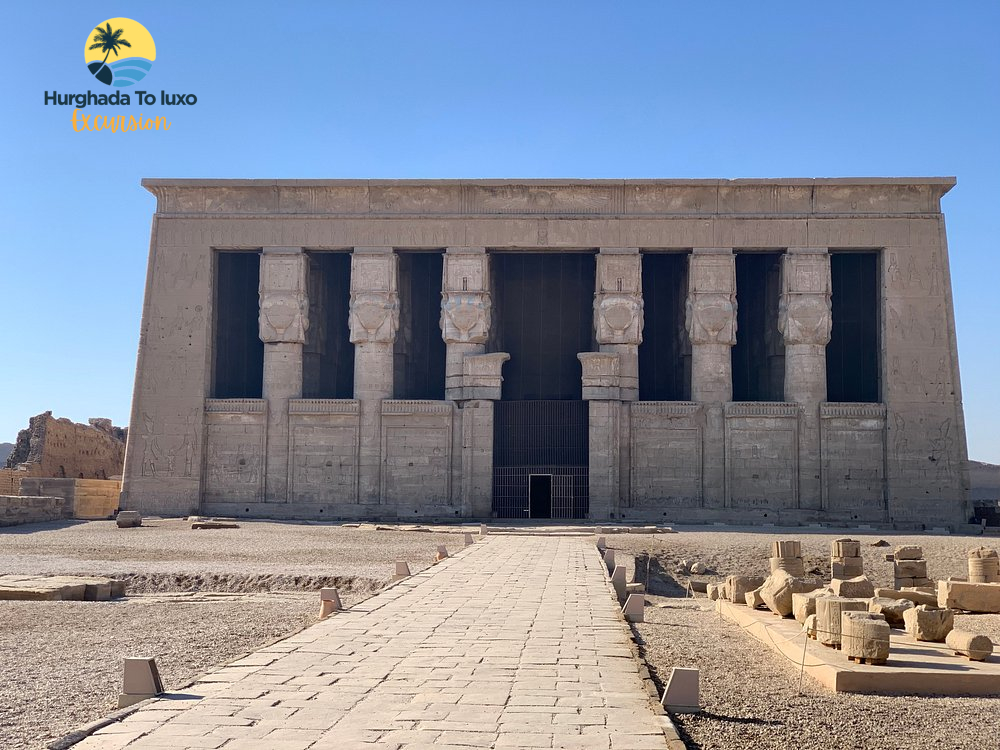
The centrepiece — a complete Ptolemaic temple dedicated to Hathor, goddess of love and beauty. Built between 54 BCE and 20 CE. The massive hypostyle hall, 18 Hathor-headed columns, inner sanctuaries, and intact roof make this one of the great architectural achievements of the ancient world.
🌌
2. The Painted Astronomical Ceiling
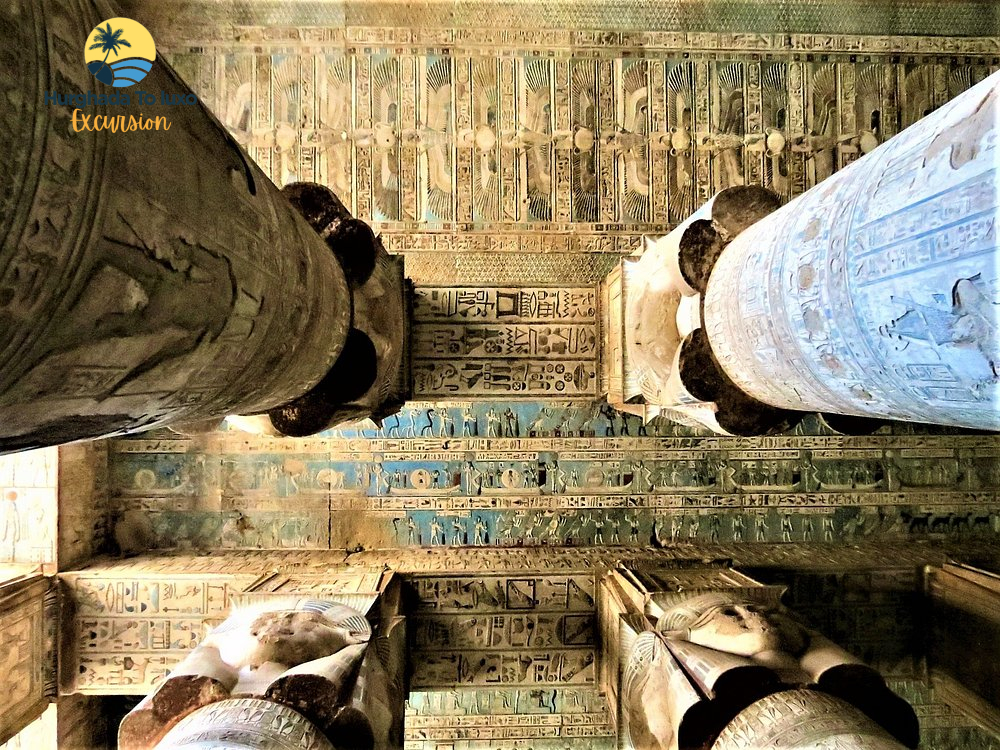
The hypostyle hall ceiling is painted with an extraordinary astronomical programme — constellations, hours of day and night, solar and lunar discs, and sky goddesses. The only complete Hathor-column hall in Egypt, with some of the most vivid original pigments surviving anywhere in Egyptian art.
⭐
3. The Temple Roof & Dendera Zodiac
Reached via an ancient winding staircase, the intact roof features the circular Dendera Zodiac (replica — original in the Louvre), the painted Osiris chapels, and panoramic views across the Nile Valley to the desert horizon. A unique experience in Egyptian tourism.
🔦
4. The Underground Crypts
Long, narrow passages beneath the temple floor carved with exceptional reliefs — including the famous “Dendera light” scene. The crypts stored the temple’s most sacred ritual objects. Atmospheric, little-visited, and completely different from any other Egyptian monument interior.
👑
5. Cleopatra & Caesarion Relief
On the exterior back wall of the main temple: a large relief depicting Cleopatra VII — history’s most famous queen — alongside her son Caesarion (fathered by Julius Caesar). One of the only surviving monumental portraits of Cleopatra, shown in full Egyptian pharaonic style.
🌿
6. Roman Birth House (Mammisi)
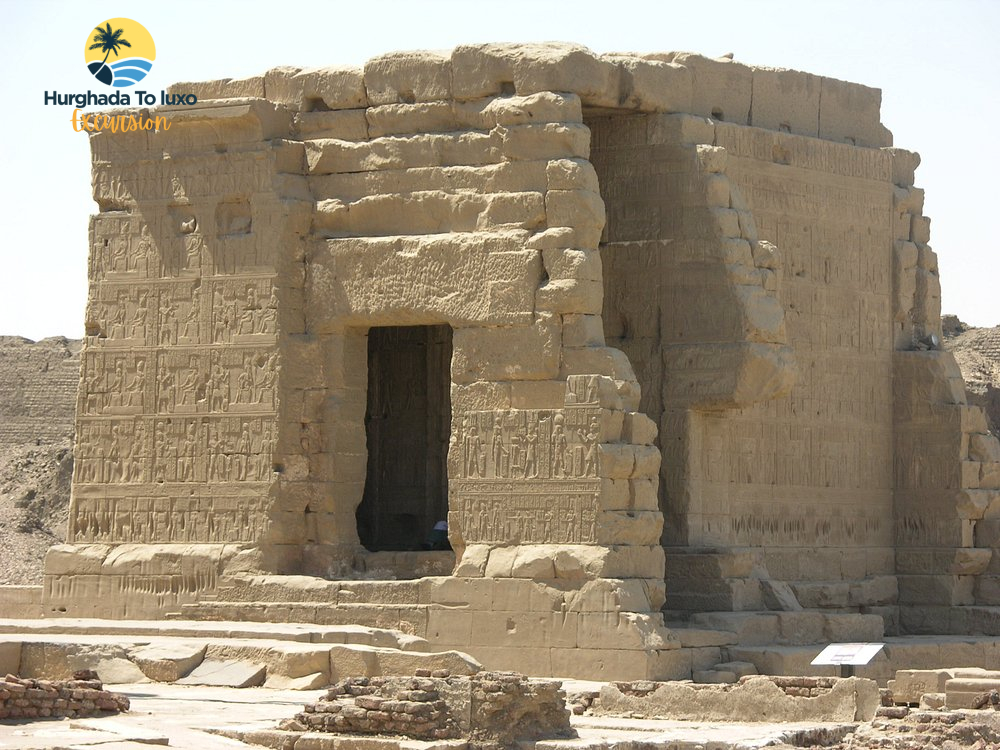
A chapel commemorating the divine birth of the god-child Ihy (son of Hathor and Horus). The Roman mammisi at Dendera is one of the finest examples of this chapel type anywhere in Egypt, with carved reliefs of outstanding quality along its exterior colonnades.
⛪
7. The Coptic Basilica
A 5th-century Coptic Christian basilica standing inside the ancient temple enclosure — one of Egypt’s most striking continuity-of-faith moments. Early Christian monks later painted saints’ faces onto ancient Hathor reliefs, creating a unique layered religious history visible nowhere else.
🏺
8. Temple of Isis
A smaller Roman-period temple dedicated to Isis — sister-wife of Osiris and one of Egypt’s most important goddesses. Well-preserved carved reliefs connect its ritual purpose to the main temple’s theological programme. Your guide explains the relationship between the two sanctuaries.
Is Dendera in Luxor?
No — Dendera is not in Luxor. This is the most common geographical question travellers ask when planning this tour. Dendera Temple is located near the town of Qena, approximately 60 km north of Luxor, in Qena Governorate. However, it is close enough to combine with Luxor in a single day from Hurghada — and this is exactly what this private tour does.
| Route Point |
Distance |
Drive Time |
| Hurghada → Dendera |
~315 km |
~3.5 hours |
| Dendera → Luxor |
~60 km |
~1 hour |
| Luxor → Hurghada (return) |
~260 km |
~3 hours |
| Hurghada → Luxor (direct) |
~260 km |
~3 hours |
🗺️ The routing logic: The tour runs Hurghada → Dendera → Luxor → Hurghada. Because Dendera is north of Luxor (on the outward highway from Hurghada), it is the logical first stop. You visit Dendera fresh in the morning, drive south to Luxor for afternoon temples, then take the direct Luxor–Hurghada highway home.
How Do I Get from Hurghada to Luxor?
How do I get from Hurghada to Luxor? This is the most practically important question for Red Sea visitors planning an inland excursion. The method you choose determines the quality of your experience significantly. Here are all the options.
| Method |
Duration |
Cost |
Verdict |
| Private tour vehicle |
3 hrs door-to-door |
Included in tour |
✓ Best — AC, flexible, guide on board |
| Taxi from Hurghada to Luxor |
3–3.5 hrs |
€50–€80 one way |
Budget option — no guide, negotiate price upfront |
| Group bus tour |
3 hrs + waiting |
€60–€100/person |
Rushed, shared, shopping stops typical |
| Train Hurghada → Luxor |
No direct service |
N/A |
No direct train — multiple transfers required |
| Domestic flight |
40 min + airport |
€80–€150/person |
Expensive; no car at arrival without extra cost |
How much is a taxi from Hurghada to Luxor? A private taxi costs approximately €50–€80 one way. However, a taxi driver is not a licensed guide — you arrive without historical context, without help navigating ticketing, and without anyone explaining what you are seeing. For a marginal saving over a private tour, the experience loss is significant. For 2+ people, a private guided tour at €110 per person is better value overall.
cat > /tmp/dendera_part2.html << ‘EOF’
10 Highlights of the Hurghada to Dendera and Luxor Private Tour
🌌
1. Dendera Zodiac & Painted Roof
The circular Dendera Zodiac on the temple roof — only complete Egyptian zodiac in circular format — combined with the Osiris chapels, astronomical ceiling, and Nile Valley views. The roof alone justifies the journey from Hurghada.
🏛️
2. Hathor Hypostyle Hall
18 Hathor-headed columns supporting a ceiling painted in vivid original colours — the only complete Hathor-column hall surviving in Egypt. Extraordinary photography in natural light filtered through ancient stone.
👑
3. Cleopatra Relief
The exterior back wall of the temple bears one of the only surviving monumental portraits of Cleopatra VII with her son Caesarion. Most visitors walk past it — your guide ensures you stop, read the cartouches, and understand why this image is historically exceptional.
🏺
4. Karnak Temple Complex
The world’s largest religious structure — 247 acres, 134 columns in the Great Hypostyle Hall. In a private tour, 2 full hours here instead of a group tour’s 45 minutes. The Sacred Lake in the afternoon light is extraordinary.
🌆
5. Luxor Temple
Built by Amenhotep III and expanded by Ramesses II — the late afternoon light on its pink-granite columns and towering statues is breathtaking. The restored Avenue of Sphinxes connects it northward to Karnak in a 2.7 km ceremonial walkway.
🔦
6. Dendera Underground Crypts
Narrow atmospheric passages beneath the temple floor — carved with the famous “Dendera light” relief and other exceptional scenes. Little visited, genuinely atmospheric, and unlike anything else in Egyptian archaeology.
🌅
7. Desert Sunrise on the Road
Departing Hurghada at 05:00 AM, you cross the Red Sea Mountains as the sun rises over the desert plateau. The scenery — rugged limestone, dry wadis, first green glimpse of the Nile Valley — is spectacular in early morning light with your guide on board for context.
🍽️
8. Nile-View Lunch in Luxor
Quality restaurant overlooking the Nile between Dendera and the afternoon Luxor temples. Selected for quality — never for commission. Egyptian mezze, grilled dishes, fresh juices. Vegetarian, halal, and child-friendly options always available.
📷
9. Photography Freedom at Dendera
Unlike the Valley of the Kings — where photography is strictly prohibited inside tombs — Dendera Temple permits photography throughout, including the hypostyle hall, the roof, the zodiac, and the crypts. One of the great photography sites in Egypt.
🚫
10. Zero Shopping Stops — Guaranteed
Our private Hurghada to Dendera and Luxor tour includes a written guarantee of zero shopping stops. No alabaster factories, no papyrus shops, no perfume stores — unless you specifically request. Your time is for the ancient sites.
Full Itinerary — Hour by Hour from Hurghada
This is the complete Hurghada to Dendera and Luxor private tour with guide programme — from hotel pickup to drop-off. Because this is a private tour, the schedule is fully adjustable to your priorities.
05
05:00 – 05:30 AM — Private Hotel Pickup
Your Vehicle Arrives at Your Hotel Lobby
Your fully air-conditioned private vehicle collects you directly from your hotel in Hurghada, El Gouna, Sahl Hasheesh, Makadi Bay, or Soma Bay. Your licensed Egyptologist guide joins you from departure. Bottled water and USB charging provided. The driver holds a board with your name — no confusion.
⛰️
05:30 – 09:00 AM — Hurghada to Dendera
Desert Drive — Private Historical Briefing
The 315 km drive via the Red Sea Mountains takes approximately 3.5 hours. Your Egyptologist guide uses this time for a private pre-visit briefing: Ptolemaic Egypt, who built Dendera Temple, why Greek pharaohs adopted Egyptian religion, and the story of the Dendera Zodiac and its journey to the Louvre. By arrival, you have a scholarly framework that transforms every detail you see inside.
🏺
09:00 – 11:00 AM — Dendera Temple Complex ⭐⭐⭐
Temple of Hathor — The Jewel of the Ptolemaic Period
You arrive with the morning still fresh and the site quiet. Your guide leads you through the complete complex in sequence: the outer enclosure wall, the Roman birth house, the main entrance, and the great hypostyle hall with its 18 Hathor-headed columns. The astronomical ceiling receives full attention — your guide reads the astronomical programme above your head, identifying planets, constellations, and deities. You proceed through the inner halls to the sanctuary and surrounding corridor reliefs — including the back wall with the Cleopatra and Caesarion relief. The visit concludes with the temple roof: reached via an ancient staircase with hieroglyph-carved walls, the roof reveals the Osiris chapels, the Dendera Zodiac replica, and panoramic Nile Valley views. Photography is permitted throughout.
🚗
11:00 AM – 12:00 PM — Dendera to Luxor
60 km South Along the Nile to Ancient Thebes
The 1-hour drive south follows the Nile Valley through agricultural villages and sugar cane fields. Your guide bridges the historical narrative — from Ptolemaic Dendera to the New Kingdom pharaohs of Luxor — explaining how two periods of Egyptian history relate to each other.
🍽️
12:00 – 13:00 PM — Nile-View Lunch in Luxor
Rest Before the Afternoon East Bank Programme
Lunch at a quality restaurant overlooking the Nile — selected by your guide for quality, never commission. Egyptian mezze, grilled dishes, fresh juices. Vegetarian, halal, and child-friendly options always available. Approximately 1 hour — a natural midpoint rest.
🏛️
13:00 – 15:30 PM — Karnak Temple ⭐⭐⭐
The World’s Largest Religious Structure
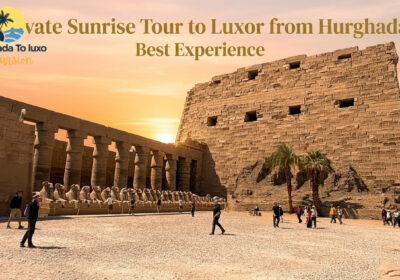
Karnak Temple — 247 acres, built over 1,500 years by 30 pharaohs. Your guide leads you through the Avenue of Ram-Headed Sphinxes, the Great Hypostyle Hall with its 134 columns each 23 metres tall, the obelisks of Hatshepsut and Thutmose I, and finally the Sacred Lake — where the afternoon light turns the water copper-gold. With 2.5 hours here rather than a group tour’s 45 minutes, you absorb rather than rush.
🌆
15:30 – 16:30 PM — Luxor Temple
The Living Heart of Ancient Thebes
Luxor Temple — built by Amenhotep III around 1400 BCE and expanded by Ramesses II — stands at the heart of modern Luxor. The late afternoon light on the pink-granite columns and colossal statues is extraordinary. Your guide explains its unique history: used as a Roman fort, with a mosque still standing inside the complex, and excavated from beneath a medieval city that buried it for centuries. The Avenue of Sphinxes connecting it to Karnak is visible from the entrance.
🚗
17:00 – 20:00 PM — Private Return to Hurghada
Door-to-Door Return as the Desert Turns Gold
Your private vehicle departs Luxor directly to your Hurghada hotel — no shared stops, no coach schedule. The 3-hour return crosses the Red Sea Mountains at sunset. You arrive at your hotel at approximately 20:00–20:30 with a full evening ahead.
Dendera + Karnak + Luxor Temple — in One Private Day
The only private tour from Hurghada that combines Dendera Temple with Luxor’s East Bank. Zero shopping stops. Licensed Egyptologist guide. Free cancellation 24 hours before.
🏺 Book Dendera & Luxor Tour — From €110
The Dendera Zodiac — Complete Guide
The Dendera Zodiac is one of the most discussed artefacts of the ancient world — and the primary reason many Egyptologists, astronomers, and historians make the journey to Dendera Temple specifically. Here is everything you need to know before you see it.
The Dendera Zodiac is a circular bas-relief carving depicting the ancient Egyptian sky map — combining Egyptian astronomical knowledge with Babylonian zodiacal signs in a single unified circular format. Carved onto the ceiling of the Osiris chapel on the temple roof around 50 BCE, it is the earliest known depiction of the classical Western zodiac in circular format, showing all 12 signs we recognise today alongside Egyptian constellations and decans.
| Detail |
Information |
| Date carved |
Approximately 50 BCE (Ptolemaic Period) |
| Diameter |
Approximately 2.5 metres |
| Original location |
Osiris chapel ceiling, Dendera Temple roof |
| Where is the original now? |
Musée du Louvre, Paris — removed by French expedition 1820 |
| What you see at Dendera |
A faithful plaster replica installed in situ on the temple roof |
| Significance |
Earliest complete circular zodiac — combines Egyptian, Babylonian & Greek astronomy |
💡 Why the replica is still worth seeing: Napoleon’s 1798 Egyptian campaign brought European scholars to Egypt who immediately recognised the Dendera Zodiac’s significance. A French expedition cut the ceiling stone in 1820 and transported it to Paris, where King Louis XVIII purchased it for the Louvre. The replica installed in its place is an excellent reproduction — and standing in the ancient chapel where it originally hung, with the Nile Valley visible through stone apertures and your guide reading the astronomical programme, is more evocative than viewing the original in a Parisian museum case.
Tour Details, Pricing & What Is Included
| Detail |
Information |
| Tour Type |
Private — your group only, no shared passengers |
| Duration |
~15–16 hours (hotel pickup to hotel return) |
| Pickup Time |
05:00 – 05:30 AM (confirmed 24 hours in advance) |
| Return Time |
Approximately 20:00 – 20:30 PM |
| Languages |
English (standard) · French, German, Spanish on request (48h notice) |
| Departure Points |
Hurghada, El Gouna, Sahl Hasheesh, Makadi Bay, Soma Bay |
| Price per Adult |
From €110 (approx. £94) |
| Price per Child (0–12) |
€60 |
| Solo Supplement |
+25% |
| Cancellation Policy |
Free cancellation up to 24 hours before departure |
Starting from
€110
per adult · approx. £94 per person
✓ Private Vehicle · ✓ All Entrance Fees · ✓ Egyptologist Guide · ✓ Lunch · ✓ Dendera + Karnak + Luxor Temple
✅ What Is Included
✓ Private round-trip air-conditioned vehicle — your group only
✓ Licensed English-speaking Egyptologist guide — full day from Hurghada departure
✓ Dendera Temple Complex entrance — Hathor temple, roof, zodiac, birth house, Isis temple
✓ Karnak Temple Complex entrance
✓ Luxor Temple entrance
✓ 1 lunch at a quality Nile-view restaurant
✓ Bottled water throughout the day
✓ Zero shopping stops — guaranteed in writing
❌ What Is Not Included
✕ Crypt access (~small extra fee — ask guide at Dendera)
✕ Sound and Light Show at Karnak (~€20 extra — ask at booking)
✕ Tips for guide and driver (optional — €10–€15 per person appreciated)
✕ Personal purchases and souvenirs
How to Hire a Private Guide in Egypt
How to hire a private guide in Egypt is one of the most practically important questions for first-time visitors. The difference between a licensed Egyptologist and an unlicensed tout is enormous — in knowledge, legal standing at sites, and quality of your day.
📜 Licensed Egyptologist
A licensed guide in Egypt holds a government-issued guide licence after a 4-year Egyptology degree and licensed examination. They are legally authorised to guide at all archaeological sites and their knowledge of hieroglyphics and historical context is professional-level.
✅ How to Book Safely
Book through a registered travel agency — not an individual approached at the hotel lobby or site entrance. A good agency provides a written itinerary, confirmed pricing, a named guide, and a zero-shopping-stop guarantee.
💬 Languages Available
English is standard. French, German, Italian, and Spanish guides are available on 48 hours’ advance notice. Mention your language preference when booking this Hurghada to Dendera and Luxor tour.
🚫 What to Avoid
Avoid guides who approach at hotel lobbies, site entrances, or in the street. Avoid any tour that cannot provide a named licensed guide in advance. Avoid any tour that includes shopping stops.
What to Pack — Day Trip Checklist
🧴
Sun Protection
SPF 50 sunscreen, wide-brimmed hat, UV sunglasses. The Dendera Temple roof is fully exposed. Karnak’s exterior walkways are in direct sun. Reapply every 90 minutes.
👗
Modest Clothing
Shoulders and knees covered at Karnak (a religious site). Light breathable cotton. Women should carry a scarf. The Dendera hypostyle hall is significantly cooler than the exterior.
👟
Comfortable Shoes
The Dendera roof staircase is steep and uneven. Karnak’s stone surfaces are worn smooth. You will walk 8–12 km total. Closed-toe walking shoes or trainers only — no sandals.
💰
Cash (EGP)
Egyptian pounds for tips and optional extras. £40–£60 equivalent is comfortable. June 2026: £1 ≈ 65 EGP. ATMs are available in Luxor city centre.
📷
Camera & Power Bank
Photography is fully permitted at Dendera — inside the hypostyle hall, on the roof, at the zodiac. Bring your best camera and a 10,000+ mAh power bank for a 15-hour day.
🆔
Passport or ID
Required at highway security checkpoints between Hurghada and Luxor. Keep it in your bag. Your driver handles all checkpoint formalities — you remain in the vehicle.
10 Insider Tips from Our Egyptologist Guide
Tip 1 — Photography at Dendera is fully permitted — unlike the Valley of the Kings. Dendera Temple allows photography throughout — inside the hypostyle hall, on the roof, at the zodiac, and in the crypts. This is one of the great photography sites in Egypt. Bring your best camera and plenty of memory cards. The morning light inside the hypostyle hall between 09:00–10:30 AM is particularly beautiful.
Tip 2 — Ask to visit the Dendera crypts. The underground passages beneath the Temple of Hathor are one of Egypt’s most atmospheric and least-visited spaces — long, low-ceilinged passages carved with exceptional reliefs including the famous “Dendera light” scene. A small additional fee applies. Add approximately 30 minutes — completely worth it.
Tip 3 — Don’t miss the Cleopatra relief on the back of the temple. Most visitors walk past the exterior back wall of the Hathor Temple without noticing the large relief of Cleopatra VII with her son Caesarion. Your guide will point it out. This is one of the only surviving monumental portraits of Cleopatra shown in Egyptian pharaonic style — a uniquely important historical image.
Tip 4 — Look at the ceiling of the Dendera hypostyle hall before looking at the columns. First-time visitors immediately focus on the Hathor-headed columns. But the ceiling above them — painted with an astronomical programme of extraordinary preservation — is equally magnificent. Give your eyes time to adjust to the interior light and then look up for at least 5 uninterrupted minutes.
Tip 5 — The Sacred Lake at Karnak is best at 15:00–16:00. Your tour timing — arriving at Karnak Temple after lunch — places you there when the afternoon light turns the Sacred Lake copper-gold. This is one of the most photographed moments in Luxor and it only happens for afternoon visitors. Group tours arriving in the morning miss it entirely.
Tip 6 — Ask your guide about the Opet Festival at Karnak. The annual procession from Karnak to Luxor Temple along the Avenue of Sphinxes was the most important religious event in ancient Egypt — lasting 11–27 days. Understanding it transforms the Avenue walk from a pleasant stroll into a recreation of living pharaonic history.
Tip 7 — Drink water continuously throughout the day. A 15-hour day in Upper Egypt in summer involves heat that dehydrates faster than you notice. The private vehicle provides cold bottled water, but actively drink at every stop. In summer (June–September), Luxor temperatures regularly exceed 40°C.
Tip 8 — Dendera Temple interior is significantly cooler than the exterior. The thick stone walls of the Hathor Temple maintain a natural temperature of approximately 22–24°C regardless of outside heat — even in summer. Allow yourself to cool down inside before returning to the sun.
Tip 9 — Book in advance, especially October–February. Private Hurghada to Dendera and Luxor tours are less widely available than standard Luxor day trips — fewer operators include Dendera in their regular programme. Peak season (October–March) fills quickly. Booking 2–4 weeks in advance is recommended for preferred dates.
Tip 10 — Use the return drive for conversation with your guide. The 3-hour return from Luxor to Hurghada crosses the Red Sea Mountains at sunset. Your Egyptologist guide is available for any questions left unanswered during the day. Some travellers find the return conversation — connecting everything they saw across Dendera, Karnak, and Luxor Temple into a single historical narrative — the most valuable part of the entire experience.
Real Reviews from Travellers
★★★★★
“Dendera was the surprise of our entire Egypt trip. We almost skipped it — our guide convinced us to add it and we cannot imagine having missed it. The zodiac, the painted ceiling, the Cleopatra relief on the back wall — extraordinary. The combination with Karnak on the same day is the perfect programme.”
Patricia & John M. — London, UK · January 2026
★★★★★
“The guide read the hieroglyphs on the Dendera roof out loud and translated them for us — standing beneath a 2,000-year-old astronomical chart while someone reads it aloud in English is unforgettable. Zero shopping stops, private car, brilliant day.”
Alan T. — Edinburgh, UK · February 2026
★★★★★
“We chose this tour because we had already done Valley of the Kings and wanted something different. Dendera gave us exactly that — a completely different period of Egyptian history, almost no crowds, and photography permitted everywhere. Being near-alone in the hypostyle hall for 20 minutes was extraordinary.”
Sophie & Marcus R. — Bristol, UK · March 2026
Frequently Asked Questions
Is Dendera Temple worth visiting?
Is Dendera Temple worth visiting? Absolutely yes. Dendera Temple has the best-preserved roof of any ancient Egyptian temple, the famous Dendera Zodiac (replica in situ; original in the Louvre), painted astronomical ceilings still bearing original vivid pigments, and significantly fewer crowds than Karnak or Luxor Temple. It represents the Ptolemaic and Roman period of Egyptian temple building — a completely different architectural and historical experience from the New Kingdom sites of Luxor. Combined with Karnak and Luxor Temple on a single private day from Hurghada, it gives you 4,000 years of Egyptian religious architecture in one extraordinary trip.
Is Dendera in Luxor?
Is Dendera in Luxor? No — Dendera is not in Luxor. It is located near the town of Qena, approximately 60 km north of Luxor in Qena Governorate. However, it is close enough to combine with Luxor in a single day from Hurghada. The tour route runs: Hurghada → Dendera (3.5 hours) → Luxor (1 hour south) → Hurghada return (3 hours). Total circuit approximately 635 km, entirely manageable with a 05:00 AM start.
What to see in Dendera, Egypt?
What to see in Dendera: the Temple of Hathor hypostyle hall with 18 Hathor-headed columns and painted astronomical ceiling; the intact temple roof with the Dendera Zodiac replica and Osiris chapels; the underground crypts with carved reliefs; the Roman Birth House; the Cleopatra and Caesarion relief on the back wall; the Temple of Isis; and the Coptic basilica inside the outer wall. A 2-hour visit with an Egyptologist guide covers all main points.
How do I get from Hurghada to Luxor?
How do I get from Hurghada to Luxor? The best option is a private tour vehicle — air-conditioned, door-to-door, with your licensed Egyptologist guide on board from departure. The drive covers approximately 260 km via the Red Sea Mountains highway and takes about 3 hours. There is no direct train between Hurghada and Luxor. Private taxi costs approximately €50–€80 one way but provides no guide.
How much is a taxi from Hurghada to Luxor?
How much is a taxi from Hurghada to Luxor? A private taxi costs approximately €50–€80 one way. For a day trip, the round-trip taxi cost is approximately €100–€160 per vehicle — without any guide, entrance fees, or itinerary planning. This private Hurghada to Dendera and Luxor tour at €110 per person includes all of these and is significantly better value for 2+ people.
How to hire a private guide in Egypt?
How to hire a private guide in Egypt: Book through a registered travel agency — not individuals approached at hotel lobbies or site entrances. Ensure the guide holds a government-issued Egyptian Guide Licence and has verifiable Egyptology qualifications. Request a named guide in advance, a written itinerary, and written confirmation of zero shopping stops. Contact us at
[email protected] or WhatsApp +20 100 925 5585.
Can you visit Abu Simbel from Luxor?
Can you visit Abu Simbel from Luxor? Yes, but it requires planning. Abu Simbel is approximately 290 km south of Luxor on Lake Nasser. Most travellers visit from Aswan (280 km south), where it is commonly offered as a day trip. From Luxor, the practical options are a direct domestic flight to Abu Simbel airport, or extending your itinerary to include an Aswan overnight. Contact us to plan a multi-day Egypt itinerary connecting Hurghada → Luxor → Aswan → Abu Simbel.
Is it worth going to Luxor from Hurghada?
Is it worth going to Luxor from Hurghada? Yes — unambiguously. Luxor contains approximately one third of all ancient monuments on earth. The 3-hour drive from Hurghada is entirely manageable, and a private day gives you 8–10 hours at the most significant sites. Adding Dendera Temple gives you a combination of Ptolemaic and New Kingdom architecture that no other day trip offers — and makes this the single most intellectually rewarding excursion available from the Red Sea coast.
Book Your Hurghada to Dendera and Luxor Private Tour
Private vehicle · Licensed Egyptologist guide · Dendera Temple + Karnak + Luxor Temple · Nile-view lunch · All entrance fees · Zero shopping stops guaranteed · Free cancellation 24 hours before departure.
🏺 Book Now — From €110 Per Person
Final Thoughts — Why Dendera + Luxor Is the Best Day Trip from Hurghada
The standard Hurghada excursion to Luxor is excellent. The Hurghada to Dendera and Luxor private tour with guide is better — because it covers a richer, more diverse range of Egyptian history. Dendera Temple gives you what Karnak and Luxor Temple cannot: the Ptolemaic and Roman chapter of Egypt’s story, in a building of extraordinary preservation, with painted ceilings still in their original colours and one of the most celebrated astronomical artefacts of the ancient world on its roof.
Combined with the New Kingdom grandeur of Karnak and the living atmosphere of Luxor Temple, this private day from Hurghada spans 4,000 years of Egyptian civilisation. Is Dendera Temple worth visiting? Standing in the hypostyle hall beneath its 2,000-year-old painted ceiling, with almost no one else around, the answer is immediately obvious. Book your tour today and experience Egypt’s most complete and least-crowded day from the Red Sea.