📷 Private Photography Tour · Egyptologist Guide · Golden-Hour Timing
Best Luxor Photography Tour from Hurghada for Travelers — 2026 Guide
📅 Updated: June 2026 | ⏱️ 18 min read | 💶 From €130 / person | ⭐ 4.9/5 rated | 📷 Empty-Frame Timing Guaranteed
The best Luxor photography tour from Hurghada for travelers is built around a single idea that most standard day trips ignore entirely: light and crowds determine whether a photograph of an ancient monument becomes a postcard or a masterpiece. A regular coach tour delivers you to Karnak at 11:00 AM in flat overhead sun surrounded by 40 strangers. This Luxor photography tour delivers you to the same column 90 minutes earlier, in raking golden light, with space to compose the shot you actually came for.
This guide covers everything a travel photographer — from smartphone enthusiast to serious hobbyist with a full kit — needs to know: the precise light-timing strategy for each site, the technical settings that work best inside Egyptian temples and tombs, the locations professional photographers request specifically, and the complete pricing, inclusions, and logistics of booking this tour from Hurghada.
📷 Why timing matters more than gear: A smartphone photograph of Karnak’s hypostyle hall at 08:00 AM in low golden light, with no crowds in frame, will consistently outperform a professional camera photograph taken at midday surrounded by 200 tourists. This Luxor photography tour from Hurghada is structured entirely around arriving at each site during its single best 45-minute photography window — something no standard tour itinerary is built to do.
Why a Dedicated Photography Tour Is Different
Every standard Luxor day trip visits the same five or six sites. What separates the best Luxor photography tour from Hurghada is not which sites it visits, but the precise order, timing, and pacing built specifically around how light behaves on each monument throughout the day.
🌅
Golden-Hour Site Sequencing
Each site has one or two windows per day when light is at its best — typically the first or last 90 minutes of sun. Our itinerary is sequenced so you arrive at each location during its specific optimal window, not whenever a standard tour schedule happens to land.
🚫
Empty-Frame Timing
Coach tour groups arrive at major sites between 09:30 and 11:30 AM. We arrive 60–90 minutes before that window opens, meaning your photographs of Karnak’s hypostyle hall and the Valley of the Kings entrance are taken with dramatically fewer people in frame.
⏱️
Unrushed Time per Site
A standard tour gives you 30–45 minutes at Karnak. This photography tour allocates extended time at each priority location — enough to scout compositions, wait for the right cloud or shadow, and try multiple angles without a guide checking their watch.
🎓
Egyptologist Guide Who Understands Photography
Your guide is a licensed Egyptologist trained to position your group for the strongest compositions — knowing exactly which column row at Karnak frames the obelisk, which angle at Hatshepsut avoids the modern visitor ramp, and which time the Colossi cast their longest, most dramatic shadows.
The Light Strategy — Site by Site
This is the technical core of why our Luxor photography tour outperforms a standard itinerary. Every Luxor monument has a “photographic personality” — a specific time of day when its architecture, orientation, and texture produce the strongest images.
| Site |
Best Light Window |
Why |
| Karnak Hypostyle Hall |
07:30–08:30 AM |
Low raking light enters the side gaps between columns, creating dramatic light shafts and shadow patterns on the column carvings |
| Karnak Sacred Lake |
15:30–16:30 PM |
Afternoon light turns the water copper-gold with reflections of the temple pylons behind |
| Luxor Temple (exterior) |
16:30–18:00 PM |
Late golden light on pink granite colossal statues and obelisk; illuminated at night for a second photography opportunity |
| Colossi of Memnon |
07:00–08:00 AM |
Long morning shadows give the statues dramatic relief; the agricultural plain behind glows green-gold |
| Valley of the Kings entrance |
08:00–09:00 AM |
Limestone cliffs catch warm side-light before the sun rises fully overhead and flattens the rock texture |
| Hatshepsut Temple |
09:30–11:00 AM |
Morning sun lights the terraces from the front while the cliff behind remains in soft shadow contrast |
| Nile crossing & riverbank |
Sunrise or sunset |
Reflective water surface at low sun angle produces mirrored Theban Hills and feluccas in silhouette |
| Avenue of Sphinxes |
17:00–18:00 PM |
Long avenue perspective with low sun creating elongated sphinx shadows down the 2.7 km restored walkway |
💡 The scheduling challenge this solves: Karnak’s best light is in the early morning. The Valley of the Kings is also best early. But Karnak is on the East Bank and the Valley is across the Nile on the West Bank — and you cannot be in both places at 07:30 AM. Our itinerary resolves this by alternating East and West Bank visits across two carefully sequenced days, OR by prioritising the single highest-value golden-hour window for a one-day version of the tour (see itinerary below for both options).
10 Best Photography Spots in Luxor
🏛️
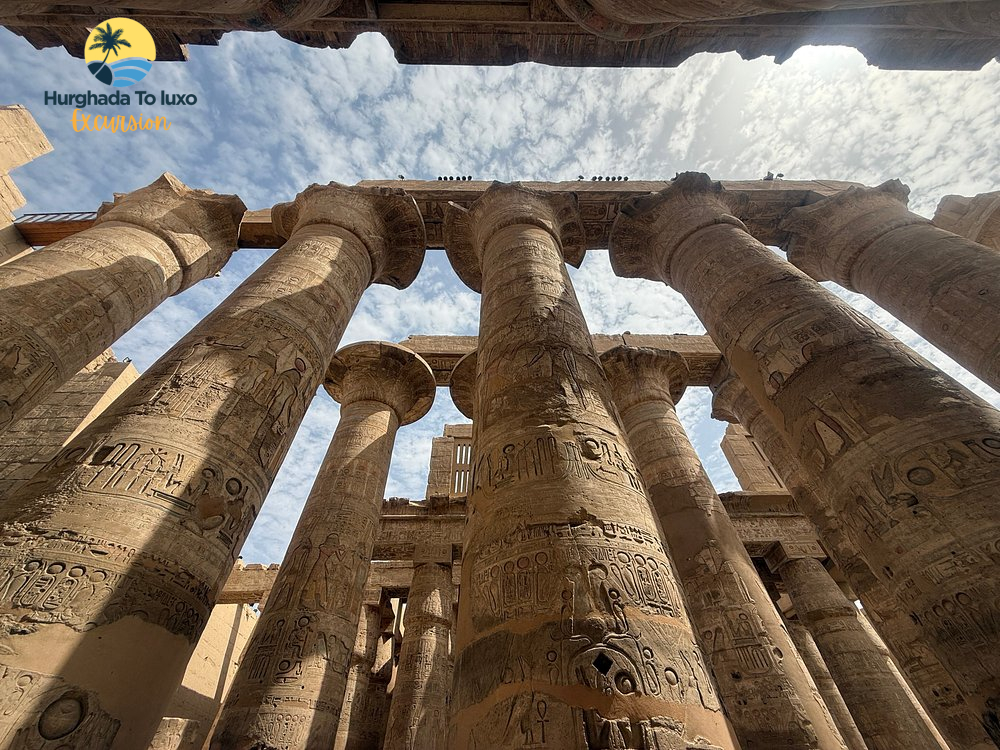
1. Karnak Great Hypostyle Hall
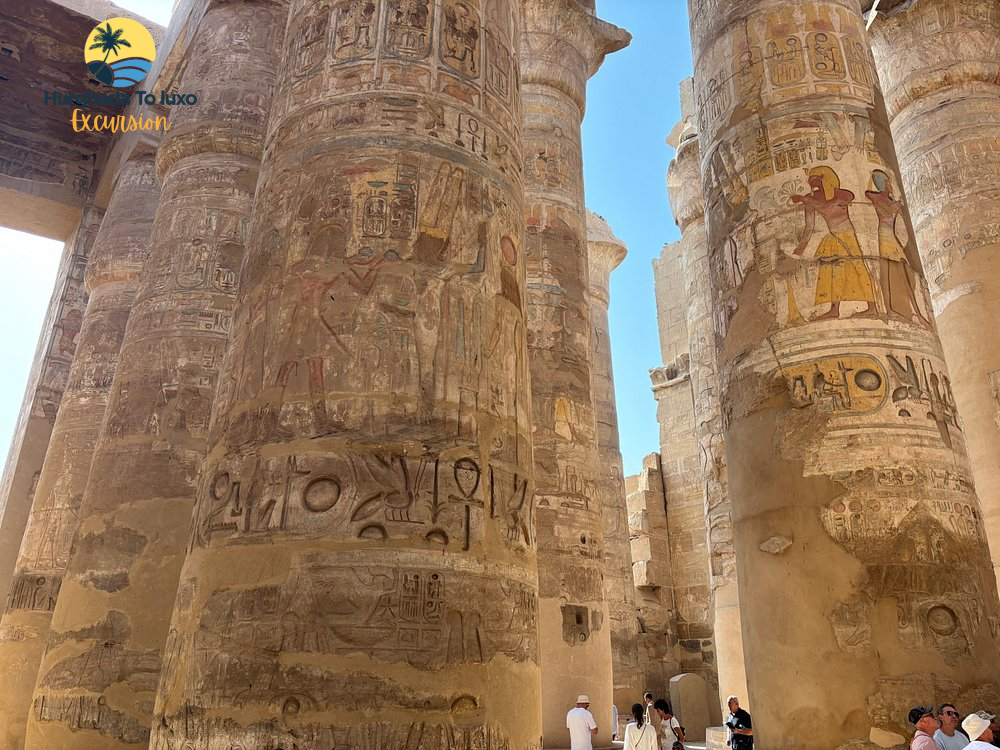
134 columns each 23 metres tall — the single most photographed interior space in Egypt. Shoot from the central nave looking toward the taller central columns for a classic symmetrical composition, or get low and wide to emphasise scale. Early morning light shafts between the columns are the signature shot here.
🌊
2. Karnak Sacred Lake
A genuinely underrated spot. Late afternoon, the still water reflects the pylons and palm trees behind it — a calm, symmetrical, reflective composition that contrasts beautifully with the grandeur of the hypostyle hall photographs taken earlier.
🗿
3. Colossi of Memnon
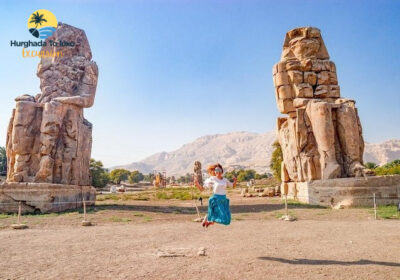
Two 18-metre statues alone in an open agricultural plain — one of the easiest “epic scale” shots in Egypt. Position a person at the base for scale reference, or shoot low and wide to fill the frame with the statue against the sky. Best with the long shadows of early morning.
👸
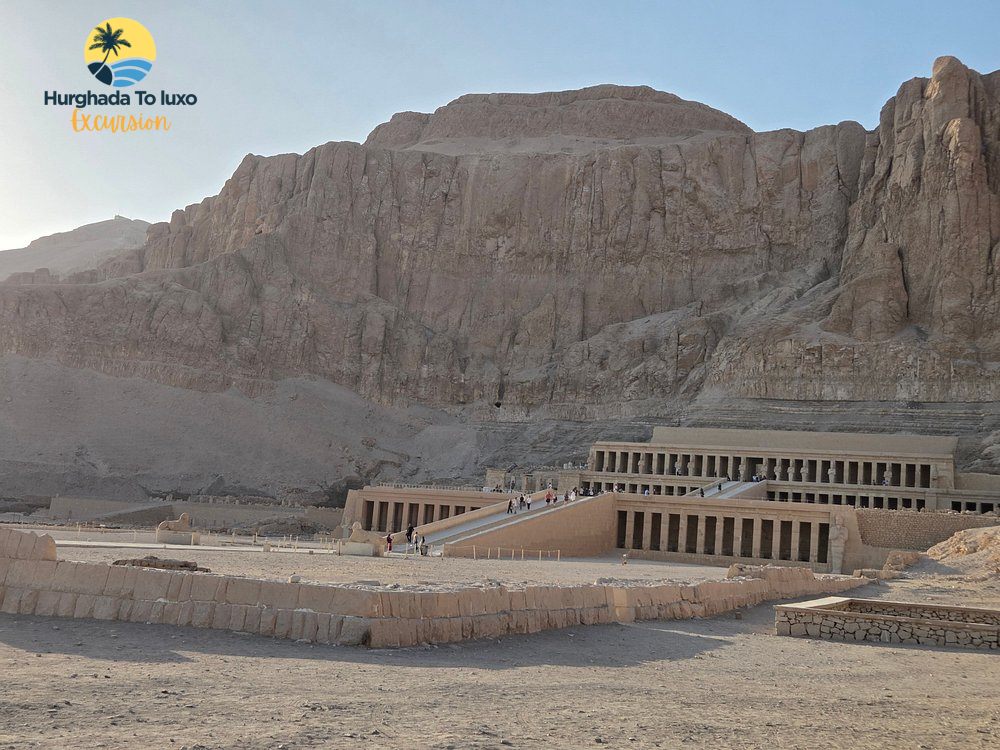
4. Temple of Hatshepsut
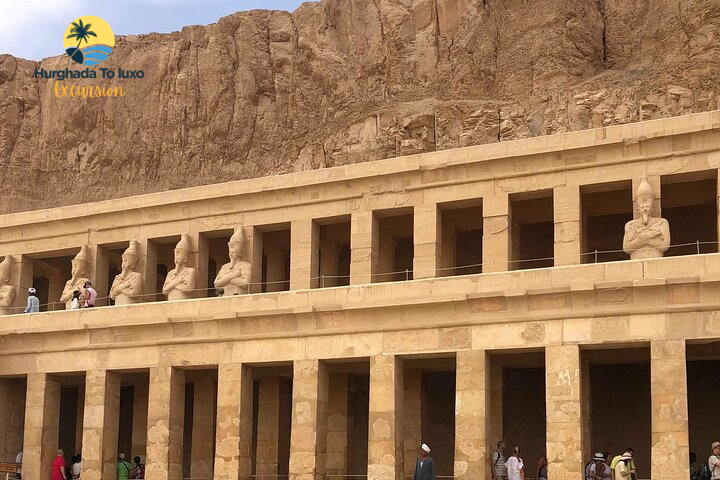
The three colonnaded terraces against the sheer cliff face is one of Egypt’s most architecturally photogenic compositions. Shoot from the base looking up the central ramp for leading-line symmetry, or from the upper terrace looking out across the Nile Valley for the reverse panorama.
🌆
5. Luxor Temple at Night
The amber-lit columns and statues of Ramesses II against a dark sky are unforgettable. A tripod (or stable surface) and a slightly longer shutter speed produce the best results here — handheld smartphone shots with night mode also work well in 2026’s improved low-light sensors.
🌅
6. Nile Crossing by Motorboat
Shooting from the moving boat toward the Theban Hills, with the river’s surface catching morning or evening light, produces some of the most evocative travel photography of the entire trip. Keep your shutter speed reasonably fast (1/250s+) to avoid motion blur from the boat’s movement.
🌴
7. Avenue of Sphinxes
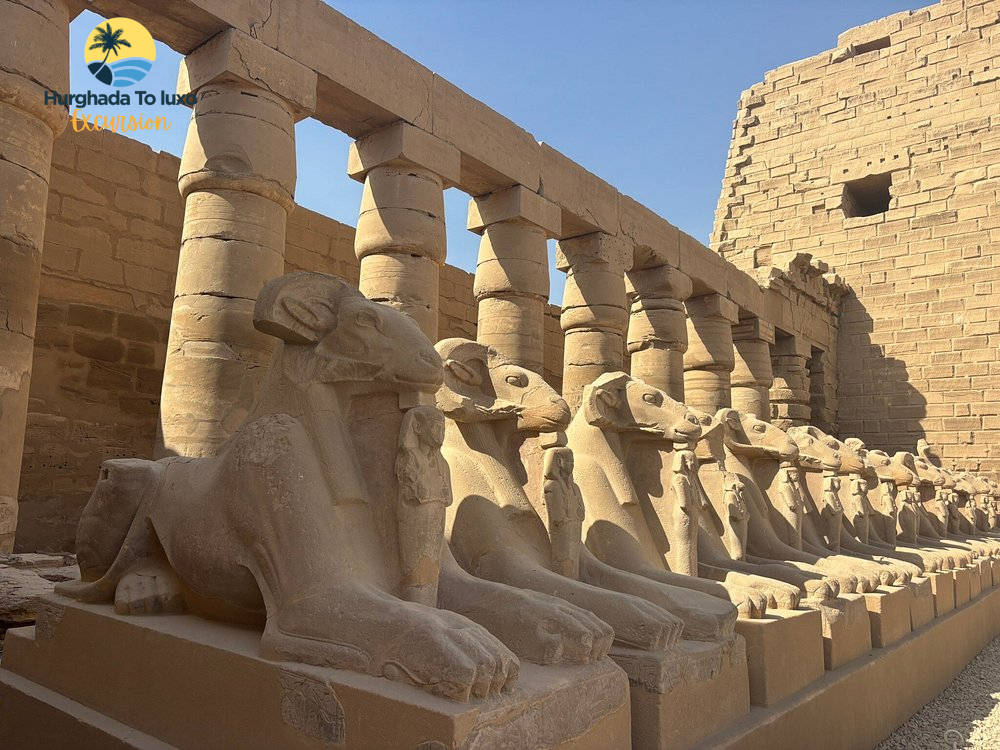
The recently restored 2.7 km ceremonial avenue lined with sphinx statues offers a textbook leading-line composition. Stand centred on the path and shoot down its length in late afternoon light for elongated shadows down the entire row of statues.
👑
8. Valley of the Kings Cliffs
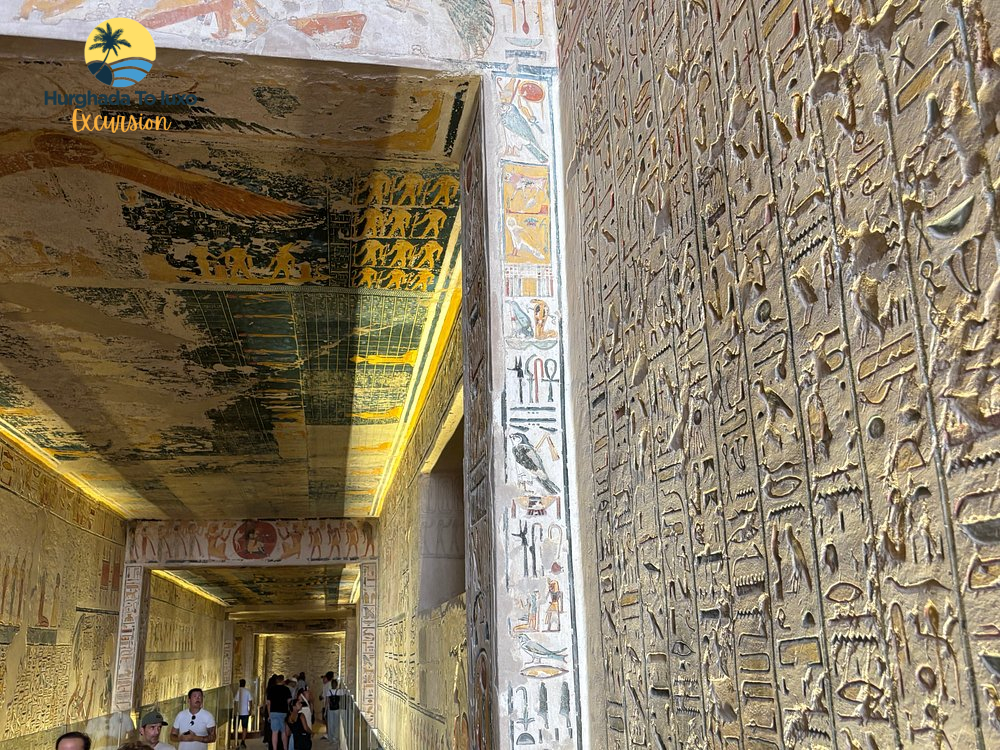
Photography is prohibited inside the tombs themselves, but the limestone cliff faces and the valley entrance — with tomb doorways visible in the rock — make for striking exterior landscape photography, especially with the warm side-light of early morning.
🏺
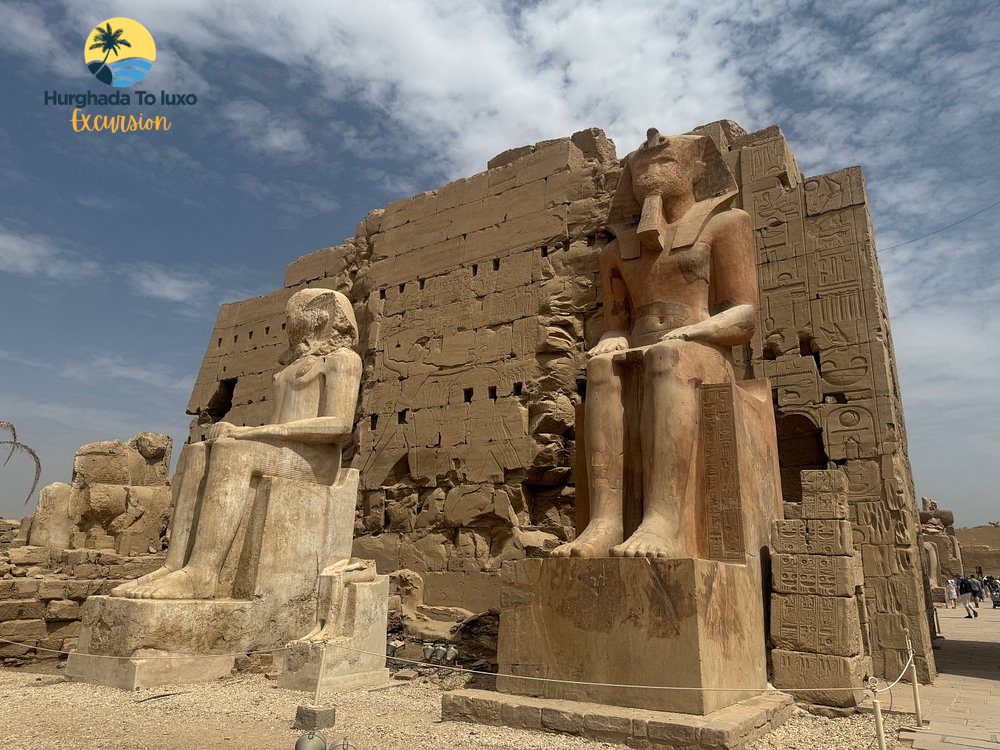
9. Karnak Obelisks at Sunset
The single remaining standing obelisk of Hatshepsut, silhouetted against a sunset sky, is one of the iconic Karnak shots. Position yourself with the obelisk between you and the lowest sun position for a strong silhouette with a rim-lit edge.
🐎
10. Local Life on the East Bank
Beyond the monuments themselves, the felucca boats moored along the Luxor corniche, the horse-drawn caleche carriages, and the riverside promenade at sunset provide authentic street and documentary photography opportunities that contextualise the ancient sites within living Luxor.
Full Itinerary — Hour by Hour from Hurghada
This is the complete Luxor photography tour from Hurghada programme — sequenced specifically around the light strategy table above. This is the one-day version covering the best achievable photographic light across both banks.
03
03:30 – 04:00 AM — Private Hotel Pickup
Earlier Than Standard Tours — On Purpose
Your private, air-conditioned vehicle collects you from your hotel in Hurghada, El Gouna, Sahl Hasheesh, Makadi Bay, or Soma Bay. This pickup is earlier than a standard day trip — a deliberate choice that puts you at the Colossi of Memnon and Valley of the Kings entrance before sunrise crowds. Your guide is on board from departure. Bottled water and USB charging provided.
⛰️
04:00 – 07:00 AM — Drive to Luxor West Bank
260 km Across the Red Sea Mountains Before Dawn
The 3-hour drive in pre-dawn darkness puts you on the West Bank exactly as first light appears. Your guide briefs you on the day’s shot list and confirms priority locations based on your photography interests — landscape, architecture, portrait, or a mix.
🗿
07:00 – 07:45 AM — Colossi of Memnon at Sunrise ⭐⭐⭐
Long Shadows, Empty Field
The first photography stop. Long morning shadows give the 18-metre Colossi dramatic three-dimensional relief, and at this hour the agricultural plain behind them is typically empty of other visitors. Allow time for multiple compositions: wide landscape shots, low-angle scale shots, and detail shots of the carved surfaces.
👑
08:00 – 09:30 AM — Valley of the Kings ⭐⭐⭐
First Group Through the Gate
Arriving at opening time means you are among the first visitors of the day. The limestone cliffs catch warm side-light before the overhead sun flattens the texture around 10:00 AM. Note: photography is strictly prohibited inside the tombs themselves — this stop covers exterior landscape photography of the valley and cliffs, plus the visit to 3 tombs (no camera). Optional: Tutankhamun’s tomb (~€15 extra, no photography).
👸
09:45 – 11:00 AM — Temple of Hatshepsut ⭐⭐⭐
The Architectural Showpiece
Mid-morning sun lights the three colonnaded terraces from the front while the cliff face behind retains soft shadow contrast — exactly the conditions that make this temple’s geometry read clearly in photographs. Shoot from the base looking up the central ramp, and from the upper terrace looking back across the Nile Valley. Extended time allocated here specifically for composition experimentation.
🛥️
11:15 – 11:45 AM — Nile Motorboat Crossing
River-Level Photography
A private motorboat crossing back to the East Bank — shoot toward the Theban Hills from water level, and toward feluccas and local river traffic. Late morning light on the water still produces good reflections, though sunrise/sunset crossings (available on multi-day tours) are stronger.
🍽️
12:00 – 13:00 PM — Nile-View Lunch & Equipment Rest
Backup Battery and Card Swap
Lunch at a quality Nile-view restaurant — also a natural opportunity to charge spare batteries from a power bank, swap memory cards, and review your morning shots. Egyptian mezze, grilled dishes, cold drinks. Midday sun (11:30 AM–14:30 PM) is the weakest light of the day in Egypt — this scheduled rest avoids wasting golden-hour energy on flat overhead conditions.
🏛️
14:00 – 16:00 PM — Karnak Temple Complex ⭐⭐⭐
The Hypostyle Hall and the Sacred Lake
Arriving in early afternoon, crowds at Karnak begin thinning toward the late-afternoon golden hour. Your guide positions you for the classic central-nave hypostyle hall composition, then leads you to the Sacred Lake for the copper-gold reflection shot as the afternoon light deepens from 15:00 onward. Extended time allocated here — this is the photographic priority location of the day.
🌅
16:30 – 18:00 PM — Luxor Temple & Avenue of Sphinxes ⭐⭐⭐
Golden Hour into Blue Hour
The final and arguably strongest light window of the day. Luxor Temple’s pink-granite colossal statues and the single remaining obelisk catch full golden-hour light, then the temple illuminates as dusk falls — giving you both natural and artificial-light photographs of the same monument within a single hour. The restored Avenue of Sphinxes offers the elongated-shadow leading-line composition described in the highlights section above.
🚗
18:30 – 21:30 PM — Return Transfer to Hurghada
Review Your Shots on the Way Home
Your private vehicle returns directly to your Hurghada hotel. The 3-hour drive is a natural time to back up your photographs, review the day’s shot list against what you actually captured, and discuss any locations you’d like to revisit on a future trip. You arrive back at approximately 21:00–21:30 with a full day of exceptional photography behind you.
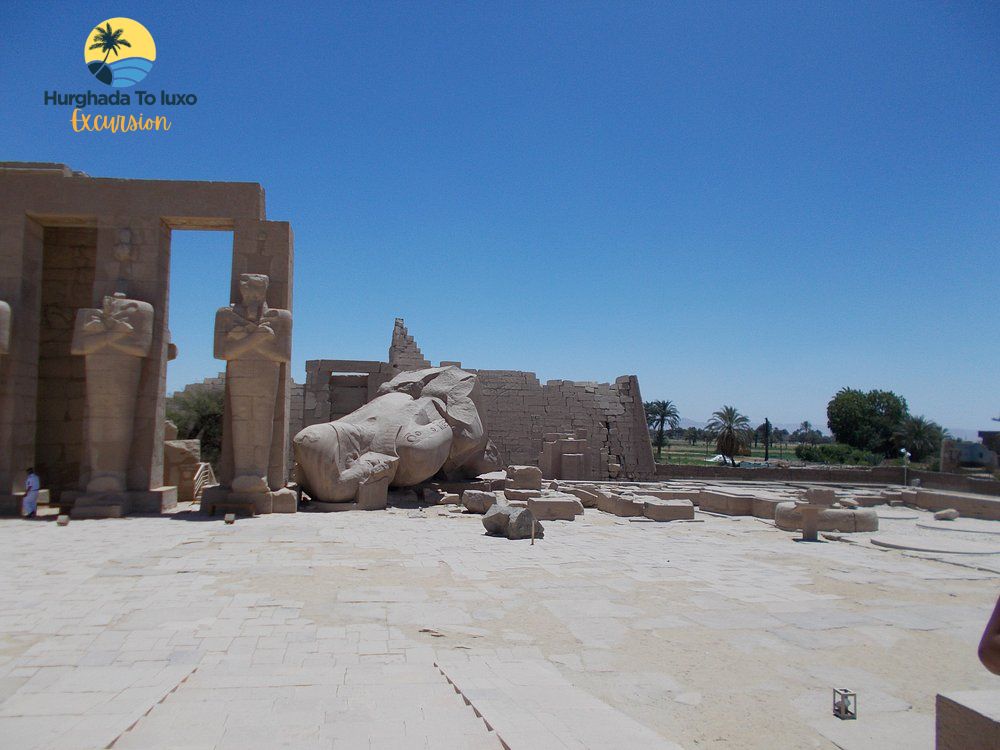
Multi-day option available for serious photographers
Want golden hour at both Karnak AND the Valley of the Kings on the same morning? Ask about our 2-day Luxor overnight with a 5-star hotel — the only way to capture every site’s single best light window without compromise.
📷 Book Photography Tour — From €130
Camera Settings & Technical Tips for Egypt
Whether you shoot with a smartphone or a full-frame mirrorless kit, Egypt’s light and dust conditions require some specific technical adjustments. Here is what our guide recommends.
☀️ Harsh Midday Sun
Between 11:00 AM and 14:30 PM, direct overhead Egyptian sun flattens texture and blows out highlights. Shoot in shade where possible, use a polarising filter to cut glare on stone surfaces, or simply wait for the scheduled golden-hour windows in the itinerary.
🏛️ Hypostyle Hall Interiors
Karnak’s hypostyle hall is high-contrast: bright shafts of light between deep column shadow. Bracket your exposure or shoot in RAW to recover shadow detail in post-processing. A wide-angle lens (16–24mm equivalent) captures the scale; a slightly longer lens isolates single columns dramatically.
🌙 Luxor Temple at Night
A small travel tripod or a stable wall ledge plus a 2–3 second shutter at low ISO produces the cleanest night shots of the illuminated columns. Modern smartphone night modes handle this well handheld. Avoid flash entirely — it flattens the deliberate amber site lighting.
🌫️ Desert Dust & Sensor Care
Fine desert dust is a real risk for interchangeable-lens cameras during lens changes outdoors. Change lenses inside the vehicle when possible, keep a lens cloth and blower handy, and avoid sensor cleaning attempts on location — wait until back at your hotel.
📱 Smartphone Settings
Use HDR mode for the high-contrast hypostyle hall shots, switch to Pro/Manual mode if available to control exposure manually in bright desert light, and use the wide-angle lens for the Colossi and Hatshepsut Temple where you need to capture full scale in tight framing.
🧍 Composition with People
Placing a person at the base of the Colossi of Memnon or beneath a Karnak column instantly communicates scale to viewers who have never seen these monuments. Ask your guide — they are experienced at directing group members for these scale-reference shots.
Photography Rules & Permits in Egypt
Egyptian archaeological sites have specific photography regulations that every traveler should understand before arriving with a camera kit.
| Location |
Photography Rule |
| Karnak Temple (exterior & halls) |
Fully permitted — no extra fee for standard cameras/phones |
| Luxor Temple |
Fully permitted — day and night |
| Valley of the Kings tombs (interior) |
Strictly prohibited — enforced by guards, phones confiscated on attempt |
| Hatshepsut Temple (exterior) |
Fully permitted |
| Colossi of Memnon |
Fully permitted |
| Professional tripod use |
Permitted at most outdoor sites; some sites restrict tripods at peak hours for crowd-flow reasons — your guide will advise on the day |
| Drone photography |
Prohibited without special government permit — do not bring a drone expecting to fly it |
| Commercial/professional shoots (paid model, full crew) |
Requires advance permit application through the Ministry of Tourism & Antiquities — contact us if planning a commercial shoot |
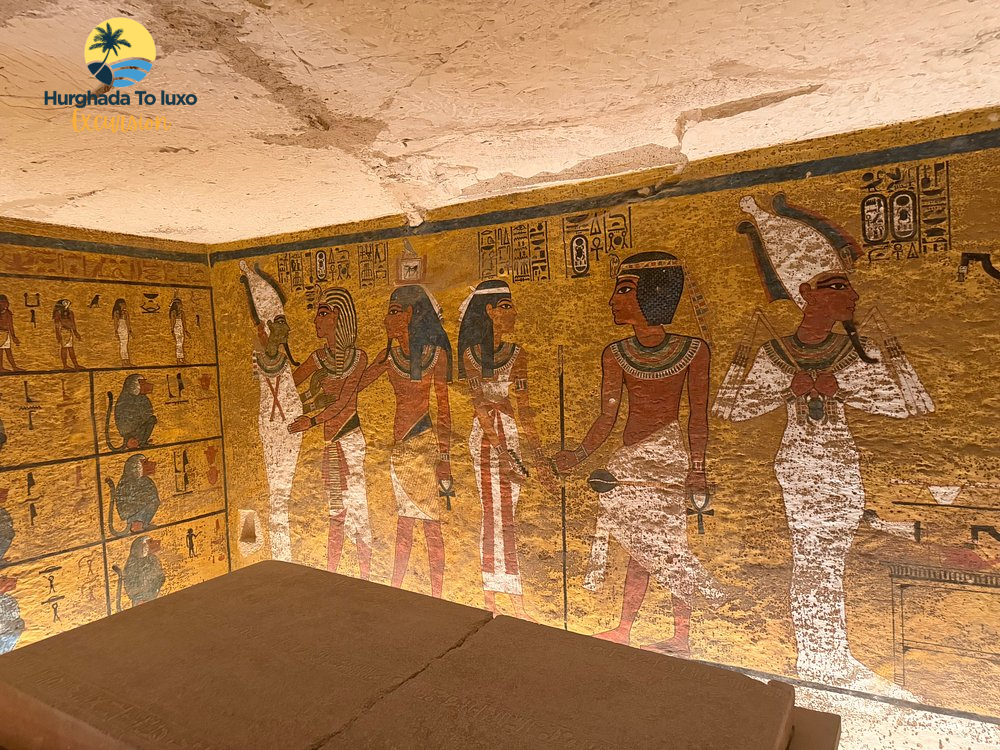
⚠️ Respect the no-photography rule inside tombs. This is not bureaucratic over-caution — camera flash and prolonged light exposure genuinely damage 3,200-year-old painted plaster surfaces. A single rule breach can result in the site closing a section to all future visitors. Enjoy the tombs with your eyes, and rely on your guide’s narration to fix the experience in memory.
Tour Details, Pricing & What Is Included
| Detail |
Information |
| Tour Type |
Private (your group only — no shared passengers) |
| Duration |
Approximately 17–18 hours (pickup to hotel return) |
| Pickup Time |
03:30 – 04:00 AM (confirmed 24 hours in advance) |
| Return Time |
Approximately 21:00 – 21:30 PM |
| Languages |
English (standard) · French, German, Spanish on request (48h notice) |
| Departure Points |
Hurghada, El Gouna, Sahl Hasheesh, Makadi Bay, Soma Bay |
| Group Size |
Private — 1 to 6 people (photography pacing works best in small groups) |
| Price per Adult |
From €130 (approx. £111) |
| Price per Child (0–12) |
€70 |
| Solo Supplement |
+25% |
| Cancellation Policy |
Free cancellation up to 24 hours before departure |
Starting from
€130
per adult · approx. €111 per person
✓ Golden-Hour Timing · ✓ Egyptologist Guide · ✓ All Entrance Fees · ✓ Nile Crossing · ✓ Lunch · ✓ Karnak + Luxor Temple + Valley of the Kings + Hatshepsut
✅ What Is Included
✓ Private round-trip air-conditioned vehicle (Hurghada ↔ Luxor) — your group only
✓ Licensed English-speaking Egyptologist guide — trained in photography-priority pacing
✓ Golden-hour scheduling at Karnak, Luxor Temple, Colossi, and the Valley of the Kings entrance
✓ All site entrance fees: Karnak, Luxor Temple, Valley of the Kings (3 tombs), Hatshepsut Temple, Colossi of Memnon
✓ Private Nile motorboat crossing
✓ 1 lunch at a quality Nile-view restaurant
✓ Bottled water throughout the day
✓ Zero shopping stops — guaranteed in writing
❌ What Is Not Included
✕ Tutankhamun’s tomb (~€15 extra — no photography permitted inside)
✕ Professional camera entrance fee at some sites (~€5–€10 — for DSLR/mirrorless with large lenses; applies at select sites only, ask guide)
✕ Tips for guide and driver (optional — €10–€15 per person appreciated)
✕ Commercial/professional shoot permits (contact us separately if needed)
Photography Kit & Packing Checklist
🔋
Spare Batteries & Power Bank
An 18-hour day with continuous shooting will exhaust standard camera batteries. Bring at least 2 spares plus a 20,000 mAh power bank for phone charging on the move.
💾
Extra Memory Cards
Karnak and Hatshepsut alone can produce hundreds of frames if shooting RAW. Bring at least 2 spare cards with sufficient capacity.
🌫️
Lens Cloth & Sensor Blower
Fine desert dust gets everywhere. A microfibre cloth and a manual blower bulb let you clean lenses on location without resorting to wet wipes that can scratch coatings.
📐
Wide-Angle Lens / Lens Mode
A 16–24mm equivalent (or your phone’s wide-angle setting) is essential for the Colossi, Hatshepsut Temple’s full façade, and the Karnak hypostyle hall’s scale.
🎯
Polarising Filter (Optional)
Cuts glare on stone surfaces and deepens sky colour during the harsh midday hours, useful if you choose to shoot outside the scheduled golden-hour windows.
🧥
Layered Clothing & Sun Protection
A pre-dawn 03:30 AM departure is cool; by 10:00 AM the desert heat is intense. SPF 50, a wide-brimmed hat, and breathable layers you can remove are essential for an all-day shoot.
10 Insider Tips from Our Photography Guide
Tip 1 — Arrive at Karnak before the gates technically open to the general public. Our 03:30 AM Hurghada pickup is calibrated precisely so you reach Karnak in the first 30–45 minutes after opening — before the day’s first coach groups arrive. This single scheduling decision does more for your photographs than any camera setting.
Tip 2 — Don’t chase every shot on the highlight list. Ten extraordinary photographs of three or four sites beat forty mediocre photographs of ten sites. Tell your guide your top 2–3 priority locations at booking and we will allocate disproportionate time there.
Tip 3 — Bring a local element into your frame. A felucca sail crossing behind the Colossi, a robed local guide walking through the hypostyle hall, a horse-drawn caleche on the Luxor corniche — these elements turn a monument photograph into a story photograph.
Tip 4 — The 11:30 AM–14:30 PM lunch window is non-negotiable for serious photographers. Egyptian midday sun is genuinely the worst light of the day for photography. Use this scheduled break for equipment maintenance and image review rather than trying to squeeze in extra shooting.
Tip 5 — Ask your guide to step out of frame after positioning you. Guides are excellent at finding the strongest composition angle, but remember to ask them to move clear before you shoot if you want a people-free frame.
Tip 6 — Luxor Temple’s night illumination changes seasonally. Lighting intensity and colour temperature are occasionally adjusted by site management. Your guide will know the current setup on your visit date and can advise on white balance.
Tip 7 — Shoot the Avenue of Sphinxes from the centre, not the side. Standing dead-centre on the walkway and shooting straight down its 2.7 km length produces the strongest perspective compression and leading-line effect — a side angle loses this entirely.
Tip 8 — Keep a separate small bag for your most-used lens/accessory. Constantly returning to the vehicle to swap full kit wastes valuable golden-hour minutes. A small sling bag with your primary lens, a spare battery, and a cloth keeps you ready to shoot the moment a composition appears.
Tip 9 — Review images on the drive, not at each site. Checking shots thoroughly while on location eats into your light window. Save detailed review for the transfer drives, when light conditions are no longer time-critical.
Tip 10 — If you only have one day, prioritise Karnak’s golden hour and Luxor Temple’s blue hour. Of every location on this itinerary, these two windows consistently produce the strongest, most distinctive images — because the light interacts with the architecture in ways unavailable at any other hour, and because both locations allow full photography access without the tomb restrictions of the West Bank.
Real Reviews from Photographers
★★★★★
“As a semi-professional photographer I have done a lot of these temple tours and this is the first one actually built around light. We were at the Colossi before sunrise with literally no one else there. The guide knew exactly where to position us at Hatshepsut for the best terrace shot. Worth every euro extra over a standard tour.”
Marcus H. — Hamburg, Germany · February 2026
★★★★★
“I’m just a smartphone photographer and the difference timing made was incredible. The hypostyle hall shots at 8am with the light coming through the columns look like something from National Geographic. Got the Luxor Temple night shot too. Highly recommend for anyone serious about their photos, even casual ones.”
Emma R. — Cardiff, UK · January 2026
★★★★★
“The early start is brutal but completely worth it. Our guide understood exactly what we wanted and built the entire day around it rather than the standard tourist checklist. Sacred Lake reflection shot at Karnak in the afternoon was the highlight — none of the other tours we saw even stopped there.”
Jonas & Lina P. — Stockholm, Sweden · March 2026
Frequently Asked Questions
What makes this the best Luxor photography tour from Hurghada?
The itinerary is built entirely around light timing rather than a generic sightseeing checklist. You arrive at the Colossi of Memnon and the Valley of the Kings before sunrise crowds, reach Hatshepsut Temple in optimal mid-morning light, rest during the harsh midday hours, and finish with Karnak’s golden hour and Luxor Temple’s blue-hour illumination. Your guide is trained to position groups for the strongest available compositions at each stop.
Can I take professional camera equipment into the temples?
Yes. Standard DSLR, mirrorless, and smartphone photography is fully permitted at Karnak, Luxor Temple, Hatshepsut Temple, and the Colossi of Memnon. A small additional camera fee (~€5–€10) may apply at select sites for large professional lenses — your guide will confirm and handle this on the day. Photography inside the Valley of the Kings tombs is strictly prohibited regardless of equipment.
Is a tripod allowed?
Tripods are generally permitted at outdoor sites, though some locations restrict them during peak visiting hours for crowd-flow reasons. Our early and late scheduling avoids these peak periods, making tripod use easier. The Luxor Temple night shoot particularly benefits from a compact travel tripod.
How early is the pickup and why?
Pickup is 03:30–04:00 AM from your Hurghada hotel. This earlier-than-standard departure is deliberate: it puts you at the Colossi of Memnon and the Valley of the Kings entrance at first light, before any other tour group arrives, and at Karnak’s hypostyle hall during its best low-light window before the daily crowd peak between 09:30 and 11:30 AM.
Is this tour suitable for beginners, or only serious photographers?
Both. The light-timing strategy that benefits a full-frame mirrorless kit benefits a smartphone equally — golden-hour light and empty frames improve every photograph regardless of camera. Our guide adjusts technical advice to your equipment and experience level, whether that means explaining manual exposure settings or simply pointing your phone toward the best composition angle.
How much does the photography tour cost compared to a standard Luxor day trip?
A standard private Luxor day trip from Hurghada typically costs €95–€120 per person. This dedicated photography tour starts from €130 per person — a modest premium that reflects the earlier 03:30 AM departure, the extended time allocated at priority photography locations, and a guide specifically experienced in composition and lighting guidance. For travellers serious about their photographs, the additional value is significant.
Can I customise which sites we prioritise for photography?
Yes. Because this is a private tour, you can tell us your top 2–3 priority locations at booking (for example, “we mostly want Karnak and Luxor Temple at night, less interest in the Valley of the Kings”) and we will reallocate time accordingly. Mention your photography style — architecture, portrait, landscape, or documentary — and your guide will adjust positioning suggestions to match.
Book the Best Luxor Photography Tour from Hurghada
Golden-hour scheduling · Egyptologist guide trained in photography pacing · Karnak · Luxor Temple by day and night · Valley of the Kings · Hatshepsut Temple · Colossi of Memnon · Nile crossing · Lunch · Zero shopping stops. Free cancellation 24 hours before.
📷 Book Now — From €130 Per Person
Final Thoughts — Photographs Worth the Early Start
The difference between a typical tourist photograph of Karnak and a genuinely striking one is rarely the camera — it is almost always the light and the absence of crowds. This Luxor photography tour from Hurghada exists because that distinction matters, and because no standard coach itinerary is built to deliver it.
A 03:30 AM departure is a real commitment. By the time you are standing alone at the Colossi of Memnon as the sun clears the horizon, or watching Luxor Temple’s columns turn amber against a darkening sky, every traveller who has taken this tour agrees it was the right one. Book your photography tour today and bring home the images that actually capture what Luxor felt like.