🏺 Private Tour · Egyptologist Guide · No Shopping Stops
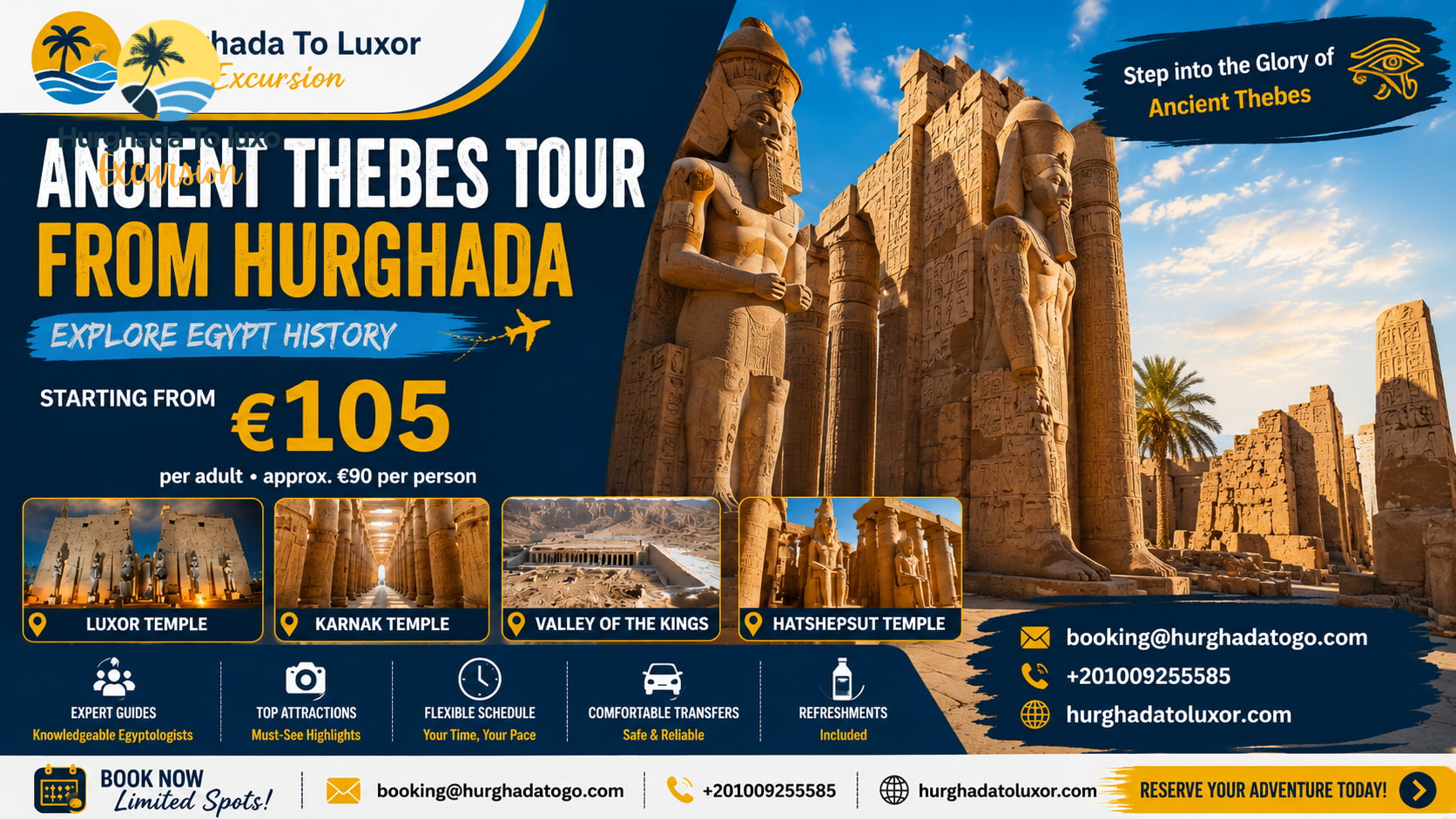
Ancient Thebes Tour from Hurghada Explore Egypt History
📅 Updated: June 2026 |
⏱️ 18 min read |
💶 From €105 / person |
⭐ 4.9/5 rated |
🏺 UNESCO World Heritage City
The Ancient Thebes tour from Hurghada takes you to the capital of pharaonic Egypt at the height of its power — a city the ancient Greeks called “Thebes of the Hundred Gates,” and which the Greek poet Homer described as the wealthiest city in the ancient world. Today we know this UNESCO World Heritage city by its modern name, Luxor, but the archaeological remains scattered across both banks of the Nile still carry the full weight of its 4,000-year history. This single, comprehensive private tour explores that history properly — with a licensed Egyptologist guide, a private vehicle, and the time to actually understand what made ancient Thebes one of the most significant capitals in human civilisation.
This guide answers the questions every history-minded traveller asks before booking: What were the original Seven Wonders of the World, and is one of them in Egypt? What is the actual history of Thebes? What historical sites can be reached from Hurghada? And what is the oldest artefact ever found in Egypt? Whether you are a casual traveller or a dedicated history enthusiast, this is the most complete resource available for exploring ancient Thebes in 2026.
🏺 Why Thebes still matters today: For nearly 1,500 years, Thebes was the religious and, at times, political capital of Egypt — the home of the god Amun-Ra, the burial ground of the New Kingdom pharaohs, and the site of some of the largest religious monuments ever constructed. UNESCO inscribed “Ancient Thebes with its Necropolis” as a World Heritage Site in 1979, recognising both banks of the Nile around modern Luxor as a single, unified historical landscape.
What Are the Original 7 Wonders of the World in Egypt?
The list of the Seven Wonders of the Ancient World was compiled by Greek scholars roughly 2,200 years ago, cataloguing what they considered the most remarkable human-built structures known at the time. Of the original seven, only one survives today — and it is in Egypt.
| Wonder |
Location |
Status Today |
| Great Pyramid of Giza |
Giza, Egypt (near Cairo) |
✓ Still standing — the only surviving wonder |
| Hanging Gardens of Babylon |
Babylon, Mesopotamia (modern Iraq) |
Destroyed — existence even debated by historians |
| Statue of Zeus at Olympia |
Olympia, Greece |
Destroyed by fire, 5th century CE |
| Temple of Artemis at Ephesus |
Ephesus, Asia Minor (modern Turkey) |
Destroyed, rebuilt, destroyed again — only foundations remain |
| Mausoleum at Halicarnassus |
Halicarnassus, Asia Minor (modern Turkey) |
Destroyed by earthquakes — fragments in the British Museum |
| Colossus of Rhodes |
Rhodes, Greece |
Destroyed by earthquake, 226 BCE |
| Lighthouse of Alexandria |
Alexandria, Egypt |
Destroyed by earthquakes — submerged remains discovered offshore |
🔑 The key fact: Egypt is home to two of the seven wonders. The Great Pyramid of Giza is the only one of the original Seven Wonders still standing today — already over 2,000 years old when the Greeks compiled their list, and still the only ancient wonder a modern traveller can stand beside in its original form. The Lighthouse of Alexandria (the Pharos) was the seventh wonder and also Egyptian, though it was destroyed by a series of earthquakes between the 12th and 14th centuries CE. While the Pyramid lies near Cairo rather than Thebes, it underscores just how central ancient Egypt was to the architectural imagination of the classical world — and ancient Thebes, though not on the original Greek list, was frequently described by classical writers, including Homer, as a city of comparable wonder and wealth.
What Is the History of Thebes in Egypt?
Thebes — known to the ancient Egyptians as Waset — rose from a relatively minor provincial town to become the religious and political heart of Egypt across nearly 1,500 years of history. Here is the essential timeline your guide expands on throughout the tour.
🌅 Early Origins (c. 3200–2050 BCE)
Thebes existed as a modest settlement during the Old Kingdom, overshadowed by Memphis as Egypt’s political capital. Its rise began during a period of political fragmentation.
👑 Middle Kingdom Rise (2050–1710 BCE)
Theban rulers reunified Egypt after the First Intermediate Period, establishing Thebes as a significant regional power and beginning major temple construction at Karnak.
⭐ New Kingdom Golden Age (1550–1070 BCE)
Thebes reached its absolute peak as the religious capital of the Egyptian empire. Karnak grew into the largest religious complex ever built; the Valley of the Kings became the royal burial ground; pharaohs from Hatshepsut to Ramesses II expanded the city.
📉 Decline & Sacking (1070–663 BCE)
Political fragmentation weakened central authority. The Assyrian sack of Thebes in 663 BCE was a documented catastrophe described even in the Hebrew Bible (as “No-Amon” in the Book of Nahum).
🏛️ Classical Memory (332 BCE onward)
Greek and Roman writers, including Homer and Strabo, continued to describe Thebes as a city of legendary wealth and scale long after its political importance had faded — “Thebes of the Hundred Gates.”
🌍 Modern Recognition (1979–present)
UNESCO inscribed “Ancient Thebes with its Necropolis” as a World Heritage Site in 1979, formally recognising both banks of the Nile around modern Luxor as a single archaeological landscape of outstanding universal value.
What makes ancient Thebes unique among the great cities of antiquity is the survival rate of its monuments. While most ancient capitals — Babylon, Nineveh, even much of classical Rome — have largely vanished beneath later cities or simply eroded away, Thebes’s desert climate and the sheer scale of its stone construction preserved an extraordinary proportion of its physical remains. Karnak Temple alone represents continuous construction across more than 2,000 years, making it one of the longest-used religious sites in human history.
What Historical Sites Are Near Hurghada?
Hurghada itself, as a Red Sea resort town, has limited ancient sites of its own — but it sits within comfortable day-trip reach of some of the most significant historical destinations in Egypt. Here is a realistic comparison of what is reachable.
| Site |
Distance from Hurghada |
Day Trip Feasible? |
| Ancient Thebes (Luxor) |
~260 km / 3 hours each way |
✓ Yes — the most popular historical day trip from Hurghada |
| Dendera Temple |
~190 km / 2.5 hours each way |
✓ Yes — often combined with Luxor |
| Cairo & Giza Pyramids |
~460 km / 4.5 hours each way |
Possible but long — better as an overnight trip |
| Abu Simbel |
~700+ km / not practical by road |
Requires a flight from Luxor or Aswan — not a Hurghada day trip |
| Marsa Alam coastal sites |
~190 km south |
✓ Limited ancient sites, mainly natural & marine heritage |
| El Quseir (Ottoman/Islamic-era fort) |
~140 km south |
✓ Yes — a shorter, lighter historical day trip option |
Of all the historical destinations within reach of Hurghada, ancient Thebes is by a clear margin the richest and most significant — home to the Valley of the Kings, Karnak Temple, Luxor Temple, and the Temple of Hatshepsut, all within the same compact area on either side of the Nile. This is the primary reason it remains, year after year, the single most popular historical excursion booked from the Red Sea coast.
What Is the Oldest Artefact Found in Egypt?
Egypt’s archaeological record extends far earlier than the pharaonic period most travellers associate with the country. Depending on how “artefact” is defined, the answer ranges from prehistoric stone tools to the earliest dynastic objects displayed in Egyptian museums.
🪓 Palaeolithic stone tools (c. 700,000+ years old)
Hand axes and flaked stone tools found in the Western Desert and Nile Valley predate organised civilisation by hundreds of thousands of years — evidence of early human presence in the region long before dynastic Egypt.
🏺 Predynastic pottery (c. 5000–3100 BCE)
Decorated pottery and burial goods from the Badarian and Naqada cultures represent the earliest organised material culture associated with the people who would become the ancient Egyptians.
📜 The Narmer Palette (c. 3100 BCE)
Widely considered the most significant early dynastic artefact — a ceremonial siltstone palette depicting the unification of Upper and Lower Egypt under a single ruler. Many Egyptologists treat this as the symbolic starting point of pharaonic civilisation itself.
🪦 Early dynastic tombs at Abydos & Saqqara (c. 3100–2700 BCE)
The earliest royal tombs of Egypt’s First and Second Dynasties, predating the famous pyramids by several centuries, contain some of the oldest surviving royal funerary goods in the archaeological record.
🔑 In the context of ancient Thebes: While the oldest artefacts found in Egypt predate Thebes itself by thousands of years, the oldest surviving structures within the Theban necropolis date to the Middle Kingdom (c. 2050 BCE) — including early tomb chapels at Deir el-Bahari. By the time the famous New Kingdom monuments of Karnak, the Valley of the Kings, and Luxor Temple were built, Egyptian civilisation already had over 1,000 years of recorded history behind it. Your guide places everything you see at Thebes within this much longer arc of Egyptian history.
10 Highlights of the Ancient Thebes Tour
🏛️
1. Karnak Temple — Heart of Ancient Thebes
The largest religious structure ever built — 247 acres, dedicated to Amun-Ra, the chief god of ancient Thebes. Construction spanned more than 2,000 years and over 30 pharaohs.
👑
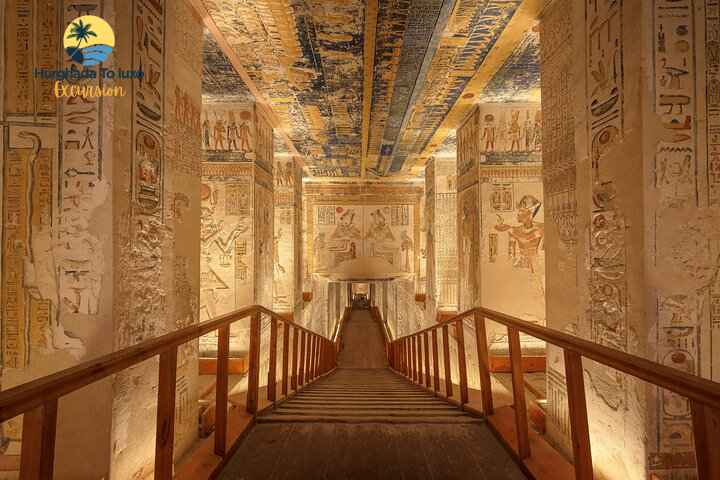
2. Valley of the Kings — Royal Necropolis
The burial ground of the New Kingdom pharaohs at the height of Theban power — 63 tombs cut into the limestone hills, including Tutankhamun’s famously intact chamber.
👸
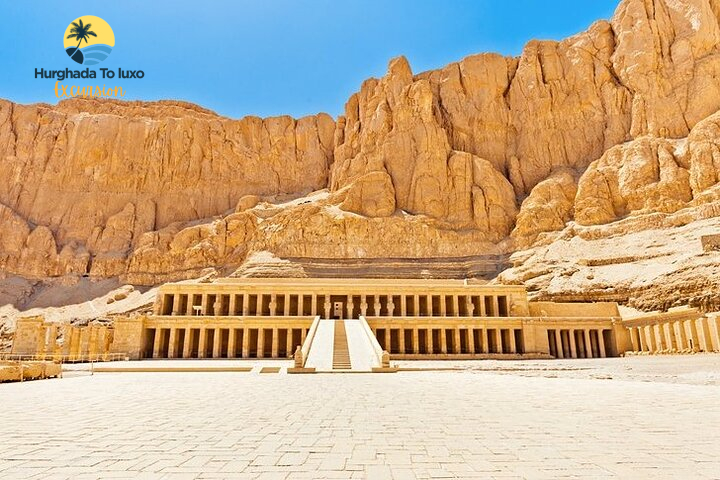
3. Temple of Hatshepsut
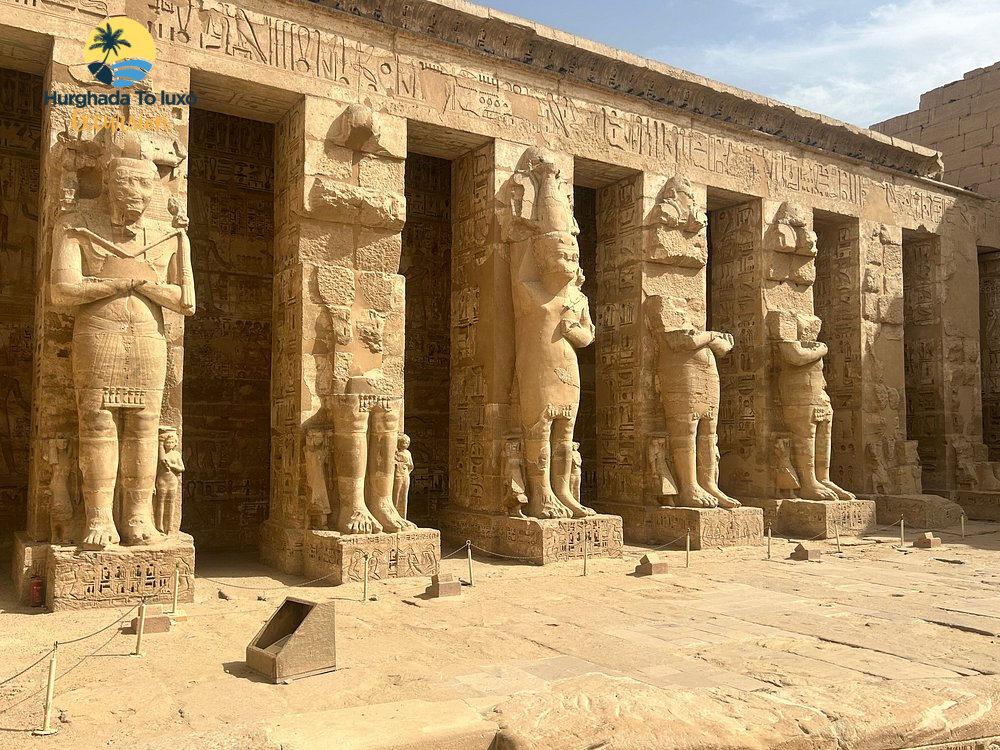
The mortuary temple of Thebes’s most powerful female pharaoh, rising in three dramatic terraces against the cliffs — a defining architectural statement of the New Kingdom’s golden age.
🗿
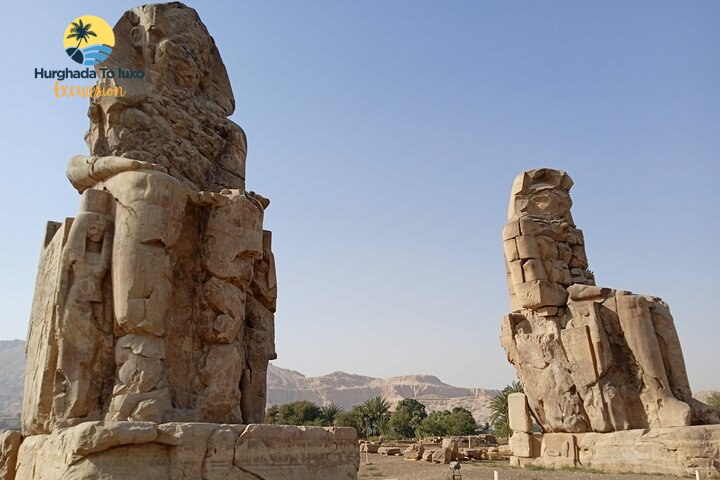
4. Colossi of Memnon
The guardians of a vanished mortuary temple, standing in an open field for over 3,400 years — the first sight that greeted ancient visitors crossing to the Theban necropolis.
🌅
5. Luxor Temple
Built for the annual Opet Festival, when statues of the gods were carried in procession from Karnak — the ceremonial heart of religious life in ancient Thebes.
🐎
6. Avenue of Sphinxes
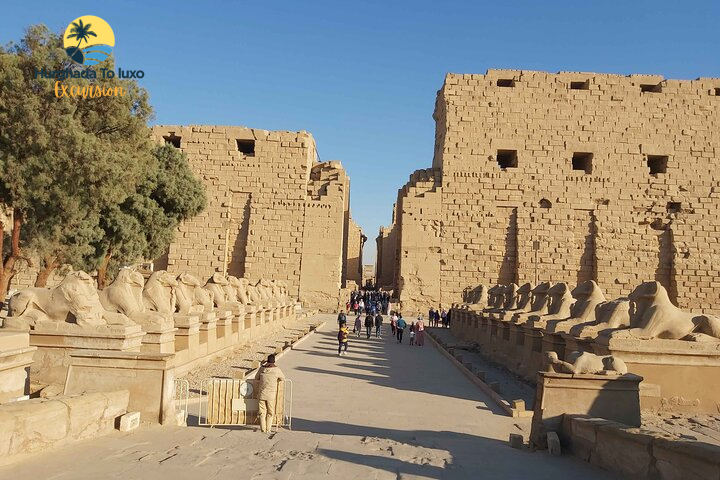
The 2.7 km processional road connecting Karnak and Luxor Temples — the ceremonial backbone along which the Opet Festival procession travelled each year.
🛥️
7. The Nile — East & West Bank Symbolism
Your guide explains the cosmological division of ancient Thebes — the East Bank as the land of the living (temples, palaces) and the West Bank as the land of the dead (tombs, mortuary temples).
🪦
8. Deir el-Medina — Workers’ Village
The ancient village of the artisans who built the royal tombs — one of the best-documented communities in the ancient world, thanks to thousands of surviving administrative texts.
📜
9. The Sack of 663 BCE — A City’s Decline
Your guide narrates the dramatic Assyrian sacking of Thebes, an event so significant it was recorded by Assyrian inscriptions and later referenced in the Hebrew Bible.
🍽️
10. Nile-View Lunch
A relaxed lunch overlooking the same river that sustained ancient Thebes for thousands of years — Egyptian mezze, grilled dishes, and fresh juices.
Full Itinerary — Hour by Hour from Hurghada
This is the complete Ancient Thebes tour from Hurghada programme — a single comprehensive day exploring the full historical arc of the ancient capital, from its royal necropolis on the West Bank to its great temples on the East Bank.
05
05:00 – 06:00 AM — Private Hotel Pickup
Your Private Vehicle Arrives at Your Hotel
Your private, air-conditioned vehicle collects you directly from your hotel lobby in Hurghada, El Gouna, Sahl Hasheesh, Makadi Bay, or Soma Bay. Exact pickup time confirmed 24 hours in advance. Bottled water and USB charging provided throughout the day.
⛰️
06:00 – 09:00 AM — Hurghada to Luxor Transfer
The Desert Highway — Introducing Ancient Thebes
The 260 km drive across the Red Sea Mountains takes approximately 3 hours. Your Egyptologist guide uses this time for a structured introduction to Thebes — its rise from the Middle Kingdom, its golden age under the New Kingdom pharaohs, and why the ancient Greeks regarded it as one of the wonders of their known world.
🛥️
09:00 – 09:30 AM — Nile Crossing to the West Bank
Entering the Land of the Dead
A private motorboat crossing of the Nile — the same symbolic boundary the ancient Thebans believed divided the living city from the necropolis. Your guide explains this cosmological division as the boat crosses toward the Theban Hills.
🗿
09:30 – 10:00 AM — Colossi of Memnon
First Sight of the Theban Necropolis
Two 18-metre quartzite statues of Amenhotep III, all that visibly remains of the largest mortuary temple ever built. For 3,400 years they have stood as the gateway to the entire West Bank — ancient visitors saw exactly this sight upon arrival.
👑
10:15 – 12:15 PM — Valley of the Kings ⭐⭐⭐
Burial Ground of the Theban Pharaohs
Two full hours at the royal necropolis. Your standard ticket includes 3 tombs, selected by your guide based on which are open and best preserved on your visit day. Your guide explains how the Valley reflects the religious worldview of New Kingdom Thebes — the journey of the pharaoh’s soul through the underworld, recorded in painted corridors that have survived more than 3,000 years. Optional: Tutankhamun’s tomb (~€15 extra, highly recommended).
👸
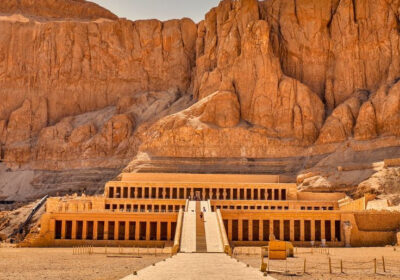
12:30 – 13:30 PM — Temple of Hatshepsut
A Defining Monument of Theban Power
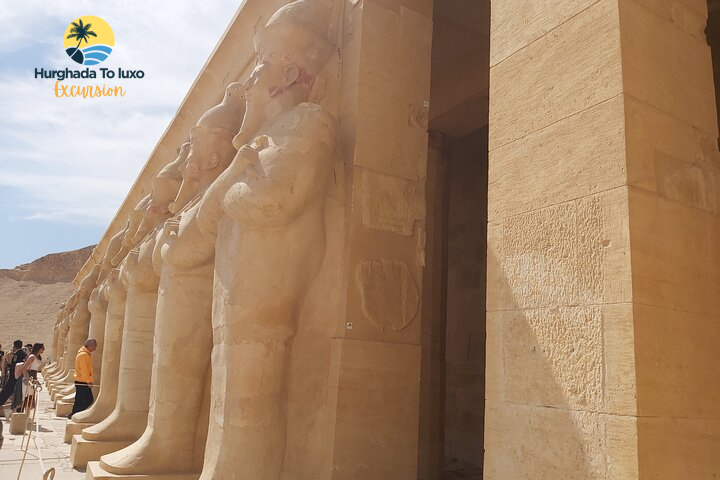
The three-terraced mortuary temple of Hatshepsut, Thebes’s most powerful female pharaoh, rises against the limestone cliffs at Deir el-Bahari. Your guide narrates her remarkable 21-year reign and the systematic erasure of her name and image by her successor Thutmose III — a story that illustrates the political volatility behind Thebes’s golden age.
🍽️
13:45 – 14:45 PM — Nile-View Lunch
Rest by the River That Sustained an Empire
Lunch at a quality Nile-view restaurant, selected by your guide for quality rather than commission. Egyptian mezze, grilled dishes, fresh juices. Vegetarian, halal, and child-friendly options always available.
🛥️
15:00 – 15:30 PM — Nile Crossing to the East Bank
Returning to the Land of the Living
A second crossing back to the East Bank, where ancient Thebes built its great temples for the worship of the living gods rather than burial. The contrast between the morning’s necropolis and the afternoon’s temple complex completes the picture of how the ancient city was organised.
🏛️
15:45 – 18:00 PM — Karnak Temple Complex ⭐⭐⭐
The Religious Heart of Ancient Thebes
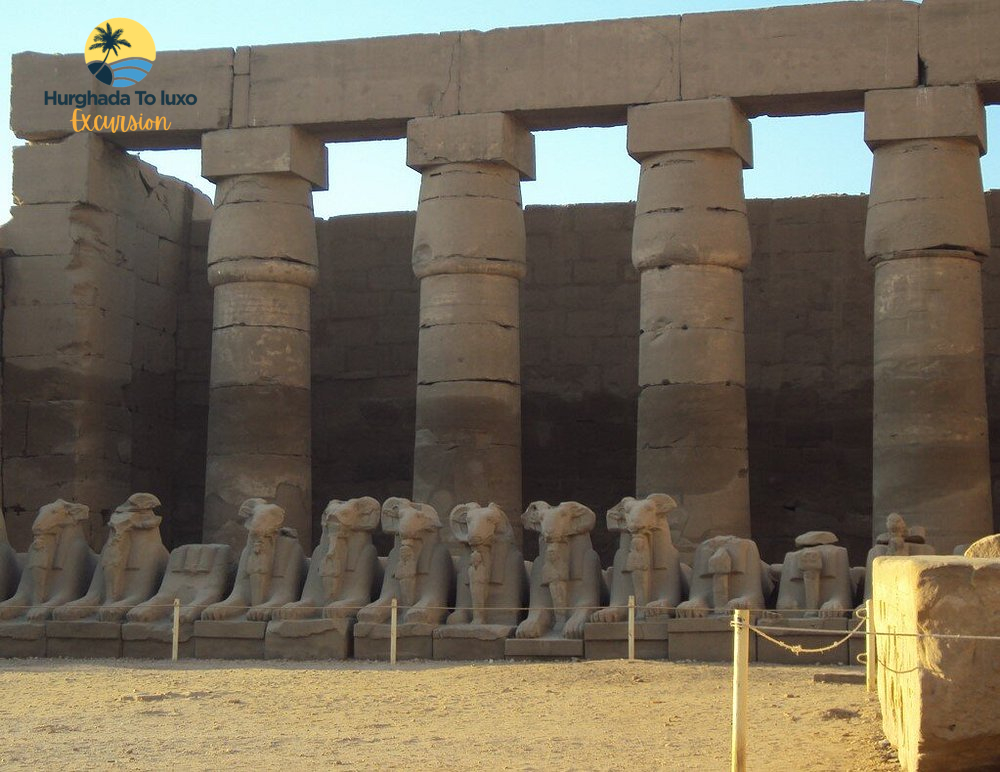
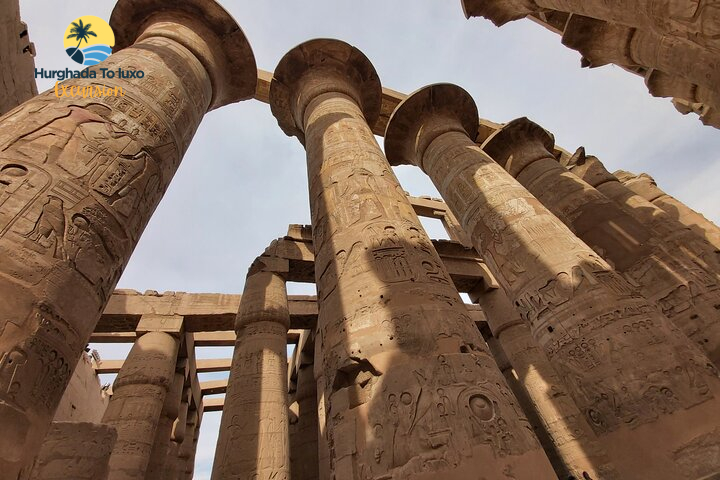
The full Karnak visit — the Great Hypostyle Hall (134 columns), the towering Obelisk of Hatshepsut, the Sacred Lake, and the Avenue of Ram-Headed Sphinxes. Your guide explains why Karnak, dedicated to the god Amun-Ra, was the true heart of religious authority in Thebes — and how more than 30 pharaohs across 2,000 years contributed to its ever-expanding complex. The afternoon light at the Sacred Lake provides a fitting close to the historical narrative of the day.
🚗
18:15 – 21:15 PM — Private Return Transfer to Hurghada
Carrying 4,000 Years of History Back Across the Desert
Your private vehicle returns you directly to your Hurghada hotel — no shared stops, no coach schedule. The 3-hour return drive crosses the Red Sea Mountains as the sun sets. You arrive back at approximately 21:00–21:30 with the full story of ancient Thebes behind you.
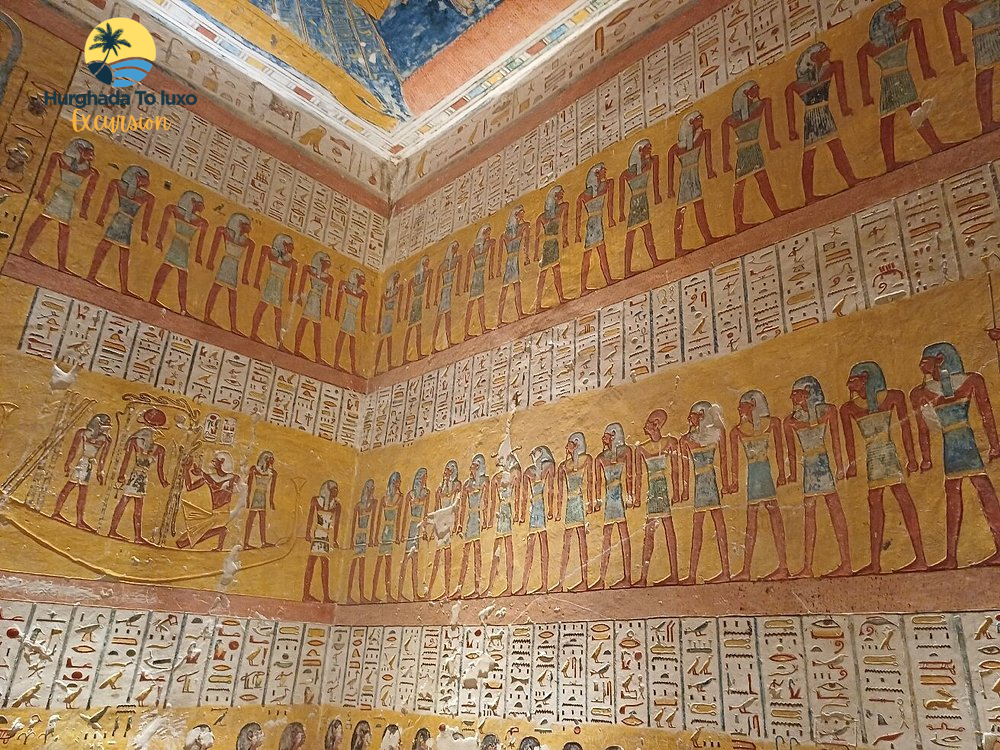
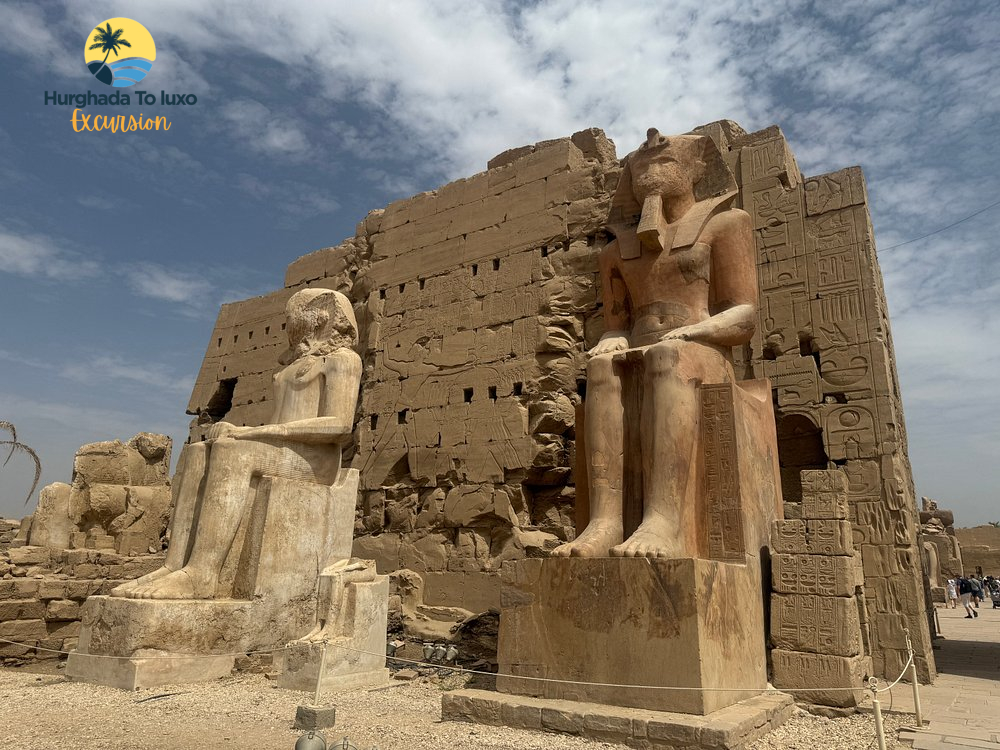
UNESCO World Heritage city — both banks in a single day
Secure your private Ancient Thebes tour from Hurghada — the necropolis, the temples, the complete 4,000-year story.
🏺 Book Ancient Thebes Tour — From €105
Free cancellation up to 24 hours before departure
Tour Details — Duration, Pickup, Languages
| Detail |
Information |
| Tour Type |
Private (your group only — no shared passengers) |
| Duration |
Approximately 16–17 hours (pickup to hotel return) |
| Pickup Time |
05:00 – 06:00 AM (confirmed 24 hours in advance) |
| Return Time |
Approximately 21:00 – 21:30 PM |
| Languages |
English (standard) · French, German, Spanish, Italian on request (48h notice) |
| Departure Points |
Hurghada, El Gouna, Sahl Hasheesh, Makadi Bay, Soma Bay |
| Group Size |
Private — 1 to 8 people per vehicle |
| Cancellation Policy |
Free cancellation up to 24 hours before departure |
2026 Pricing — What Is Included & What Is Not
Starting from
€105
per adult · approx. €90 per person
✓ Private Vehicle · ✓ Egyptologist Guide · ✓ Both Banks · ✓ All Entrance Fees · ✓ Nile Crossing · ✓ Lunch
Children (0–12): €55 · Solo traveller: +25% supplement
✅ What Is Included
✓ Private round-trip air-conditioned vehicle (Hurghada ↔ Luxor) — your group only
✓ Licensed English-speaking Egyptologist guide — dedicated to your group for the full day
✓ Valley of the Kings entrance (3 standard tombs)
✓ Temple of Hatshepsut & Colossi of Memnon entrance
✓ Karnak Temple Complex entrance
✓ 2 private Nile motorboat crossings (West Bank and return)
✓ 1 lunch at a quality Nile-view restaurant
✓ Bottled water throughout the day
✓ Zero shopping stops — guaranteed in writing
❌ What Is Not Included
✕ Tutankhamun’s tomb (~€15 extra — highly recommended)
✕ Avenue of Sphinxes & Luxor Temple extension (~€10 extra)
✕ Deir el-Medina workers’ village add-on (~€10 extra — optional, by request)
✕ Tips for guide and driver (optional — €10–€15 per person appreciated)
✕ Personal purchases and souvenirs
What to Pack — Day Trip Checklist
🧴
Sun Protection
SPF 50 sunscreen, wide-brimmed hat, UV sunglasses. Both banks involve substantial time outdoors. Reapply every 90 minutes.
👟
Comfortable Walking Shoes
A long, active day across multiple sites with steps, uneven stone, and gravel paths. Closed-toe walking shoes are essential.
👗
Modest Clothing
Karnak and Hatshepsut’s Temple are religious sites — shoulders and knees covered. Women should carry a light scarf.
💰
Cash in EGP
For Tutankhamun’s tomb extra, tips, and small purchases. Approximately £40–£50 equivalent is sufficient. June 2026: £1 ≈ 65 EGP.
📷
Camera & Power Bank
Photography is prohibited inside the Valley of the Kings tombs but fully permitted at Karnak, Hatshepsut Temple, and the Colossi. Bring a power bank for the long day.
🆔
Passport or ID Copy
Required at highway security checkpoints en route. Your driver handles all formalities — just keep your ID accessible.
10 Insider Tips from Our Egyptologist Guides
Tip 1 — Ask your guide to explain the East–West symbolism before crossing the Nile. Understanding why the ancient Thebans organised their entire city around this division — life on the east, death on the west — transforms the rest of the day from a list of sites into a coherent worldview.
Tip 2 — Budget for Tutankhamun’s tomb. The extra ~€15 buys access to the only royal tomb found largely intact — directly connected to the Theban story of how thoroughly most other tombs were looted within decades of burial.
Tip 3 — Ask about Homer’s description of Thebes. The Greek poet referred to it as a city of “a hundred gates” — your guide can point to specific surviving features at Karnak that likely inspired this classical reputation.
Tip 4 — Note the layered construction at Karnak. Different pylons and halls were added by different pharaohs across 2,000 years — once you know what to look for, the architectural seams between eras become visible.
Tip 5 — Photography is prohibited inside all tombs — without exception. This protects 3,000-year-old painted surfaces from flash and prolonged light exposure.
Tip 6 — Ask about the 663 BCE Assyrian sack of Thebes. This dramatic and well-documented event marks the effective end of Thebes’s political importance, even though religious significance continued for centuries afterward.
Tip 7 — If time allows, request a brief stop at Deir el-Medina. The workers’ village offers a rare window into the daily life of ordinary ancient Egyptians rather than only royalty — a valuable contrast to the rest of the day’s focus on pharaohs and gods.
Tip 8 — The Sacred Lake at Karnak is best appreciated in the late afternoon. The itinerary’s timing places you there exactly when the light is strongest — a natural, unhurried close to the day’s history.
Tip 9 — Bring small EGP notes for restroom attendants. EGP 5–10 is the expected tip throughout the day’s sites.
Tip 10 — Ask your guide to summarise the full Theban timeline on the return drive. Hearing the complete arc — from Middle Kingdom origins through New Kingdom glory to the Assyrian sack and UNESCO recognition — as a single connected narrative consolidates everything you saw during the day.
Real Reviews from Travellers
★★★★★
“I knew almost nothing about Thebes beyond the name before this tour and left understanding the entire arc of its history — from its rise to the Assyrian sack to its UNESCO recognition today. Our guide tied everything together brilliantly. No shopping stops, exactly as promised.”
Charlotte W. — Brighton, UK · April 2026
★★★★★
“Long day from Hurghada but covering both banks gave us a proper sense of how the ancient city actually worked — the living side and the dead side. Karnak in the late afternoon was stunning. Would book again without hesitation.”
Lars & Ingrid B. — Oslo, Norway · March 2026
★★★★★
“Loved the historical context — particularly learning that Homer himself wrote about Thebes. It made standing in front of Karnak feel like stepping into something the ancient Greeks themselves were in awe of. Highly recommended.”
Robert K. — Dublin, Ireland · February 2026
Frequently Asked Questions
What are the original 7 Wonders of the World, and is one of them in Egypt?
The original Seven Wonders of the Ancient World were the Great Pyramid of Giza, the Hanging Gardens of Babylon, the Statue of Zeus at Olympia, the Temple of Artemis at Ephesus, the Mausoleum at Halicarnassus, the Colossus of Rhodes, and the Lighthouse of Alexandria. Egypt is home to two of them — the Great Pyramid (the only one still standing today, near Cairo) and the Lighthouse of Alexandria (destroyed by earthquakes). Ancient Thebes was not on this classical list, but Greek writers including Homer described it as a city of comparable wealth and wonder.
What is the history of Thebes in Egypt?
Thebes (ancient Egyptian: Waset) rose from a minor settlement to become the religious and political capital of Egypt during the Middle Kingdom and reached its peak during the New Kingdom (1550–1070 BCE), when Karnak Temple and the Valley of the Kings were built. The city was sacked by the Assyrians in 663 BCE, after which it declined in political importance but retained religious significance for centuries. UNESCO inscribed “Ancient Thebes with its Necropolis” as a World Heritage Site in 1979.
What historical sites are near Hurghada?
Ancient Thebes (modern Luxor) is the most significant historical destination within day-trip reach, at approximately 260 km / 3 hours each way. Dendera Temple is also reachable as a day trip (~190 km). Cairo and the Giza Pyramids are technically possible but better suited to an overnight visit (~460 km / 4.5 hours each way). Abu Simbel requires a flight from Luxor or Aswan and is not feasible as a Hurghada day trip.
What is the oldest artefact found in Egypt?
Depending on definition, Palaeolithic stone tools found in the Nile Valley and Western Desert predate organised civilisation by hundreds of thousands of years. Among dynastic artefacts, the Narmer Palette (c. 3100 BCE), depicting the unification of Upper and Lower Egypt, is widely considered the most significant early artefact and a symbolic starting point of pharaonic civilisation. Thebes itself rose to prominence over a thousand years later, during the Middle Kingdom.
How much does the Ancient Thebes tour from Hurghada cost?
From €105 per adult (approximately £90). Children aged 0–12 pay €55. Solo travellers are subject to a 25% single supplement. Included: private vehicle, Egyptologist guide, entrance fees for the Valley of the Kings, Hatshepsut Temple, Colossi of Memnon and Karnak, two Nile crossings, and lunch. Optional extras include Tutankhamun’s tomb (~€15) and the Avenue of Sphinxes extension (~€10).
Why is Thebes called “Thebes of the Hundred Gates”?
This phrase comes from the Greek poet Homer’s Iliad, describing the legendary wealth and scale of the city centuries after its political peak. While not a literal count of physical gates, it reflects the awe that Thebes’s massive temple pylons and monumental gateways — particularly at Karnak — inspired in classical visitors and writers long after the city’s decline.
Book Your Ancient Thebes Tour from Hurghada
Private vehicle, licensed Egyptologist guide, full West Bank necropolis and East Bank temple complex, two Nile crossings, lunch. Zero shopping stops guaranteed. Free cancellation up to 24 hours before departure.
🏺 Book Now — From €105 Per Person
Final Thoughts — Walking Through 4,000 Years of History
Few cities in human history have left as complete a physical record of their existence as ancient Thebes. From the royal tombs hidden in the Theban Hills to the towering columns of Karnak that took 2,000 years to complete, this single UNESCO World Heritage landscape tells the story of pharaonic Egypt at its absolute height — and its eventual decline.
An Ancient Thebes tour from Hurghada is, for most travellers staying on the Red Sea coast, the single best opportunity to step inside that history properly — guided by a licensed Egyptologist, with the time to actually understand what made this city legendary even to the ancient Greeks who never saw it at its peak. Book your tour today and walk through 4,000 years of Egyptian history in a single, unforgettable day.