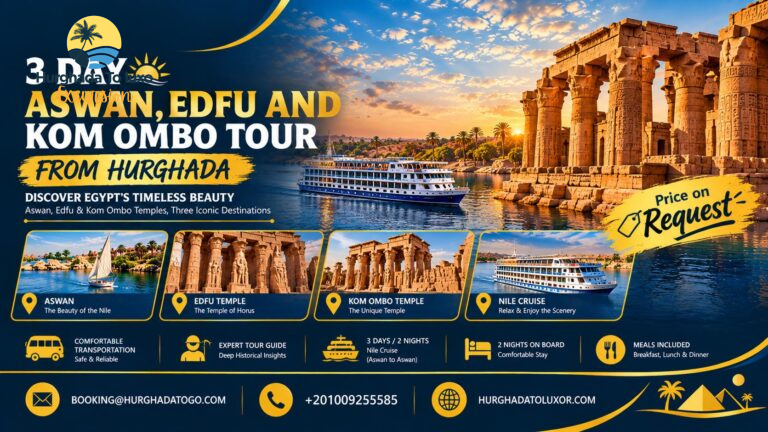
3 Day Aswan Edfu and Kom Ombo Tour from Hurghada – Discover ancient Egyptian temples, explore the beauty of Aswan, and visit the magnificent Edfu and Kom Ombo Temples on an unforgettable 3-day tour. Book your Egypt adventure today!
🦅 3 Days · Private Tour · Egyptologist Guide · Edfu + Kom Ombo + Aswan
📅 Updated: June 2026 | ⏱️ 19 min read | 💶 Price on Request | ⭐ 5.0/5 rated | 🏛️ Luxor · Edfu · Kom Ombo · Aswan · Philae
The 3 day Aswan, Edfu and Kom Ombo tour from Hurghada takes you through the most archaeologically concentrated road corridor in Upper Egypt — from Luxor south through the Nile Valley via the best-preserved ancient temple in existence at Edfu, the unique double temple at Kom Ombo, and on to Aswan and the island temple of Philae. Three days, two overnights, and a single dedicated Egyptologist guide from your Hurghada hotel door to your return.
Day 1 takes you from Hurghada to Luxor for an overnight stay. Day 2 is the centrepiece of the tour — a south-bound road journey through the Nile Valley stopping at Edfu and Kom Ombo before arriving at Aswan for a second overnight. Day 3 covers Aswan’s landmark UNESCO-rescued island temple at Philae before the road return to Hurghada. This guide covers every hour of the programme, what each site involves, full pricing information, and everything you need before booking.
🦅 Why Edfu and Kom Ombo deserve their own dedicated day: Most Luxor-focused tours visit either Edfu or Kom Ombo as a brief add-on — rarely both, never with the time they warrant. This 3-day itinerary builds Day 2 entirely around the south-bound journey through both sites, allocating the time each deserves. Edfu alone requires 2–2.5 hours to explore properly; Kom Ombo another 2 hours. On a single dedicated driving day, both are achievable without rushing — and Aswan awaits at the end of the afternoon.
This is a fully private, 3-day, 2-night tour that connects Hurghada to Luxor, Edfu, Kom Ombo, and Aswan in a south-bound journey through the Nile Valley before returning north to the Red Sea coast. The overnight structure — Night 1 in Luxor, Night 2 in Aswan — distributes the driving and sightseeing sensibly across all three days without any single day becoming unreasonably long.
Detail
Information
Tour Type
Private — your group only, no shared passengers
Duration
3 days / 2 nights (Night 1: Luxor · Night 2: Aswan)
Route
Hurghada → Luxor (overnight) → Edfu → Kom Ombo → Aswan (overnight) → Philae Temple → Hurghada
Sites Visited
Karnak Temple (Day 1), Temple of Horus at Edfu (Day 2), Temple of Kom Ombo (Day 2), Philae Temple (Day 3)
Guide
Licensed Egyptologist, dedicated to your group for all 3 days
Overnights
Night 1: Luxor hotel · Night 2: Aswan hotel (categories confirmed at booking)
Departure Points
Hurghada, El Gouna, Sahl Hasheesh, Makadi Bay, Soma Bay
Price
Price on Request — contact us with group size and preferred dates
Tour Highlights
Temple of Horus at Edfu
The best-preserved ancient Egyptian temple in existence — completely intact from entrance pylon to inner sanctuary. Built by the Ptolemaic rulers and buried under desert sand for centuries, its painted surfaces and original doors survived to a degree no pharaonic-era temple can match.
Temple of Kom Ombo
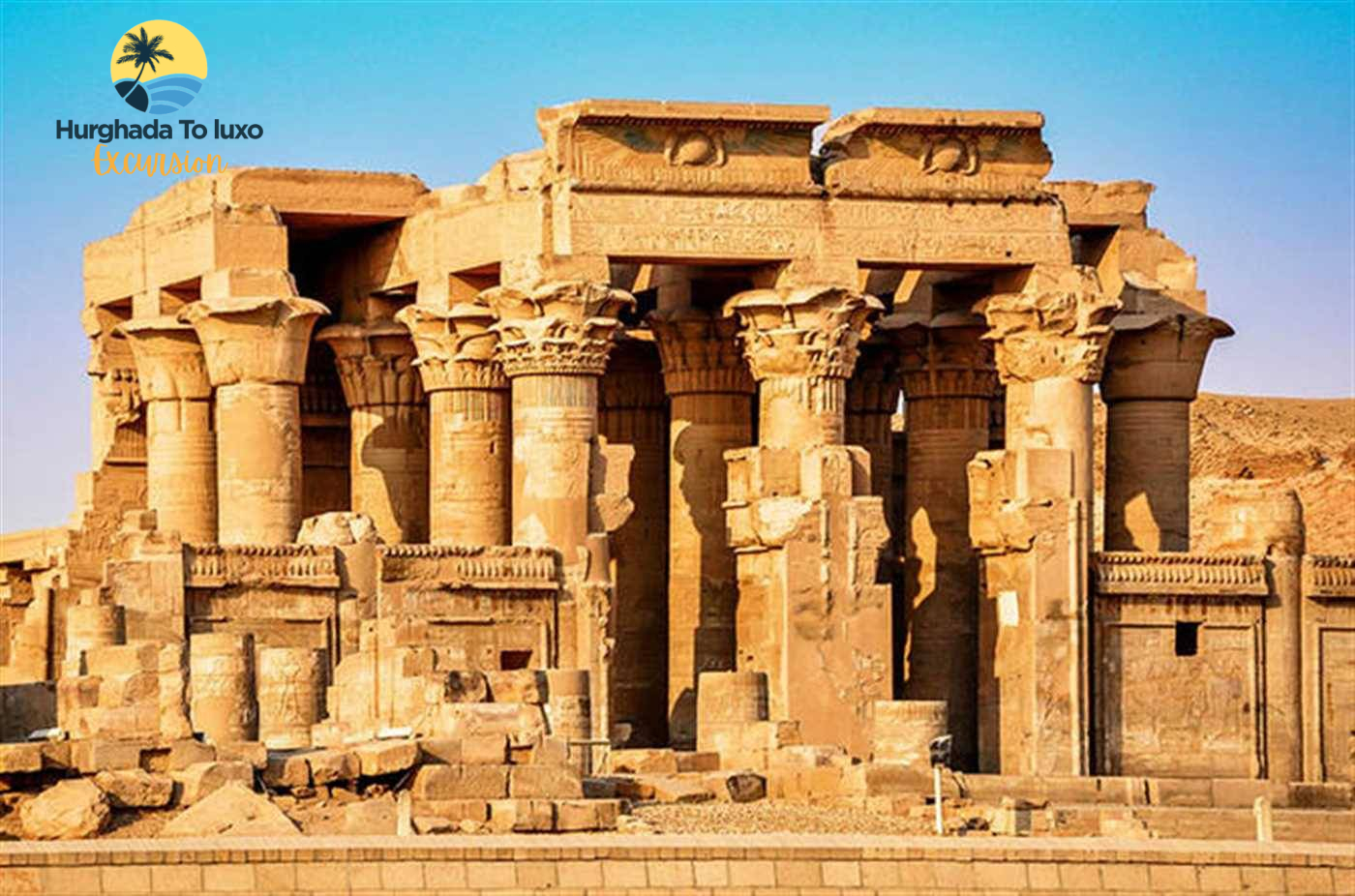
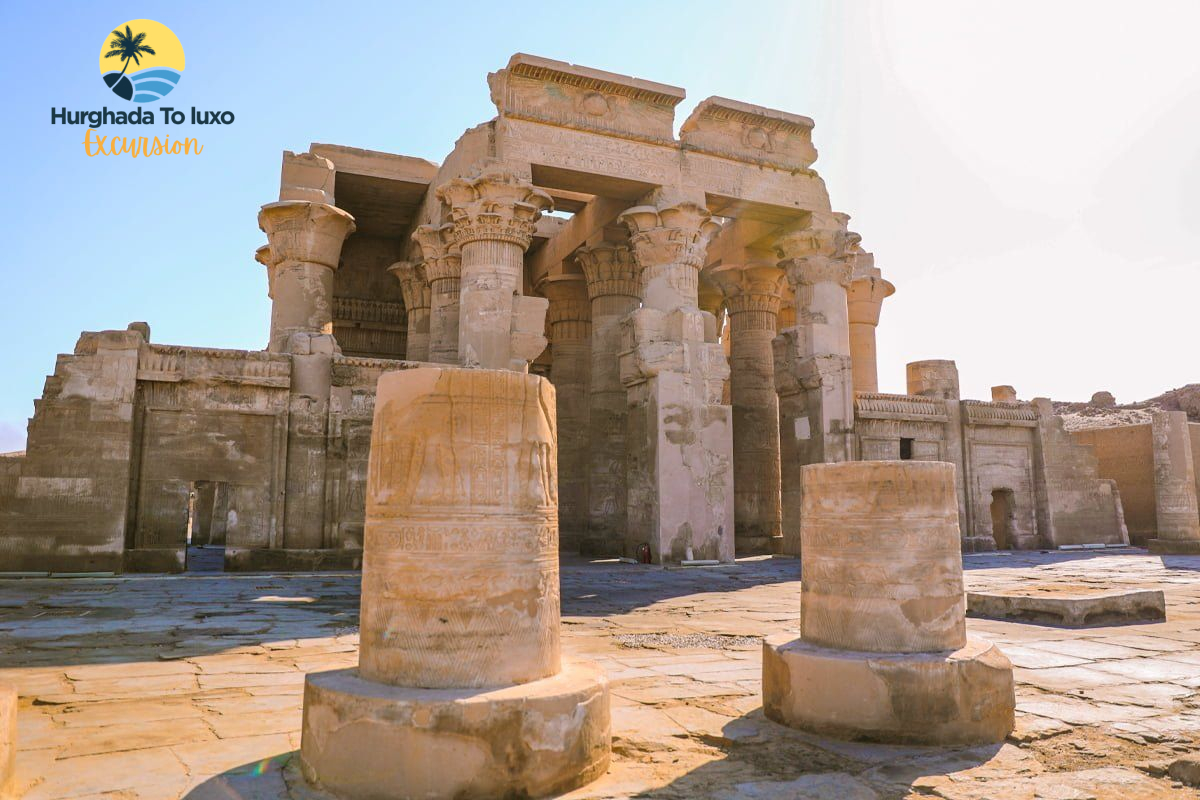
Egypt’s only double temple — two complete parallel sacred complexes dedicated simultaneously to Sobek the crocodile god and Haroeris a form of Horus — positioned directly on the Nile bank with the river immediately below its walls.
Philae Temple, Aswan
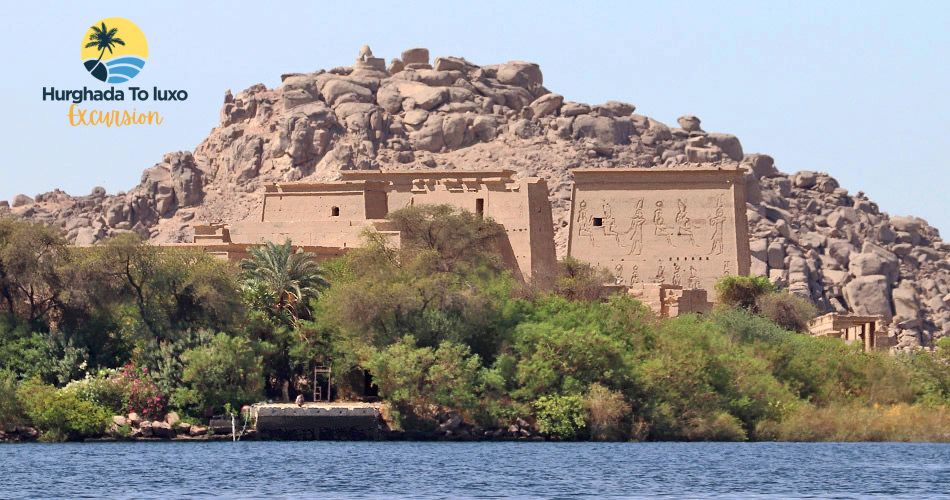
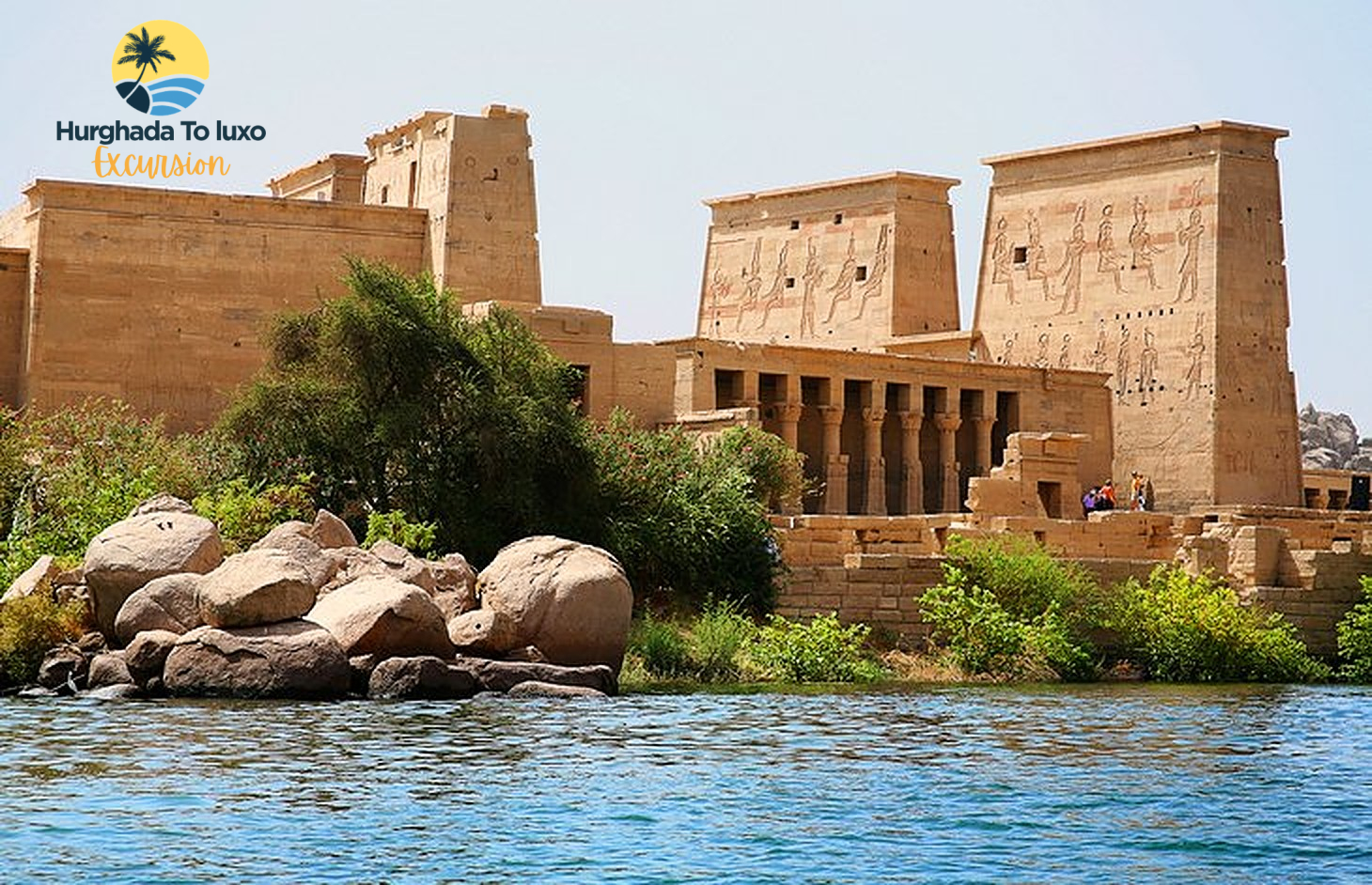
The last functioning site of the ancient Egyptian religion — active until 550 CE and reached by motorboat across the Aswan reservoir. The Temple of Isis at Philae carries the final hieroglyphic inscription ever carved anywhere in the world.
Karnak Temple at Golden Hour
On Day 1 afternoon — the largest religious structure ever built in the ideal late-afternoon light. The Great Hypostyle Hall’s 134 columns in deep shadow as the sun drops behind the pylons is one of the most dramatic architectural sights in Egypt.
Luxor Temple by Night
Available on Day 1 evening — exclusive to overnight guests in Luxor. The illuminated pink granite statues and the single surviving obelisk in amber floodlight, with the Avenue of Sphinxes stretching away in the dark, is one of Egypt’s most atmospheric night sights.
The Nile Valley Road — Luxor to Aswan
The entire Day 2 drive follows the Nile Valley south — a route through sugar cane fields, date-palm groves, riverside villages, and the gradually narrowing valley that opens at Aswan into its dramatic granite landscape.
Aswan — Egypt’s Most Beautiful Nile
Night 2 in Aswan gives you the evening to experience the corniche — smooth granite islands, moored feluccas, and the golden dunes of the West Bank at sunset — the most visually beautiful stretch of the Nile in Egypt.
Two Overnights — No Rushed Days
The two overnight stays distribute the driving and sightseeing across three manageable days — no single day requires both a long drive and multiple major site visits. The itinerary breathes rather than sprints.
3 Day Itinerary
The itinerary below details all three days from hotel pickup in Hurghada on Day 1 to hotel drop-off on Day 3 evening. Sites listed are the only sites on this programme — nothing has been added or inflated.
Day 1 — Hurghada to Luxor · Karnak Temple · Overnight
06:00 – 07:00 AM — Pickup at Your Hurghada Hotel
Private vehicle · Egyptologist guide on board from departure
Your private, air-conditioned vehicle arrives at your hotel lobby in Hurghada, El Gouna, Sahl Hasheesh, Makadi Bay, or Soma Bay. Your dedicated Egyptologist guide is on board from the first moment of Day 1. Bottled water and USB charging throughout. Exact pickup time confirmed 24 hours in advance.
07:00 – 10:00 AM — Hurghada to Luxor Drive
~260 km across the Red Sea Mountains
The approximately 3-hour drive crosses the Red Sea Mountains and descends into the Nile Valley. Your guide uses this journey to brief you on the full 3-day programme — the historical context of Karnak, the Ptolemaic temples at Edfu and Kom Ombo, and the UNESCO rescue story that connects the High Dam to Philae.
10:30 – 11:30 AM — Lunch on Arrival in Luxor
First meal beside the Nile
Lunch at a quality Nile-view restaurant in Luxor after the morning drive. A proper sit-down meal before the afternoon’s sightseeing programme. Vegetarian, halal, and child-friendly options always available.
13:00 – 15:00 PM — Karnak Temple Complex ⭐⭐⭐
The largest religious structure ever built
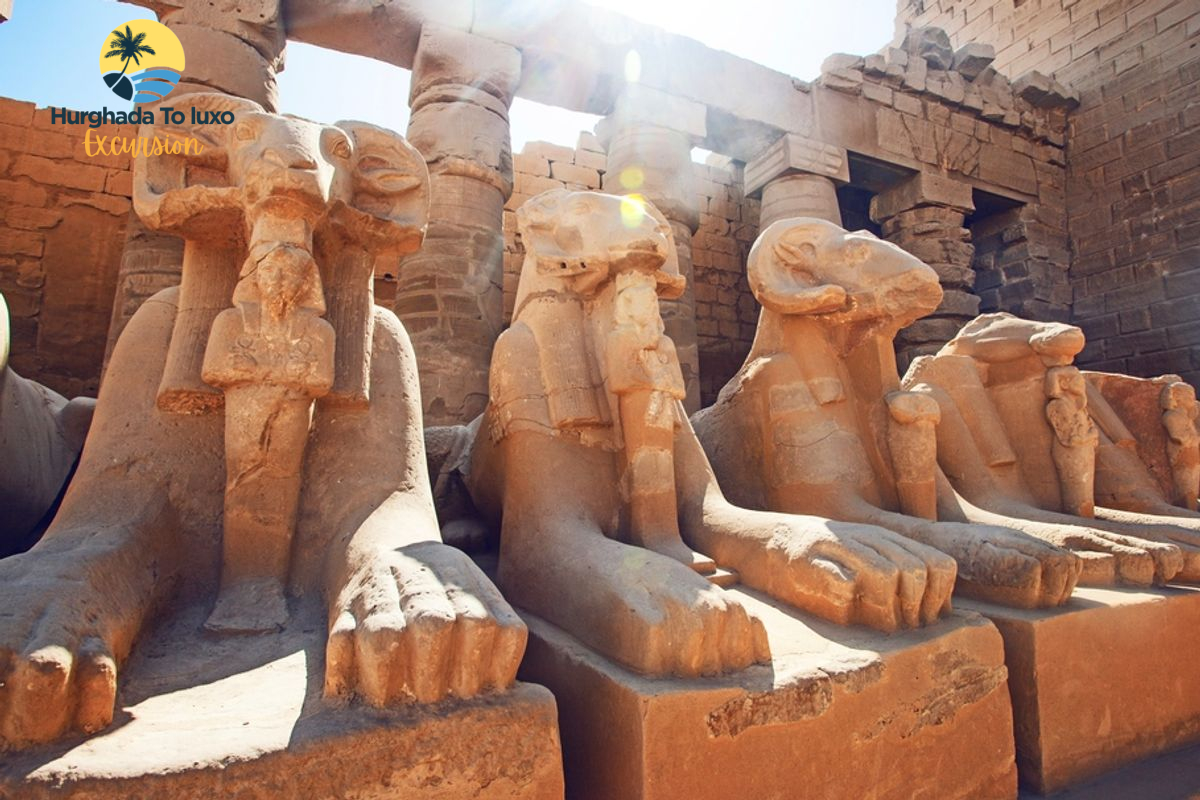
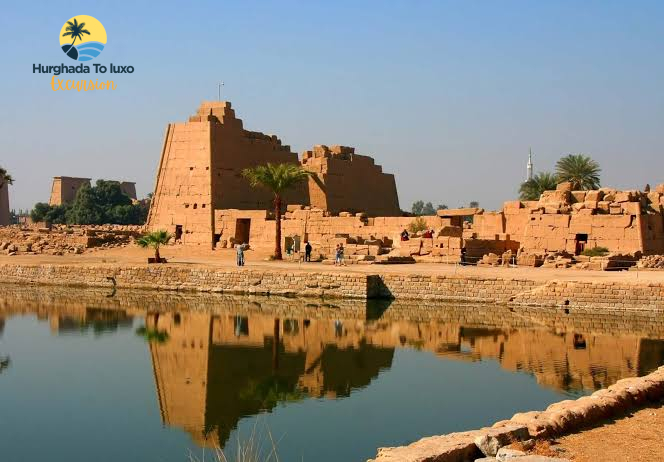
Two full hours at Karnak — the 247-acre complex dedicated to the god Amun-Ra, built and extended by more than 30 pharaohs across over 2,000 years. The Great Hypostyle Hall with its 134 immense columns, the towering Obelisk of Hatshepsut, the Sacred Lake, and the Avenue of Ram-Headed Sphinxes — visited in the early afternoon before the full golden-hour light intensifies. Your guide explains the layered 2,000-year construction history and how each architectural phase can be identified by cartouche analysis and style.
15:30 – 16:30 PM — Avenue of Sphinxes Walk
The ceremonial road between Karnak and Luxor Temple
The 2.7 km ceremonial avenue lined with sphinxes connecting Karnak to Luxor Temple was used for the annual Opet Festival procession and was buried under the modern city of Luxor for decades before its restoration. A walk along sections of this recently excavated avenue completes the East Bank picture before hotel check-in.
17:30 PM — Luxor Hotel Check-in · Night 1
Overnight in Luxor before the full Day 2 south-bound drive
Check-in at your Luxor hotel — category confirmed at booking. Dinner on Day 1 evening is not included and is at your own expense. Optional: Luxor Temple is illuminated after dark and a 10–15 minute walk from most Luxor hotels — a strongly recommended brief evening visit available only to overnight guests. Day 2 begins at 07:00–07:30 AM with the south-bound drive toward Edfu.
🏨 Night 1 — Luxor: The overnight in Luxor is what makes Day 2’s full south-bound itinerary through Edfu and Kom Ombo to Aswan practical — you begin Day 2 already in Luxor rather than driving from Hurghada first. Day 2 departs at 07:00–07:30 AM from your Luxor hotel.
Day 2 — Luxor to Edfu to Kom Ombo to Aswan
07:00 – 07:30 AM — Departure from Luxor Hotel
Hotel breakfast · South-bound drive begins
Breakfast at your Luxor hotel (where included in the room rate — confirm at check-in). Your private vehicle departs Luxor at approximately 07:00–07:30 AM for the south-bound drive through the Nile Valley. The full Day 2 programme — Edfu, Kom Ombo, and arrival in Aswan — is approximately 10–11 hours door to door from your Luxor hotel.
07:30 – 09:30 AM — Luxor to Edfu Drive
~115 km south through the Nile Valley
The 2-hour drive south from Luxor to Edfu follows the western bank of the Nile through the agricultural heartland of Upper Egypt — sugar cane fields, date palms, and riverside villages that have occupied this same strip of fertile land for millennia. Your guide uses this driving time to brief you specifically on the Ptolemaic period — the Greek-descended rulers who built both Edfu and Kom Ombo — and why their temples survive so completely compared to their pharaonic predecessors.
09:30 AM – 12:00 PM — Temple of Horus at Edfu ⭐⭐⭐
The best-preserved ancient Egyptian temple in existence
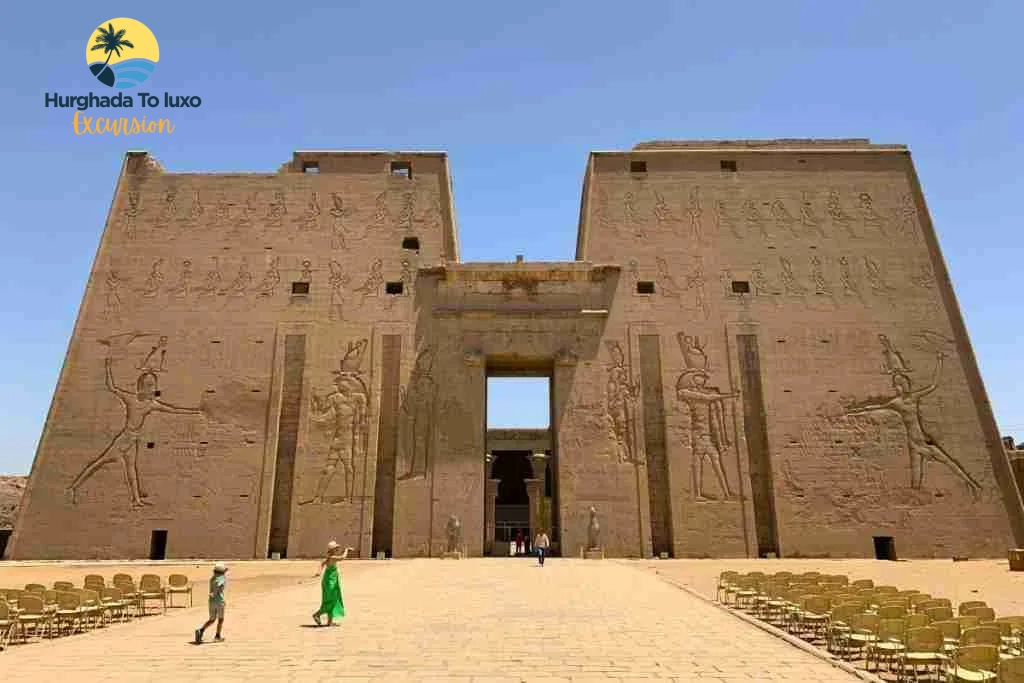
From the vehicle parking area, a horse-drawn caleche or taxi carries you to the entrance — one of the more atmospheric arrivals at any Upper Egyptian site. The Temple of Horus was built by the Ptolemaic rulers between 237 and 57 BCE on the site of an earlier New Kingdom structure. It is the most completely preserved ancient Egyptian temple in existence — not because it is the newest, but because it was buried under the desert sand and accumulated debris of the town that grew above it for centuries, protecting its painted surfaces and architectural fabric from both human disturbance and weathering.
Your Egyptologist guide allocates the full 2.5 hours the site warrants. Key sections: the enormous First Pylon with carved battle reliefs of Horus defeating Set, the outer hypostyle hall with 12 columns, the inner hypostyle hall with its elaborately carved ceiling, the laboratory room where ancient priestly perfume and incense recipes are carved into the walls in full detail, the inner sanctuary with its reconstructed original doors and the black granite naos containing the sacred Horus falcon statue, and the rooftop chambers with their panoramic views across the Nile Valley. The overall architectural logic of an ancient Egyptian temple — the progressing sequence of spaces from exposed and public to enclosed and sacred — is more completely readable here than anywhere else in Egypt.
12:30 – 13:30 PM — Lunch in Edfu
Rest before the afternoon drive to Kom Ombo
Lunch at a quality restaurant near the Edfu site — a proper break before the approximately 65 km drive south to Kom Ombo. A good point for questions about the morning’s Edfu visit while the details are fresh.
14:00 – 15:00 PM — Edfu to Kom Ombo Drive
~65 km through the narrowing Nile Valley
The 65 km drive south from Edfu to Kom Ombo crosses increasingly arid terrain as the valley narrows toward Aswan. Your guide contrasts the two Ptolemaic temples — Edfu’s single dedication to Horus versus Kom Ombo’s unique dual dedication — and explains the specific theological reasons that produced such a distinctive architectural solution.
15:15 – 17:15 PM — Temple of Kom Ombo ⭐⭐⭐
Egypt’s only double temple — on the Nile bank in afternoon light
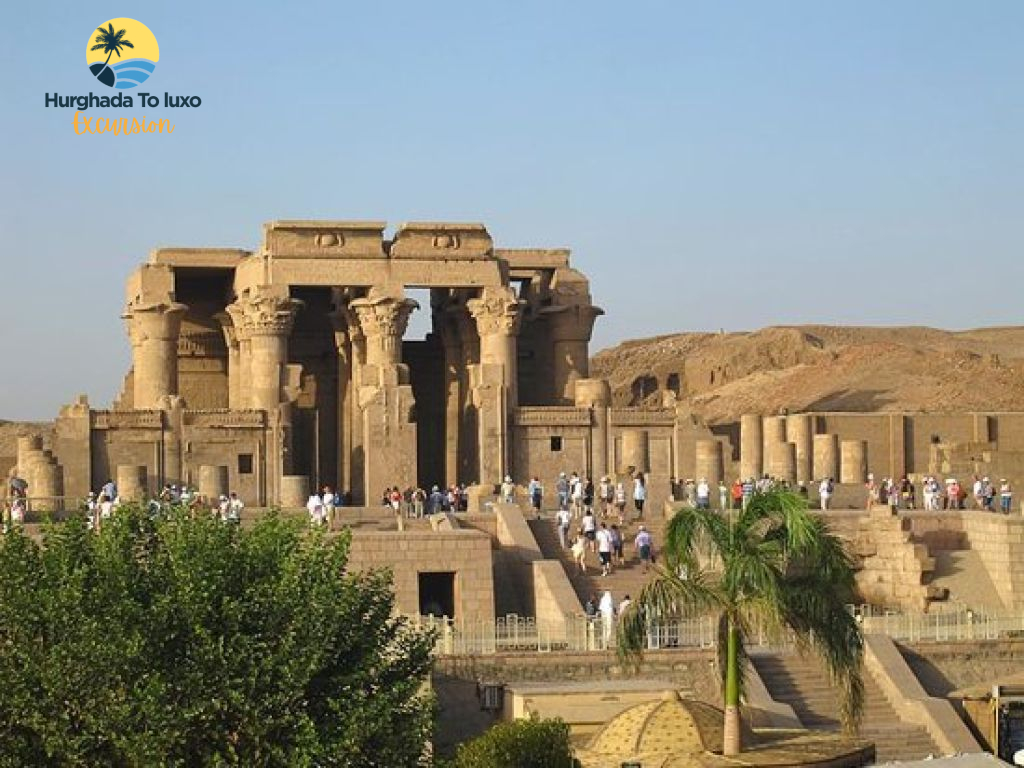
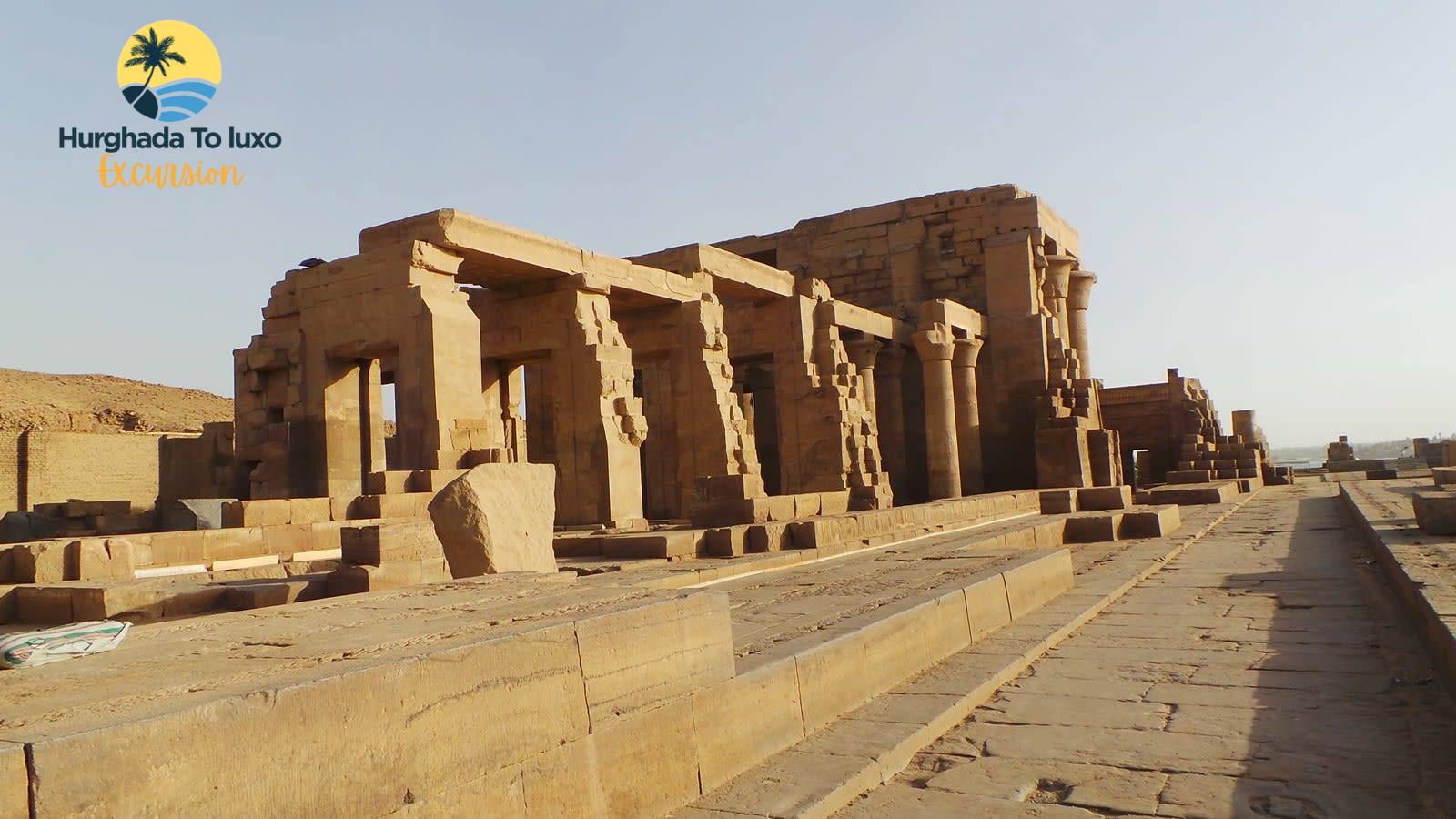
The Temple of Sobek and Haroeris sits directly on the eastern Nile bank — the only major ancient Egyptian temple with an immediate river-side position, its colonnades rising above the water’s edge. The afternoon light from the west catches the sandstone facade at this hour with particular warmth.
The temple is unique in ancient Egyptian architectural history: two complete and parallel sacred programmes — two entrance pylons, two hypostyle halls, two sanctuaries, two sets of offering chambers — sharing a single central wall. The left side belongs to Sobek, the crocodile god associated with fertility and the Nile flood; the right side to Haroeris (the Elder Horus), associated with kingship and the sky. Your guide explains the theological reasoning for this co-dedication and how the parallel architecture physically embodies the divine balance.
Specific highlights: the carved medical instruments on the inner corridor walls — forceps, scalpels, bone saws, birthing chairs, and cupping vessels carved approximately 2,000 years ago and remarkably identifiable to modern eyes; the ancient Nilometer built into the temple precinct wall to measure the Nile’s annual flood level; and the adjacent Crocodile Museum containing 22 mummified crocodiles — offerings to Sobek from the local population who lived and fished beside the river where the crocodiles lived. Approximately 2 hours on site.
17:30 – 19:00 PM — Kom Ombo to Aswan Drive
~45 km into the granite landscape of Aswan
The final 45 km drive south to Aswan as the sun begins to set. The landscape changes dramatically over this short stretch — the flat agricultural valley gives way to exposed granite outcroppings rising from the river and the surrounding terrain. You arrive in Aswan as the first lights of the corniche come on along the waterfront.
19:00 PM — Aswan Hotel Check-in · Night 2
Overnight in Egypt’s most beautiful Nile city
Check-in at your Aswan hotel — category confirmed at booking. The Aswan corniche is within walking distance of most hotels. Dinner is not included and is at your own expense. The Nile at Aswan at night — granite islands lit by the hotel and restaurant lights, feluccas silhouetted in the dark water — is worth the evening walk. Day 3 begins with breakfast and then the Philae visit before the road return to Hurghada.
🏨 Night 2 — Aswan: Your second overnight. Day 3 begins with breakfast at the hotel, the Philae Temple visit in the morning, lunch in Aswan, and then the 5–6 hour road return to Hurghada. No early departure required on Day 3 — the Philae visit starts at a comfortable mid-morning hour.
Day 3 — Philae Temple · Aswan · Return to Hurghada
08:00 – 09:00 AM — Hotel Breakfast in Aswan
A relaxed start to the final day
Breakfast at your Aswan hotel before the day’s sightseeing programme. The view of the Nile at Aswan in the morning — granite outcroppings catching the early sun, feluccas beginning their first circuits — makes the hotel breakfast one of the more memorable of the tour.
09:30 – 11:30 AM — Philae Temple ⭐⭐⭐
The last site of the ancient Egyptian religion — reached by motorboat
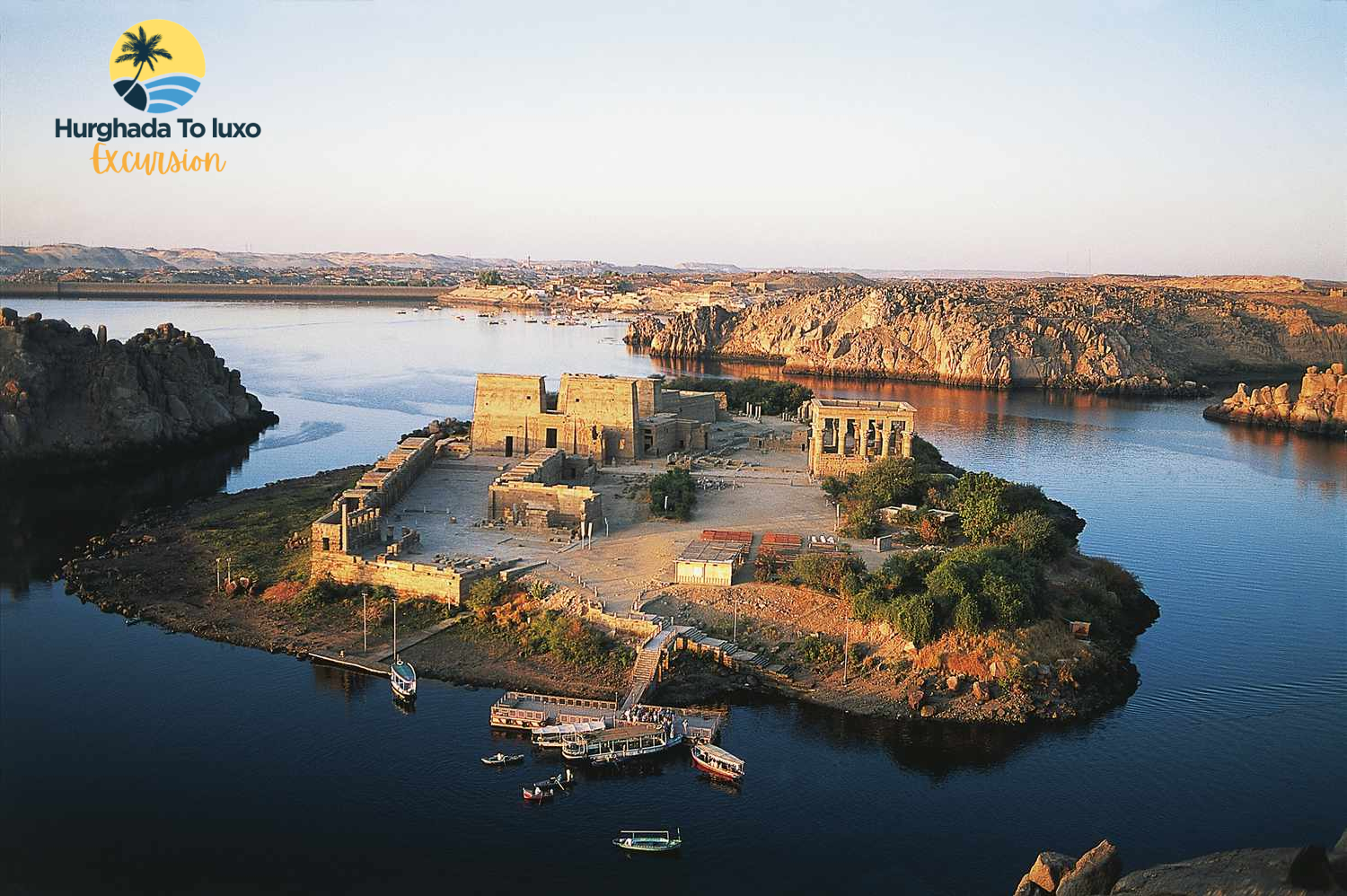
A short motorboat crossing from the Aswan reservoir landing stage to Agilkia Island — the temple appearing gradually across the water as the boat approaches, its pylons and colonnaded courts rising from the island shoreline. This crossing, in the mid-morning light with the reservoir calm, is one of the most quietly atmospheric moments of the 3-day tour.
The Temple of Isis at Philae was originally built on an island that would have been permanently submerged under the waters of Lake Nasser after the completion of the Aswan High Dam. Between 1972 and 1980, in the same UNESCO rescue operation that saved Abu Simbel, the entire temple complex was dismantled into 47,000 individually recorded blocks and reconstructed on the higher ground of Agilkia Island, 300 metres from its original position.
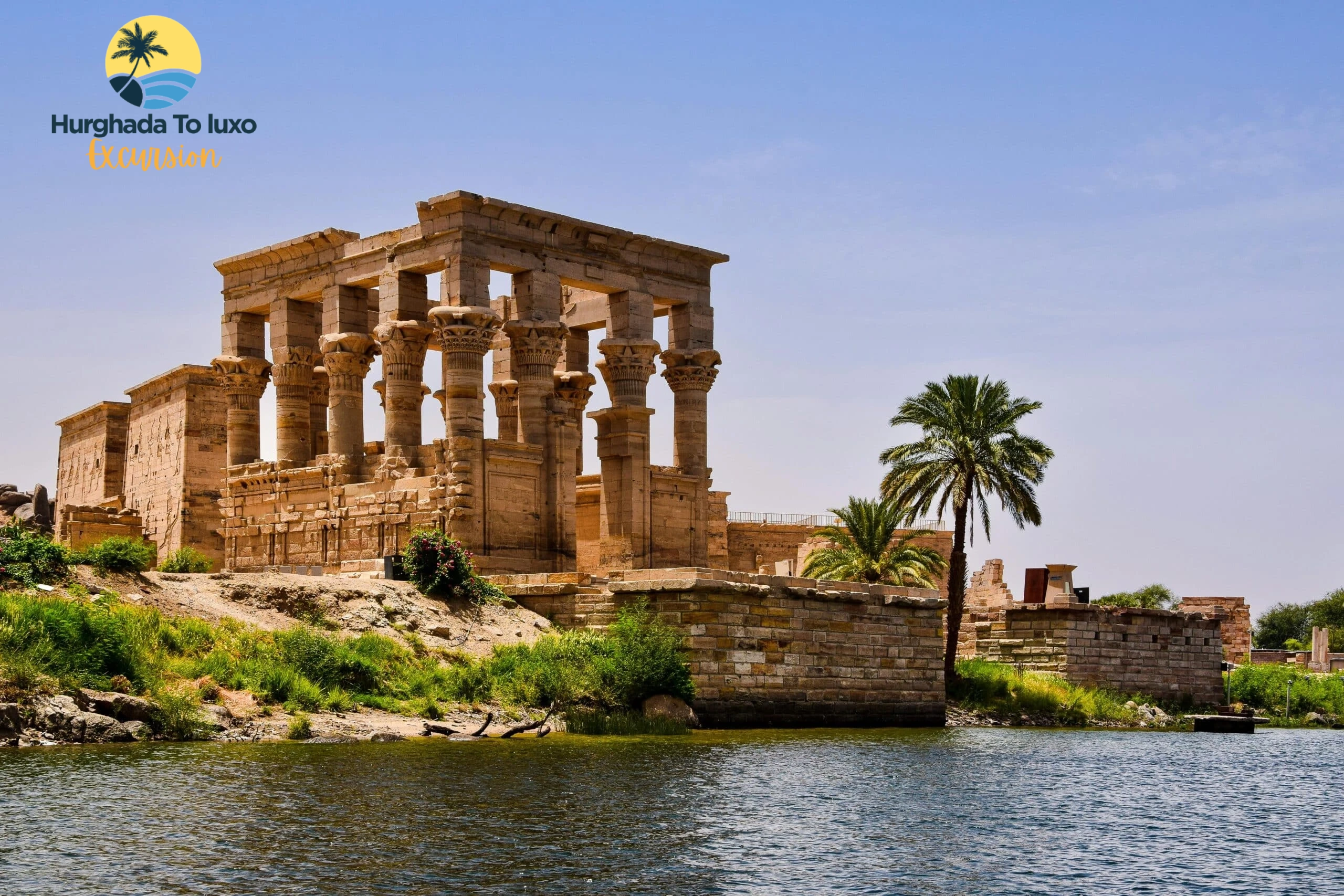
Your guide leads a full guided visit: the Outer Court with its double colonnade, the Birth House (Mammisi) celebrating the divine birth of Horus, the main Hypostyle Hall with its Ptolemaic and Roman-era relief carvings, the inner sanctuary of Isis, and the small Kiosk of Trajan — the most photographed structure at Philae, an open-sided colonnaded pavilion on the island’s southern point. The temple’s final hieroglyphic inscription, carved in 394 CE, is pointed out specifically by your guide — approximately 4,500 years after the script was first developed, this is the last record of the writing system in active use. Approximately 2 hours on site.
12:00 – 13:00 PM — Lunch in Aswan
Last meal before the road north
Lunch at a quality Nile-view restaurant in Aswan — your final meal in Upper Egypt before the return journey. A proper sit-down meal and rest before the approximately 5–6 hour drive back to Hurghada via Luxor.
14:00 PM – 20:00 PM — Aswan to Hurghada Return Drive
Direct door-to-door return to your Hurghada hotel
Your private vehicle drives directly from Aswan north through the Nile Valley and across the Eastern Desert back to your Hurghada hotel. The return route passes through Luxor — visible from the highway — before continuing northeast across the Red Sea Mountains. You arrive at approximately 19:30–20:30 PM, completing a 3-day, 8-site journey through Upper Egypt’s Ptolemaic and Nubian heritage.
Request pricing and availability for the 3 day Aswan, Edfu and Kom Ombo tour from Hurghada.
🗓️ Booking lead time: Hotels in both Luxor and Aswan — particularly Nile-view properties — require advance booking, especially during peak season (October–February) and around Egyptian public holidays. We recommend booking at minimum 3–4 weeks in advance for standard dates. Mention any special occasion at booking so we can arrange appropriate touches with the hotels.
Pickup Information
Day 1 Pickup Location
Your hotel lobby in Hurghada, El Gouna, Sahl Hasheesh, Makadi Bay, or Soma Bay. Your driver meets you with a name board. The Egyptologist guide is on board from this first moment.
Day 1 Pickup Time
06:00 – 07:00 AM, confirmed 24 hours in advance. The Luxor overnight means a comfortable 3-hour drive from Hurghada to a full afternoon sightseeing programme rather than a rushed one.
Day 2 Departure — Luxor Hotel
07:00 – 07:30 AM from your Luxor hotel. The full Day 2 programme (Edfu + Kom Ombo + Aswan arrival) requires an early start to complete both sites comfortably.
Day 3 Return Drop-Off
Your original Hurghada hotel, door to door. Estimated return: 19:30 – 20:30 PM on Day 3.
What to Bring
Overnight Bag — 2 Nights
Two nights in different cities. Pack 2 changes of clothing, pyjamas or sleepwear, full toiletries, chargers, and your original passport for both hotel check-ins. A medium-sized soft bag is ideal.
Sun Protection — All 3 Days
SPF 50 sunscreen, wide-brimmed hat, UV sunglasses. All sites — Karnak, Edfu, Kom Ombo, Philae — involve significant outdoor time in direct Egyptian sun. Reapply every 90 minutes on site days.
Walking Shoes for All Site Days
All four sites visited on this tour involve walking on uneven stone and gravel. Comfortable, closed-toe walking shoes are essential for Days 1, 2, and 3. Do not rely on sandals at any site.
Modest Clothing — Religious Sites
Karnak, Edfu, Kom Ombo, and Philae are all religious sites requiring covered shoulders and knees. Pack modest clothing appropriate for all three days of site visits.
Camera + 2 Power Banks
Three days of photography across four outstanding sites. Charge both power banks fully each evening at the hotel. The Edfu rooftop and the Philae motorboat crossing are among the strongest photography opportunities of the tour.
Original Passport — Accessible
Required at both Luxor (Day 1 evening) and Aswan (Day 2 evening) hotel check-ins, and at road security checkpoints. Keep it in your day bag throughout all three days.
Insider Tips
Tip 1 — Visit Luxor Temple on Day 1 evening before dinner. It is 10–15 minutes from most Luxor hotels on foot, the entry fee is modest, and the illuminated temple after dark is available only to overnight guests in Luxor. You will not pass through Luxor again on Days 2 or 3. This is the only window in the entire 3-day tour for this sight.
Tip 2 — Allocate the full 2.5 hours at Edfu. The Temple of Horus is not a site to rush. The rooftop alone — reached by a narrow staircase and rarely visited by tour groups on short schedules — provides the best bird’s-eye view of the complete temple plan and the surrounding Nile Valley. The laboratory room with its perfume recipes is easily missed but extraordinary when explained in context.
Tip 3 — The Crocodile Museum at Kom Ombo is a worthwhile 15-minute addition. Twenty-two preserved mummified crocodiles — some still wrapped in linen bindings — in a purpose-built gallery adjacent to the temple. An unexpected and genuinely memorable addendum to the temple visit, particularly for children.
Tip 4 — Ask your guide to explain why both Edfu and Kom Ombo are Ptolemaic rather than pharaonic. The Ptolemaic period (332–30 BCE) was Egypt ruled by Greek-descended pharaohs who adopted Egyptian religion as a tool of legitimacy. Their temples are architecturally distinct from the earlier New Kingdom structures at Luxor — and your guide can explain the stylistic and theological differences across all four sites of this 3-day tour in a way that makes the Ptolemaic temples feel part of a connected story rather than isolated footnotes.
Tip 5 — The motorboat crossing to Philae is worth having your camera accessible on the boat. The temple appears gradually across the reservoir as you approach — the pylons and the Kiosk of Trajan coming into view in sequence as the distance closes. This approach, from the water, is the way the temple was designed to be reached and photographs well from the moving boat.
Tip 6 — Day 2 is the longest day — manage your energy accordingly. Departing Luxor at 07:00 AM, visiting Edfu (2.5 hours), driving to Kom Ombo (1 hour), visiting Kom Ombo (2 hours), and driving to Aswan (45 minutes) makes for a full 12-hour day. A good lunch break in Edfu is practical and important, not optional.
Tip 7 — Ask about the last hieroglyphic inscription at Philae. Your guide will point to the specific relief carved in 394 CE — the last known use of the hieroglyphic writing system anywhere in the world. Standing beside it, knowing that the person who carved it was the last human being to practice a 4,500-year-old writing tradition, is one of the more quietly extraordinary moments of the tour.
Tip 8 — The Aswan corniche on Day 2 evening is worth a brief walk before dinner. The combination of granite islands, moored feluccas, and the reflections on the Nile at night makes Aswan’s waterfront one of the most atmospheric in Egypt. After the long Day 2 driving programme, a 20-minute walk along the corniche before dinner is a good way to absorb the city before your hotel room for the night.
Frequently Asked Questions
Why is the Luxor overnight on Day 1 included when the main sites are Edfu, Kom Ombo, and Aswan?
The overnight in Luxor on Day 1 serves two purposes. First, it places you already in Luxor at the start of Day 2, allowing the full south-bound journey through Edfu and Kom Ombo to Aswan without the added time of driving from Hurghada that morning. Without the overnight, Day 2 would require leaving Hurghada before dawn to reach Edfu at a reasonable hour, making it an exhausting and impractical day. Second, Day 1 afternoon in Luxor allows a proper visit to Karnak Temple — the largest religious structure ever built — which adds significant historical context and value to the overall 3-day journey.
What makes the Temple of Horus at Edfu the best-preserved ancient Egyptian temple?
Edfu Temple was not simply well-maintained — it was buried. After the decline of the Ptolemaic period and the later rise of a Christian and then Islamic community in the area, the town of Edfu gradually built directly on top of the ancient temple, covering it in accumulated debris and mud-brick construction over many centuries. When French archaeologists began systematic excavations in the 19th century, they found the temple encased in this protective layer to a height of approximately 12 metres in places. The burial that had hidden it also preserved it — its painted surfaces, its original wooden doors (still functioning on their stone hinges), and its carved relief programmes survived largely intact in a way that temples left exposed to weather, human disturbance, and later religious modification could not.
Why is the Temple of Kom Ombo dedicated to two gods?
The site at Kom Ombo had religious significance associated with two separate deities from an early date — Sobek the crocodile god, associated with the Nile flood, fertility, and the local crocodile population that was historically concentrated in this stretch of the river, and Haroeris (the Elder Horus), associated with kingship and the sky. The Ptolemaic builders chose to honour both traditions simultaneously rather than replacing one with the other, creating the unique dual-axis architectural solution: two complete sacred programmes sharing a single central wall and a single outer enclosure. This co-dedication is unique in the entire corpus of ancient Egyptian temple architecture.
How does this 3-day tour differ from the 3-day Luxor, Aswan and Abu Simbel tour?
The 3-day Luxor, Aswan and Abu Simbel tour covers Luxor’s West Bank (Valley of the Kings, Hatshepsut Temple), Aswan, and Abu Simbel — with a pre-dawn Day 3 departure. It does not include Edfu or Kom Ombo. This 3-day Aswan, Edfu and Kom Ombo tour is built around the south-bound Nile Valley road journey through Edfu and Kom Ombo to Aswan, with Philae on Day 3 — it does not include Abu Simbel or the Valley of the Kings. The choice depends on whether you prioritise Abu Simbel (3-day Abu Simbel tour) or the Ptolemaic temple route through Edfu and Kom Ombo (this tour).
What is the price of this 3-day tour?
Pricing is on request because it varies based on group size, hotel category in Luxor and Aswan, and travel dates. Contact us at [email protected] or via WhatsApp at +20 100 925 5585 with your group size and preferred dates — we will provide a detailed, no-obligation quote within 24 hours.
Is this tour suitable for families with children?
Yes — this is one of the more family-friendly multi-day tours from Hurghada. The sites themselves are particularly engaging for children: the massive colossal statues and falcon statue at Edfu, the Crocodile Museum at Kom Ombo (consistently popular with younger visitors), and the motorboat crossing to Philae all work well with children. Day 2 is the longest day, but the two hotel stays remove the exhaustion of same-day return driving. Mention the ages and number of children when requesting your quote so we can advise appropriately.
Book the 3 Day Aswan, Edfu and Kom Ombo Tour from Hurghada
Day 1: Hurghada → Karnak Temple → overnight Luxor · Day 2: Luxor → Edfu (2.5 hrs) → Kom Ombo (2 hrs) → overnight Aswan · Day 3: Philae Temple → lunch Aswan → return to Hurghada. Dedicated Egyptologist guide all 3 days. 2 nights hotels. 3 lunches. All entrance fees included.
Price on Request — contact us with your group size and travel dates
The four sites on this 3-day programme — Karnak, Edfu, Kom Ombo, and Philae — represent four different chapters in the same story: the story of how the ancient Egyptian religion was built, maintained, adapted, and finally extinguished. Karnak was the New Kingdom’s heart at the religion’s peak. Edfu and Kom Ombo were the Ptolemaic rulers’ attempt to perpetuate it under Greek governance. Philae was where the last practitioners carved the last hieroglyphs, in a world that had already moved on, in 394 CE.
Travelling this route from Hurghada with a single Egyptologist guide who connects all four sites across three days produces something fundamentally different from visiting them on separate occasions. Contact us with your group size and dates to receive your personalised quote.