
Hurghada is Egypt’s most iconic Red Sea resort city — and for good reason. Stretching along 40 kilometres of pristine coastline in Egypt’s Eastern Desert, it has grown from a handful of fishing villages into one of the world’s most sought-after beach and diving destinations. With year-round sunshine, crystal-clear waters, vibrant coral reefs, and direct flights from across Europe and beyond, Hurghada attracts millions of travellers every year seeking something the Mediterranean simply cannot offer.
But Hurghada is far more than a sun-and-beach resort. It is also the perfect base for day trips to Luxor, the Valley of the Kings, Cairo, and Aswan — meaning you can combine ancient Egyptian history with Red Sea adventure all in one trip. Whether you’re a seasoned diver, a family looking for a relaxed holiday, or an adventure traveller hungry for desert safaris and dolphin encounters, this guide covers everything you need to plan your perfect visit.
At HurghadaToGo, we’re based right here in Hurghada and have been running private tours and excursions for years. Everything in this guide comes from real local expertise — not a travel brochure written 5,000 km away.
📌 Quick Answer: Hurghada is best known for Red Sea diving, snorkeling, dolphin watching, desert quad safaris, and as a launchpad for excursions to Luxor, Cairo, and Aswan. It is a year-round destination with warm temperatures, very little rain, and direct flights from dozens of countries.
📋 Table of Contents
Hurghada Travel Guide
1. Where Is Hurghada? Location, Geography & Climate
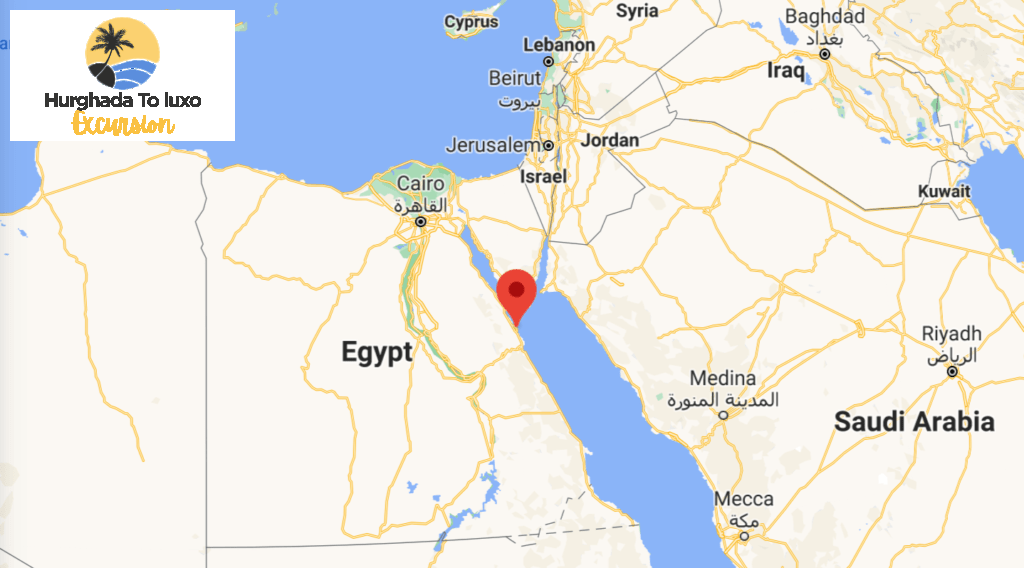
Hurghada sits on the western shore of the Red Sea, in Egypt’s Red Sea Governorate, approximately 450 km southeast of Cairo by road. It lies at around latitude 27°N — close enough to the equator to guarantee intense sunshine, yet moderated by the Red Sea breeze so that temperatures rarely become dangerously extreme.
To the west, the city is flanked by the rugged Eastern Desert — a vast, largely uninhabited expanse of mountains and wadis that for centuries acted as a natural barrier, keeping the Red Sea coast isolated from the Nile Valley. This isolation is precisely why Hurghada’s underwater world remained pristine: there was simply no large-scale human settlement to damage the reef ecosystems until tourism arrived in the 1980s.
Key distances from Hurghada:
Hurghada Travel guide Climate: What to Expect
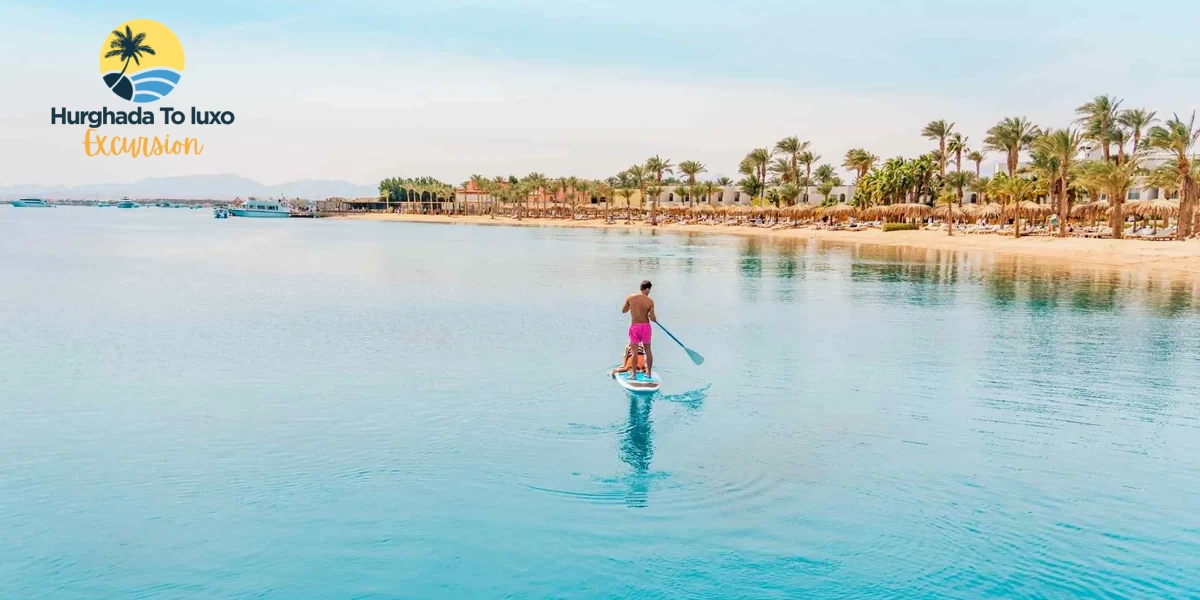
One of Hurghada’s greatest assets is its climate. The city receives almost no rainfall — typically just a few millimetres per year — and enjoys over 320 sunny days annually. This makes it a truly year-round destination, unlike Mediterranean resorts that close for winter.
💡 Best time to visit Hurghada: October to April offers the most comfortable temperatures for sightseeing and excursions (20–30°C). Divers prefer September–November for peak underwater visibility. Summer is hot but great for beach holidays with excellent resort deals.
2. What to Do in Hurghada
Whether you’re chasing underwater adventures, desert adrenaline, or ancient history, Hurghada delivers on every front. Here are the essential activities that define a visit to the city.
🤿 Diving & Snorkeling in Hurghada
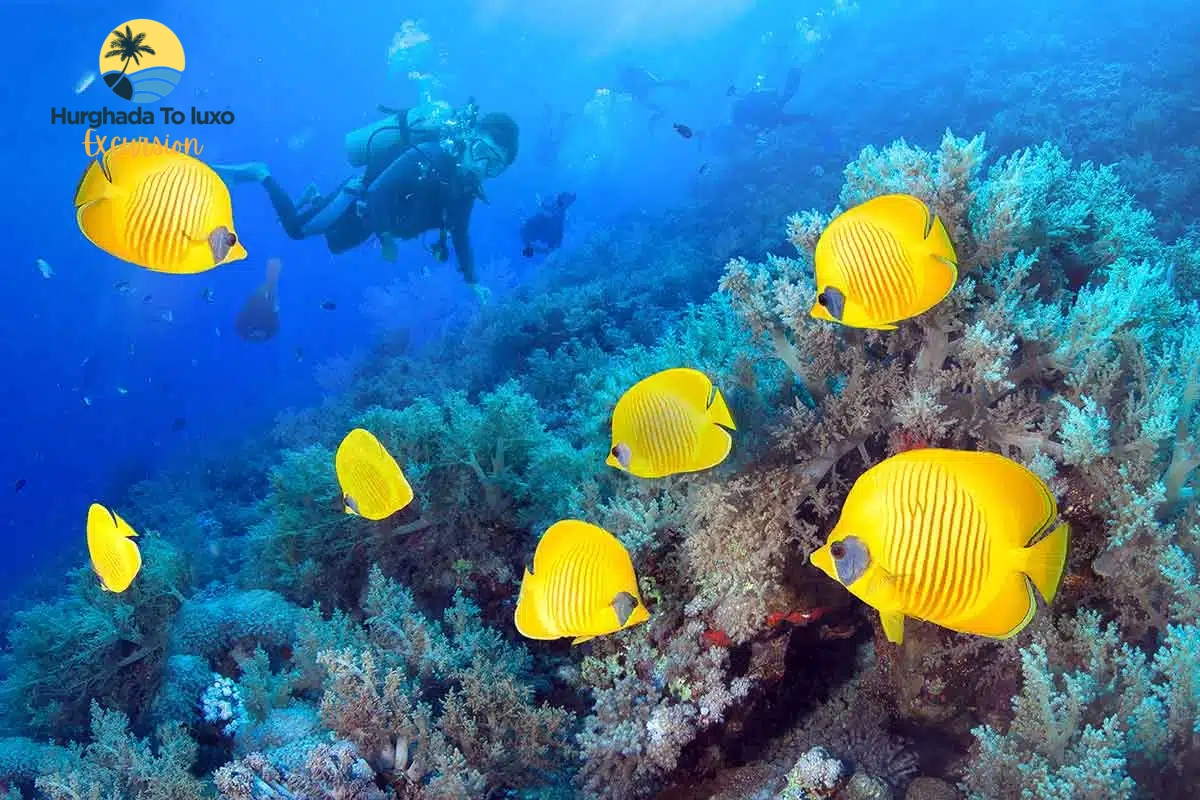
Diving is the reason many people come to Hurghada in the first place — and the Red Sea earns its legendary reputation. The combination of exceptional water clarity (visibility frequently exceeding 30 metres), warm year-round water temperatures (22–30°C), and an extraordinary density of marine life makes Hurghada one of the top five diving destinations on the planet.
The reef ecosystems here are extraordinarily diverse. In a single dive you can encounter lionfish, moray eels, sea turtles, reef sharks, Napoleon wrasse, and schools of hundreds of glass fish shimmering in the sunlight filtering through the water. Larger pelagic species — including whale sharks, hammerhead sharks, and spinner dolphins — are also regularly spotted on offshore sites.
Top diving sites near Hurghada:
🐠 Giftun Islands
The most popular site near Hurghada, offering shallow coral gardens perfect for beginners and snorkelers, alongside deeper walls and slopes for experienced divers. Also home to Hurghada’s best beaches.
🐡 Gota Abu Ramada
Known locally as “the aquarium,” this coral pinnacle is teeming with colourful reef fish and is one of the most photogenic dive sites in the entire Red Sea. Excellent for all skill levels.
🦈 Umm Qamar
A remote offshore reef offering spectacular wall diving, large coral formations, and frequent sightings of grey reef sharks and barracuda. Best for intermediate to advanced divers.
🌊 Shedwan Island
North of Hurghada, Shedwan offers excellent drift diving along dramatic drop-offs and is known for encounters with large pelagic fish. Often combined with Ashrafi Islands on liveaboard trips.
🌿 Ashrafi Islands
A protected marine reserve north of Hurghada with pristine, less-visited reefs. Known for pristine hard coral gardens and a high density of reef life rarely disturbed by tourist activity.
🐬 Dolphin House (Sha’ab El Erg)
A shallow reef lagoon that is home to a resident pod of spinner dolphins. Snorkelers and divers have a high chance of swimming alongside free-roaming dolphins — one of Hurghada’s most magical experiences.
🤿 Beginner or non-diver? Hurghada offers excellent options at every level. Snorkeling from boats gives access to most reef sites, and discover scuba diving courses (no certification needed) allow first-timers to reach up to 6 metres with an instructor. PADI open water courses are widely available from reputable dive centres in 3–4 days.
🔭 Marine Sightseeing Without Diving
Not every visitor wants to get wet — and Hurghada has thought of you too. Several specialist boat options allow non-divers to experience the Red Sea’s underwater world comfortably:
- Glass-bottom boats — The most accessible option. A large glass panel in the hull lets you observe coral and fish from a comfortable, dry seat. These run throughout the day from Hurghada’s marina and resort docks.
- Semi-submarine tours — A step up: the vessel’s hull descends partially underwater while passengers sit below the waterline in a pressurised viewing cabin. You get reef-level views without getting wet or submerging.
- Mini-submarine tours — Fully submersible vessels that descend to 20+ metres, giving genuine underwater views of species that snorkelers can’t reach. Departs from the port area daily.
- Dolphin watching & swimming tours — Daily boat trips to Sha’ab El Erg (Dolphin House) offer a near-guaranteed encounter with the resident spinner dolphin pod. On a lucky day, guides let passengers enter the water to swim alongside them.
🏜️ Desert Safari & Quad Biking
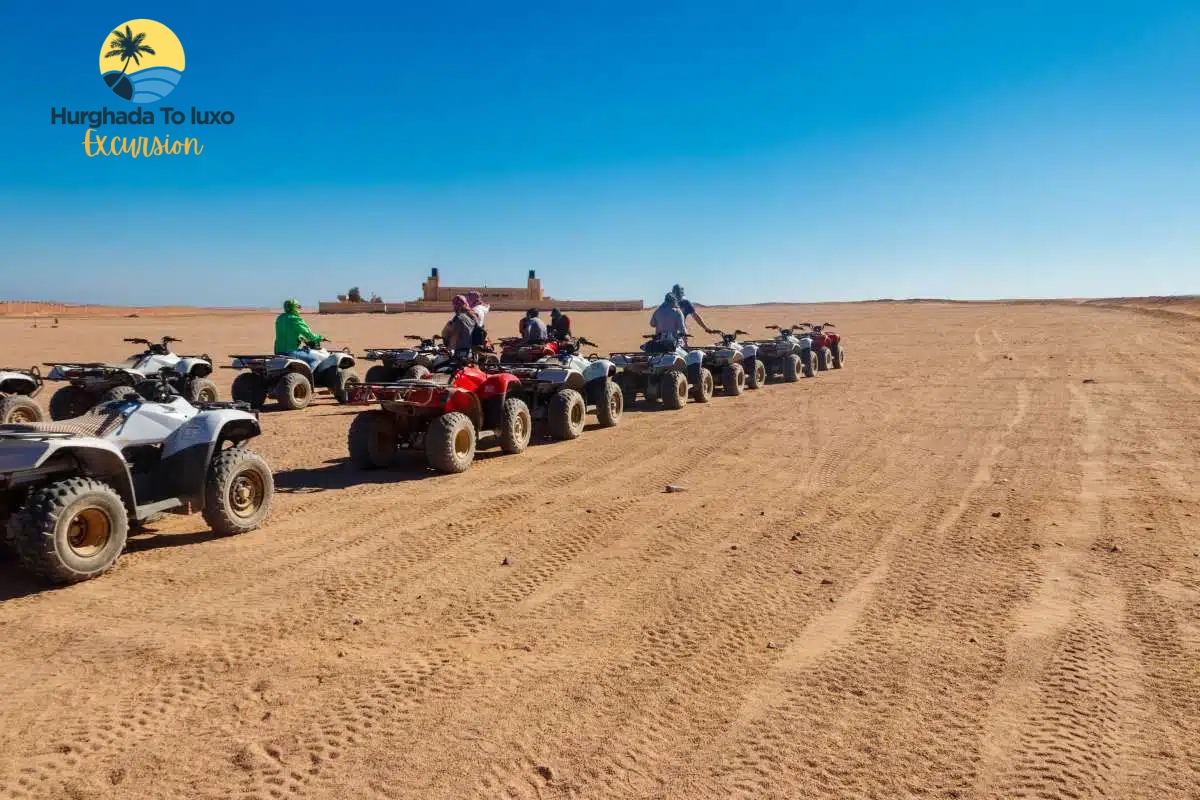
The Eastern Desert immediately behind Hurghada is surprisingly dramatic — a world of golden dunes, rocky plateaus, dry wadis, and Bedouin camps that most sun-worshippers never bother to explore. Those who do are usually the most enthusiastic guests at the dinner table that evening.
Desert safari options from Hurghada include:
- Quad bike desert safari — The most popular option. Ride ATV quad bikes across open desert terrain, typically including a stop at a Bedouin camp for mint tea, traditional bread, and a chance to stargaze. Half-day and full-day options available.
- 4×4 jeep desert tour — A more comfortable way to cover larger distances and reach remote desert landscapes, often combined with a visit to a Bedouin village and sandboarding on dunes.
- Camel trekking — For a slower, more atmospheric experience, camel rides through the desert offer a connection to Bedouin culture and a unique perspective on the landscape. Usually 1–2 hours.
- Bedouin village overnight — Some operators offer overnight desert experiences with a traditional dinner, music, and sleeping under the stars in a Bedouin camp. An unforgettable experience for the adventurous traveller.
🏺 Day Trips & Excursions from Hurghada
One of Hurghada’s great but underappreciated advantages is its proximity to some of Egypt’s most extraordinary ancient monuments. A private car makes all of these accessible as day trips or overnight excursions from your resort:
3. What to See in Hurghada
🏖️ Beaches & Islands
Hurghada’s finest beaches belong to the resorts, which maintain them meticulously with sunbeds, water sports facilities, and beach bars. Most five-star resorts have genuinely stunning private beaches, and many allow day-visitor access for a fee — worth considering if your hotel’s beach is modest.
The top beaches and islands near Hurghada include:
- Giftun Island (Big Giftun) — The Red Sea’s most iconic island beach. Fine white sand, crystalline turquoise water, and a fringing reef just metres from shore. Two beaches dominate: Paradise Beach and Orange Bay, each with its own personality. A 5 km boat trip from the mainland.
- Mahmya Island (Orange Bay) — A protected sandbar surrounded by shallow reefs managed as a conservation area. Exceptionally clear water and a peaceful, uncrowded atmosphere make it popular for exclusive boat trips.
- Sahl Hasheesh — A newer resort town 18 km south of central Hurghada with a long, unspoiled beach and luxury resorts. Less crowded and more upscale than the main resort strip.
- Makadi Bay — About 30 km south of Hurghada, this bay has a calmer, more local atmosphere and excellent reefs directly accessible from the beach — rare in the Hurghada area.
🐟 Aquariums & Marine Museums
- Hurghada Grand Aquarium — The city’s flagship aquarium, featuring a large walk-through glass tunnel surrounded by Red Sea species, plus outdoor sections with reptiles and birds. Located near the airport; a great option for a morning or afternoon outing.
- Red Sea Aquarium (Corniche) — A smaller, more traditional aquarium on the seafront promenade in Sigala. Good for a quick introduction to Red Sea marine life.
- Hurghada Marine Museum & Aquarium — Located north of the city, this museum combines life-size exhibits and preserved specimens that complement what you’ll see while diving or snorkeling.
👨👩👧👦 Family Entertainment in Hurghada
- Jungle Aqua Park — Hurghada’s largest water park, with high-speed water slides, wave pools, splash zones for young children, and extensive sunbed areas. A full-day family destination.
- Sand City — An outdoor open-air museum where talented artists sculpt enormous and intricate scenes entirely from beach sand — pharaohs, cartoon characters, deities, and mythological creatures. Uniquely Egyptian and surprisingly impressive.
- Mini Egypt — Near Makadi Bay, about 25 km from the airport. A theme park of miniature replicas of Egypt’s greatest monuments — Pyramids of Giza, Karnak, Abu Simbel, the Library of Alexandria, and more. Popular for photo opportunities and giving children context for Egypt’s ancient history.
🕌 City Sights: Marina, Al Mina Mosque & Ad Dahar Bazaar
Beyond the beach and the reef, Hurghada has a city life worth exploring. Three areas stand out:
- Hurghada Marina (Abu Tig) — The heart of the city’s upscale social scene. Spectacular yachts moored alongside traditional wooden dahabiyas and feluccas; waterfront restaurants serving everything from fresh fish to Italian gelato; boutique shopping and lively evening bars. Best visited at sunset or evening.
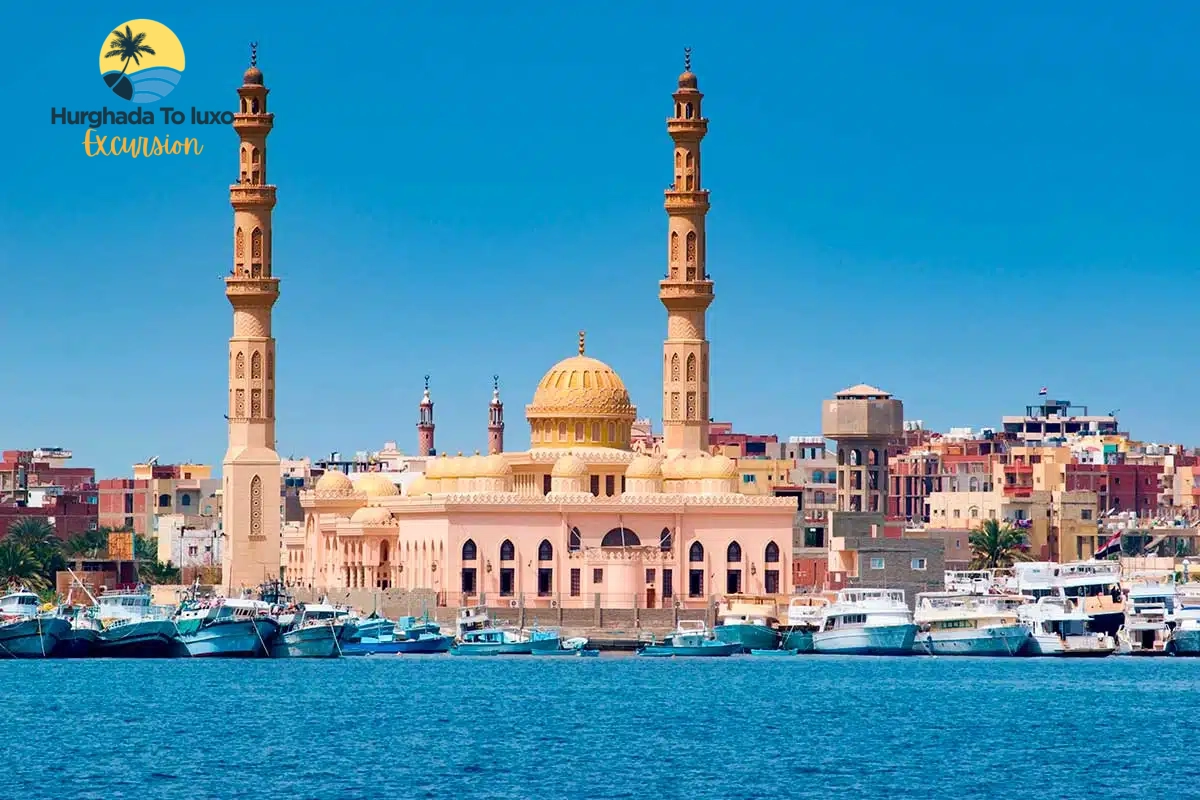
- Al Mina Mosque — Hurghada’s most beautiful architectural landmark. A recently built mosque with multiple gleaming white domes, elegant Turkish-influenced minarets, and a vast marble forecourt. It sparkles in daylight and glows magnificently at night when illuminated. Visitors are welcome outside prayer times.
- Ad Dahar Bazaar — The oldest and most authentically Egyptian area of Hurghada, located in the northern district. The bazaar here is smaller and more genuinely local than Cairo’s Khan el-Khalili, but it’s a good place to buy handicrafts, spices, galabiyyas, alabaster items, and papyrus without the hard sell common in larger tourist markets.
4. Practical Information: Getting to & Around Hurghada
✈️ How to Get to Hurghada
By Air: Hurghada International Airport (HRG) is the city’s main gateway and one of Egypt’s busiest airports. It receives direct charter and scheduled flights from across Europe, Russia, the CIS countries, and the Gulf. Major direct routes include:
- UK: London, Manchester, Birmingham, Glasgow, East Midlands, Newcastle
- Germany: Berlin, Frankfurt, Munich, Hamburg, Düsseldorf, Stuttgart, Cologne, Hanover and more
- Russia: Moscow, St. Petersburg, Novosibirsk, Chelyabinsk, Kaliningrad
- Other European: Amsterdam, Paris, Brussels, Warsaw, Vienna, Helsinki, Zurich, Geneva, Belgrade, Sofia
- Domestic: Cairo, Alexandria, Sharm El Sheikh (EgyptAir and Nile Air)
By Road: Hurghada is connected to Cairo via the coastal Highway 65 (~5 hours), and to Luxor and the Nile Valley via the desert highway through Qena (~3.5 hours). Private transfers are by far the most comfortable and practical option and can be arranged through HurghadaToGo.
By Bus: Several bus companies (Go Bus, Blue Bus) operate routes between Hurghada and Cairo, Luxor, and other Egyptian cities. Comfortable and affordable but slower than private car.
By Sea: Seasonal ferry crossings connect Hurghada with Sharm El Sheikh on the Sinai Peninsula — a scenic alternative for those combining both Red Sea coasts.
🚗 How to Get Around Hurghada
Hurghada is a long, sprawling city divided into three main areas:
- Ad Dahar (north) — The original, most traditionally Egyptian neighbourhood. Home to the bazaar, the Red Sea Aquarium, residential streets, and local restaurants.
- Sigala (centre) — The commercial and social hub, with the Marina, the Al Mina Mosque, shops, restaurants, and the majority of day-trip booking offices.
- The Resort Strip (south) — Stretching south towards and beyond the airport, this is where the majority of large international resorts are located, each with private beach access.
Walking between these areas is impractical given the distances. Getting around options:
- Local taxis — Readily available; identifiable by their distinctive orange-and-black colour scheme. A ride from Ad Dahar to the resort strip costs around 50–80 EGP. Always agree a price before you travel.
- Private transfers — The most comfortable and reliable option, especially for resort guests going to and from excursions, the airport, or day trips. HurghadaToGo provides private chauffeur-driven vehicles.
- Car rental — Available at the airport and in the Sigala area; recommended only for experienced drivers comfortable with Egyptian road conditions.
- Tuk-tuks — Three-wheeled motorised rickshaws useful for short trips within one neighbourhood. Cheap and available but not suitable for cross-city journeys.
Planning a Trip to Hurghada?
HurghadaToGo is a locally based tour operator with expert knowledge of the Red Sea, the Eastern Desert, and Egypt’s ancient monuments. We specialise in private, tailor-made excursions — from snorkeling trips to Luxor overnight tours.
5. Frequently Asked Questions About Hurghada
Ready to Discover Hurghada?
From the moment you descend into the Red Sea’s impossibly clear waters and encounter your first coral garden, to the jaw-dropping moment you stand in the Valley of the Kings 3,500 years of history whispering from every hieroglyph — Hurghada delivers experiences that stay with you for life.
HurghadaToGo is here to make your trip effortless. As a locally based team, we know every reef, every road, and every monument. Browse our tours below or contact us directly on WhatsApp — we respond fast.