⚰️ Private Tour · Egyptologist Guide · Hidden Tombs · No Shopping Stops
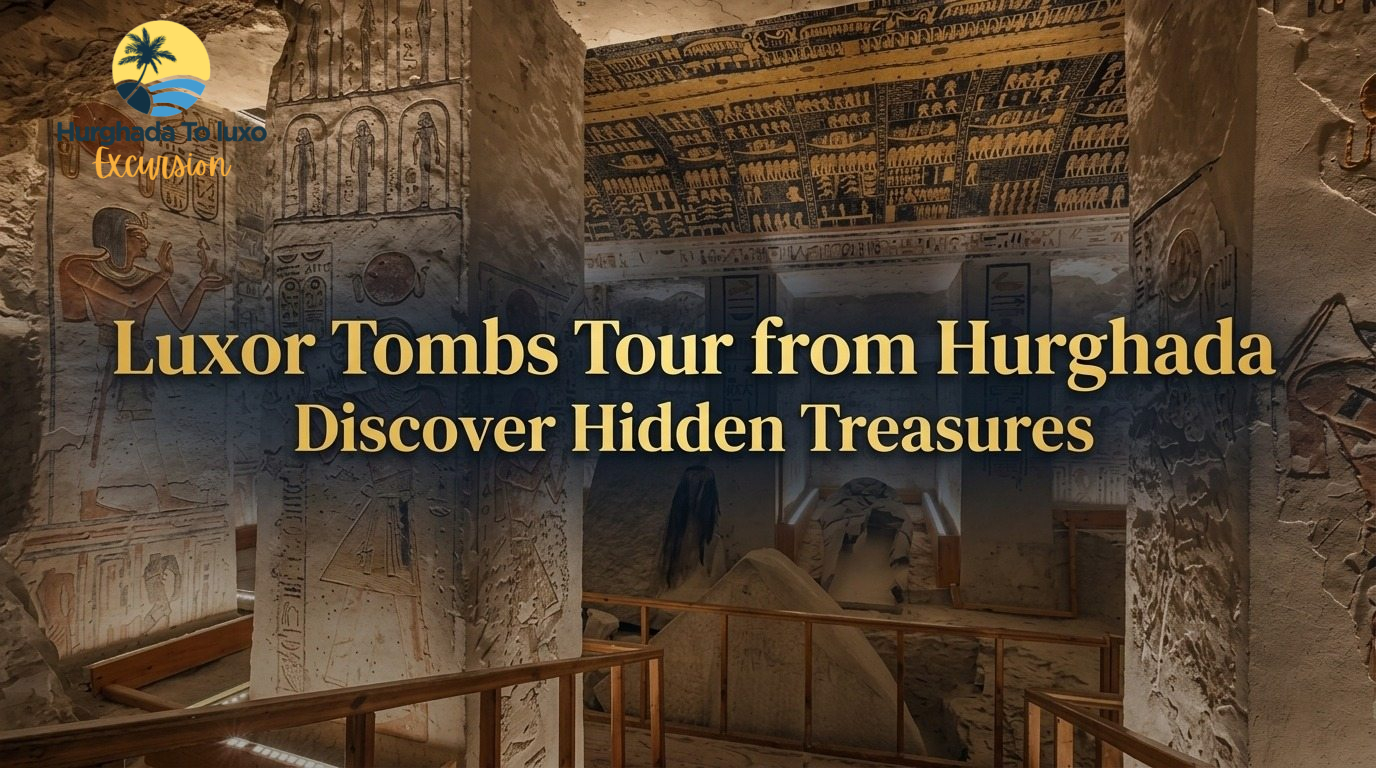
Luxor Tombs Tour from Hurghada Discover Hidden Treasures
📅 Updated: June 2026 | ⏱️ 18 min read | 💶 From €95 / person | ⭐ 4.9/5 | ⚰️ Valley of the Kings + Hidden Tombs
The Luxor Tombs Tour from Hurghada is Egypt’s most extraordinary private excursion — a full-day journey into the world’s greatest royal necropolis, taking you beyond the standard tourist sites into the hidden treasures of ancient Thebes that most Hurghada visitors never discover. From the famous Valley of the Kings to the intimate Nobles’ Tombs, from the royal Valley of the Queens to the painted village of Deir el-Medina, this private tour with a licensed Egyptologist reveals the full spectrum of Luxor’s buried world.
This complete guide answers every question before you book: Is there still undiscovered treasure in Egypt? Is it worth going to Luxor from Hurghada? Does Luxor have real Egyptian artefacts? What are the best tombs to visit in Luxor? Whether you are visiting the tombs for the first time or returning to explore beyond the Valley of the Kings, this is the most comprehensive resource on a Luxor tombs tour from Hurghada available in 2026.
⚰️ Why Luxor’s tombs are unlike anything else on earth: The West Bank of Luxor is the world’s most concentrated ancient necropolis — over 500 tombs cut into the limestone of the Theban Hills, spanning 1,500 years of pharaonic burial tradition. The Valley of the Kings alone contains 63 royal tombs. But the hidden treasures of Luxor extend far beyond it: the Nobles’ Tombs preserve intimate painted scenes of daily life that royal tombs never show. The Valley of the Queens hides Nefertari’s Tomb — the most beautifully decorated space in ancient Egypt. The village of Deir el-Medina preserves the homes and tombs of the artisans who built them all.
Is There Still Undiscovered Treasure in Egypt?
Yes — and far more than most people realise. Egypt’s Minister of Antiquities has stated publicly that archaeologists have found less than 30% of what lies beneath Egyptian soil. The Valley of the Kings itself still yields discoveries: KV63 was found in 2006 (the first new Valley tomb since Tutankhamun in 1922), and KV64 was confirmed in 2011. Ground-penetrating radar surveys beneath Tutankhamun’s tomb have suggested the possible presence of additional chambers. New tombs are discovered regularly across the Luxor West Bank, particularly in the Nobles’ Tombs area where excavations continue.
The concept of hidden treasures in Luxor is entirely literal. In 2022, a cache of 250 complete sealed coffins was discovered at Saqqara, still containing their mummies. In 2023, an intact workshop and storage facility was found beneath the Theban plain containing bronze figurines, amulets, and papyri. The sand of ancient Thebes continues to yield extraordinary objects to teams working at this very moment.
🔍
KV63 — Discovered 2006
The first new tomb discovered in the Valley of the Kings since Tutankhamun in 1922 — 84 years after the world’s most famous archaeological find. It contained seven coffins and storage jars but no royal mummy. It proved the Valley still holds secrets.
📡
Radar Beneath Tutankhamun
Ground-penetrating radar surveys within KV62 have suggested possible sealed chambers adjacent to the burial room — potentially the resting place of Queen Nefertiti. Ongoing investigation continues to generate global headlines.
🏺
2023 — Bronze Cache at Luxor
An intact ancient workshop discovered beneath the West Bank plain in 2023 contained bronze figurines, amulets, papyri, and storage vessels from the Late Period — a completely unexpected find in a well-surveyed area.
🌿
Nobles’ Tombs — New Finds Every Year
The area of the Nobles’ Tombs on the West Bank contains over 500 registered tombs, of which perhaps 60 are open to visitors. New chambers are cleared and opened regularly. Your guide knows which new discoveries are accessible to the public.
🔑 What this means for your visit: Walking through the tombs of the Valley of the Kings in 2026, you are walking through an active archaeological zone where discoveries are still being made. Your private Egyptologist guide knows the latest developments — which new tombs have been opened, which ongoing excavations are visible, and which sites are producing finds right now. This living quality of ancient Luxor is something no museum exhibit can replicate.
Is It Worth Going to Luxor from Hurghada?
Yes — Luxor is the single most rewarding excursion available from any Red Sea resort in Egypt. The Luxor tombs tour from Hurghada is the most popular and highest-rated private excursion from the Red Sea coast, and it consistently receives higher satisfaction scores than any beach activity, dive trip, or desert safari. Most travellers who complete it describe it as the best day of their Egypt holiday.
Hurghada is 260 km from Luxor — a 3-hour drive across the Eastern Desert via the Red Sea Mountains highway. This is not a trivial journey, but it is entirely comfortable in a private air-conditioned vehicle with a guide who transforms the drive into the first chapter of your day. You arrive in ancient Thebes — the world’s greatest concentration of ancient monuments — with a dedicated Egyptologist and a full day to explore it properly.
| Question |
Answer |
| Is the drive from Hurghada to Luxor worth it? |
Yes — most visitors call it the best day of their Egypt trip |
| Distance Hurghada to Luxor |
260 km — approximately 3 hours private air-conditioned vehicle |
| Best format for the journey |
Private tour with dedicated Egyptologist — not group bus |
| Can you visit multiple tombs in one day? |
Yes — Valley of the Kings + Nobles’ Tombs + Deir el-Medina + Queens in one day |
| Is a Luxor tombs day trip from Hurghada feasible? |
Yes — depart 05:30 AM, return 20:30–21:00 PM with 8–9 hours sightseeing |
Does Luxor Have Real Egyptian Artefacts?
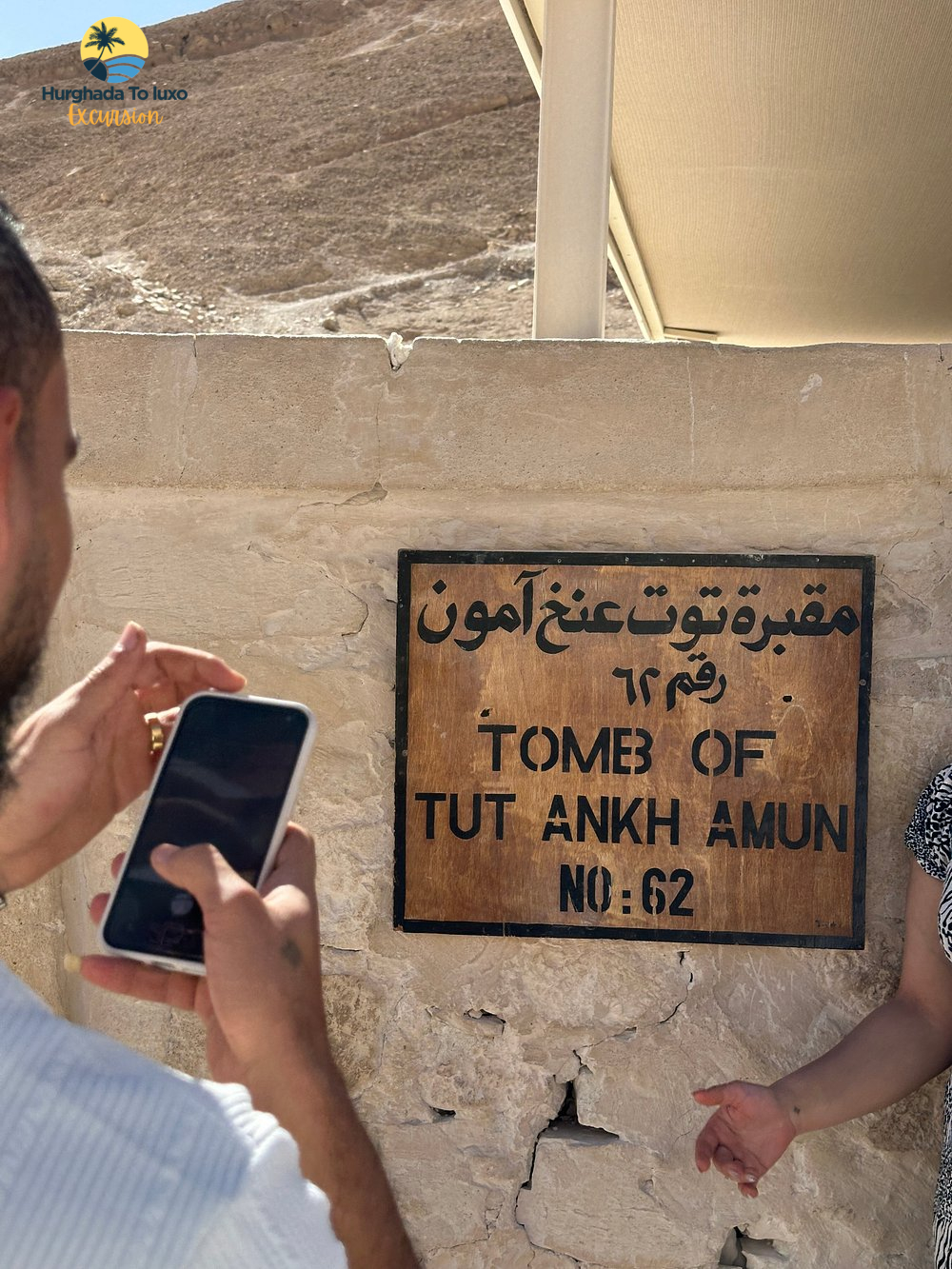
Yes — Luxor is one of the few places on earth where you encounter original ancient Egyptian artefacts in their original context. Unlike a museum where objects have been removed from their tombs and placed in display cases, the tombs of Luxor’s West Bank preserve artefacts exactly where they were placed thousands of years ago: painted walls, carved hieroglyphs, inlaid column capitals, sculpted figures, relief portraits of pharaohs and gods — all in the rooms built to contain them. The mummy of Tutankhamun still rests in his tomb (KV62) in the Valley of the Kings, exactly where Howard Carter found him in 1922.
Additionally, Luxor Museum — one of Egypt’s finest — houses an extraordinary collection of objects found in the Theban area, including the statue of Thutmose III widely considered the finest royal portrait in Egyptian art, two complete Royal Mummies, and hundreds of individual artefacts from tombs and temples across the West Bank. Your guide can incorporate a Luxor Museum visit into the afternoon of your tombs tour.
⚰️ Tutankhamun’s Mummy
Still resting in KV62 in the Valley of the Kings — the only royal mummy remaining in the valley. Optional tomb entry ~€15 extra.
🎨 Original Painted Walls
The painted walls of the Nobles’ Tombs show scenes of ancient Egyptian daily life — hunting, farming, feasting, music — painted 3,400 years ago with pigments still vivid.
🏛️ Luxor Museum
One of Egypt’s finest museums — the Thutmose III statue, two Royal Mummies, and hundreds of authentic artefacts from the Theban area. ~€10 extra, ~90 minutes.
🔵 In-Situ Sarcophagi
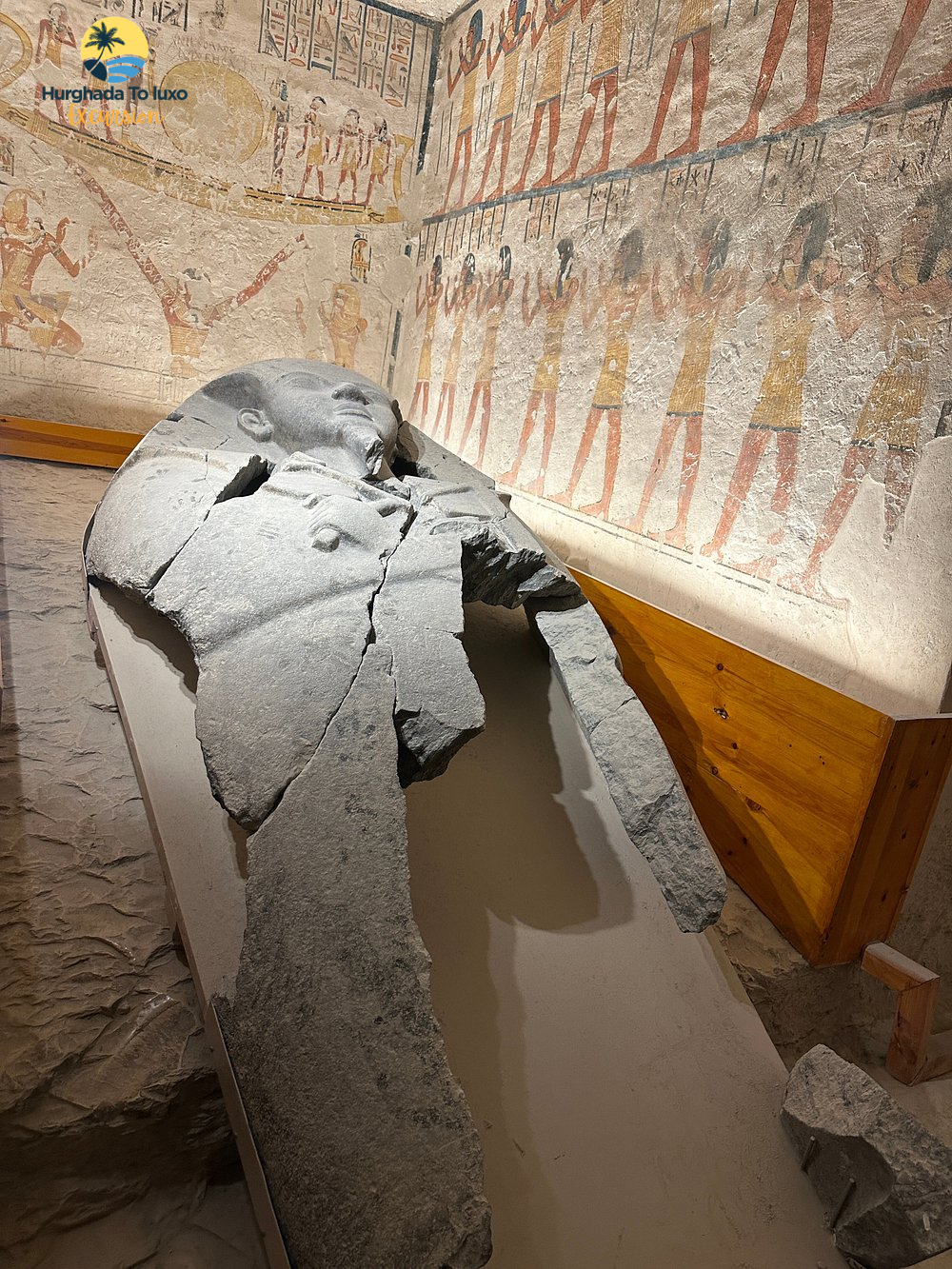
Several tombs in the Valley of the Kings (KV35, KV11) retain their original stone sarcophagi in situ — the very containers built to hold the pharaoh’s body for eternity.
What Are the Best Tombs to Visit in Luxor?
This is the most important question any traveller asks before a Luxor tombs tour — and the answer depends entirely on your interests. Here is the definitive guide to the best tombs in Luxor across all four major necropolis areas, with your private Egyptologist’s recommendation for each.
| Tomb |
Name / Pharaoh |
Why Visit |
Ticket |
| KV62 |
Tutankhamun |
Only royal mummy still in the Valley. Smallest royal tomb but most famous in history — found intact in 1922 by Howard Carter. |
+€15 extra |
| KV9 |
Ramesses VI |
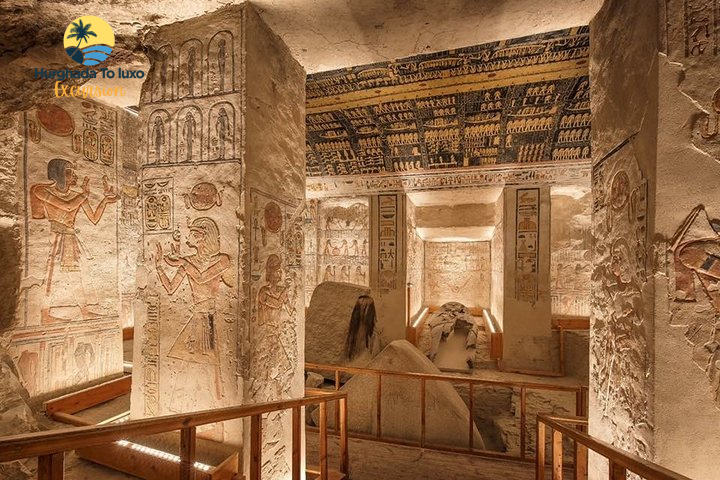
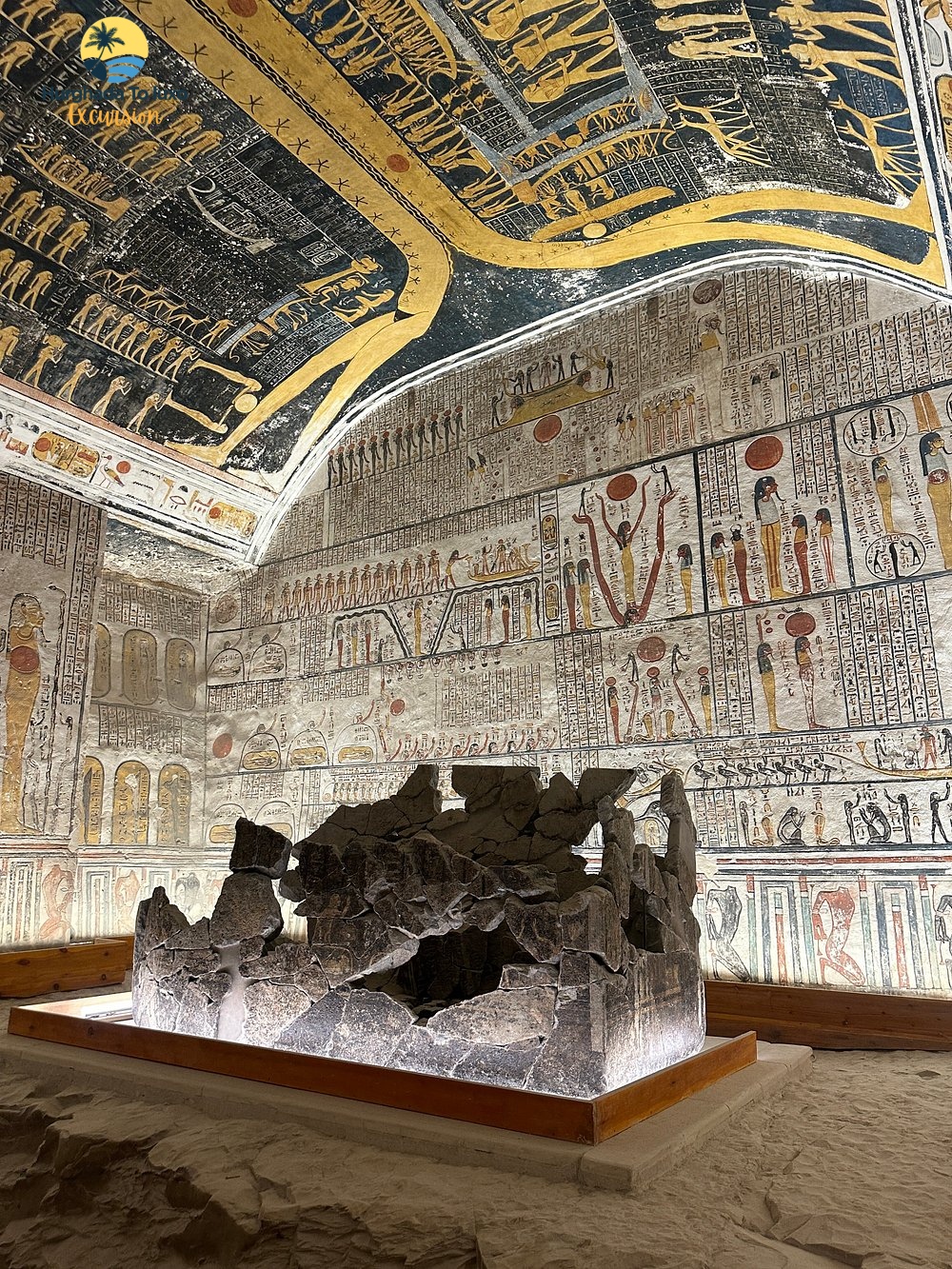
Most elaborately decorated tomb in the Valley — complete astronomical ceiling mapping the ancient Egyptian sky in gold on deep blue. |
+€8 extra |
| KV11 |
Ramesses III |
One of the largest tombs — 168 metres deep with unique side chambers depicting musical instruments, ships, food preparation. |
Standard |
| KV35 |
Amenhotep II |
Multi-level burial chamber — original red quartzite sarcophagus in situ. One of the most dramatic spatial sequences in the Valley. |
Standard |
| KV17 |
Seti I |
The longest tomb in the Valley (137 metres) and the most beautifully painted — reliefs of exceptional quality, many still vivid after 3,200 years. |
+€25 extra |
| QV66 |
Nefertari (Queens) |
The Sistine Chapel of ancient Egypt — 520 m² of the finest painted walls surviving from the ancient world. Wife of Ramesses II. |
+€25 extra |
| TT52 |
Nakht (Nobles) |
The finest example of daily life painting in the Nobles’ Tombs — banquet scenes, musicians, hunting, agriculture in extraordinary vivid colour. |
Standard |
| TT69 |
Menna (Nobles) |
Agricultural scenes of extraordinary detail — land measurement, harvest, grain transport. One of the most charming and intimate tombs in the entire necropolis. |
Standard |
| Deir el-Medina |
Artisans’ Tombs |
The village tombs of the craftsmen who built the royal tombs — decorated with unique imagery unavailable anywhere in the royal necropolis. Sennedjem’s tomb is the finest. |
Standard |
💡 Our guide’s selection: For a first visit to Luxor’s tombs, the ideal combination is: Valley of the Kings (KV9 + KV11 + one more standard tomb) + Tutankhamun optional + the Nobles’ Tombs of Nakht and Menna (which most group tours never visit) + Deir el-Medina village. This covers the best tombs in Luxor across four separate necropolis areas and gives a complete picture of ancient Egyptian funerary culture that the Valley of the Kings alone cannot provide.
10 Hidden Treasures of the Luxor Tombs Tour from Hurghada
👑
1. Valley of the Kings — The Royal Necropolis
63 pharaonic tombs cut into the limestone of the Theban Hills between 1550 and 1070 BCE. Standard ticket includes 3 tombs — your guide selects the finest open on your visit day. The painted corridors and burial chambers are among the greatest artistic achievements of the ancient world.
⚰️
2. Tutankhamun’s Tomb (KV62) — Optional Add-On
The only royal mummy still resting in the Valley — exactly where Howard Carter found him in 1922. The antechamber, burial chamber, and sarcophagus exactly as left after excavation. The most emotionally resonant space in ancient Egypt. ~€15 extra — highly recommended.
🎨
3. Nobles’ Tombs — The Hidden Gem of Luxor
The Tombs of the Nobles (Sheikh Abd el-Qurna) are the greatest secret on the West Bank — over 500 tombs of viziers, priests, and scribes decorated with vivid scenes of daily life, banquets, hunting, and agriculture that royal tombs never show. Almost no group tour visits them. Your private guide reveals this hidden treasure of Luxor.
🎵
4. Tomb of Nakht (TT52) — The Best Daily Life Tomb
The finest banquet and daily life scene in the entire Theban necropolis — painted around 1400 BCE for a royal astronomer/scribe. Three female musicians, harvest scenes, grape-treading, and hunting all rendered with exceptional delicacy and vivid colour. A completely different world from the royal tombs.
🌾
5. Tomb of Menna (TT69) — Agricultural Masterpiece
Menna was an estate inspector — and his tomb shows every aspect of Egyptian agricultural life in extraordinary detail: land surveying, grain harvesting, fishing, and hunting. One of the most intimate and charming tombs in the entire Luxor necropolis.
🏘️
6. Deir el-Medina — The Artisans’ Village
The ancient village and tombs of the craftsmen who built the royal tombs — a completely intact community whose inhabitants lived, worked, and were buried here for 400 years. Their tombs contain imagery found nowhere else in Egyptian art. The hidden treasure of Deir el-Medina — almost unknown to most tourists.
👸
7. Valley of the Queens — Nefertari’s Tomb (Optional)
The Tomb of Nefertari (QV66) — wife of Ramesses II — is the most beautifully decorated tomb in ancient Egypt: 520 m² of painted walls retaining their original vivid colours after 3,200 years. Strictly limited daily access. The ultimate hidden treasure of Luxor. ~€25 extra, must be pre-booked.
🗿
8. Temple of Hatshepsut & Colossi of Memnon
Between the tomb valleys stands the three-terraced mortuary temple of Egypt’s greatest female pharaoh — and at the West Bank entrance, the twin 18-metre quartzite colossi of Amenhotep III, among the most famous statues in the ancient world.
🛥️
9. Private Nile Motorboat Crossing
The private motorboat crossing from East to West Bank — the symbolic journey between the world of the living and the city of the dead made by ancient Egyptians for 4,000 years. Your guide explains its cosmological significance as you cross in morning light.
🏛️
10. Luxor Museum (Optional Afternoon)
One of Egypt’s finest small museums — the Thutmose III statue (greatest royal portrait in Egyptian art), two Royal Mummies, hundreds of authentic Egyptian artefacts from Theban tombs and temples. ~€10 extra, ~90 minutes. The perfect complement to a day in the tombs.
Full Itinerary — Hour by Hour from Hurghada to Luxor’s Tombs
The complete Luxor Tombs Tour private excursion from Hurghada — every stage from hotel pickup to return. This tour goes beyond the standard Valley of the Kings programme to include the Nobles’ Tombs and Deir el-Medina — the hidden treasures that most Hurghada excursions never reach.
05
05:00 – 06:00 AM — Private Hotel Pickup
Your Private Vehicle at Your Hotel Lobby
Your fully air-conditioned private vehicle collects you directly from your hotel — Hurghada, El Gouna, Sahl Hasheesh, Makadi Bay, or Soma Bay. Pickup time confirmed 24 hours in advance. Bottled water and USB charging from the first moment. No shared pickups, no waiting for other hotels.
⛰️
05:30 – 08:30 AM — Hurghada to Luxor (260 km)
The Desert Highway — Private Tomb Briefing
The 3-hour drive across the Red Sea Mountains. Your licensed Egyptologist guide travels with you from departure — briefing you on the complete history of the Theban Necropolis, the fascinating stories of the individual Luxor tombs you will visit, the 1922 discovery of Tutankhamun, the recent archaeological finds, and what makes the Nobles’ Tombs and Deir el-Medina different from everything else on the West Bank. The desert sunrise over the Eastern Desert begins around 05:45 AM.
🛥️
08:30 – 09:00 AM — Arrival & Nile Motorboat Crossing
East Bank to West Bank — The Journey into the Necropolis
A private motorboat crossing of the Nile — the Theban Hills rising ahead through the morning light. Your guide explains the ancient Egyptian cosmological significance of crossing from the East (world of the living) to the West (world of the dead). Your private driver meets you on the western shore.
🗿
09:00 – 09:20 AM — Colossi of Memnon
The Twin Guardians — Gateway to the West Bank
The twin 18-metre quartzite colossi of Amenhotep III — first ancient monument after the Nile crossing. Famous in antiquity for producing a musical sound at dawn. A 15-minute photography stop that sets the scale for everything you are about to discover.
👑
09:20 – 11:30 AM — Valley of the Kings ⭐⭐⭐
The Royal Necropolis — Best Tombs Before the Crowds
The Valley of the Kings in the morning — arriving well before the peak of the coach parties from Nile cruise ships. Standard ticket includes 3 tombs selected by your guide. Depending on your interests, your guide prioritises: KV9 (Ramesses VI — finest astronomical ceiling), KV11 (Ramesses III — largest with unique side chambers), KV35 (Amenhotep II — original sarcophagus in situ), or others open on your date. Optional: Tutankhamun’s tomb (KV62) ~€15 extra — the only royal mummy still in the Valley, the antechamber exactly as Howard Carter found it. Your guide covers the complete history of the Valley of the Kings tombs, the royal tomb-building process, and the latest archaeological discoveries.
👸
11:30 AM – 12:30 PM — Temple of Hatshepsut
Deir el-Bahari — Egypt’s Greatest Female Pharaoh
The three-terraced mortuary temple of Hatshepsut — who ruled Egypt for 21 years as pharaoh and was subsequently erased from official records by her successor Thutmose III. The temple rises dramatically against the limestone cliffs with painted reliefs of her expedition to the Land of Punt and her divine birth. Your guide narrates her extraordinary story.
🎨
12:30 – 14:00 PM — Nobles’ Tombs (Sheikh Abd el-Qurna) ⭐⭐⭐
The Hidden Treasures of Luxor — Daily Life in Ancient Egypt
The Nobles’ Tombs are the most underrated sites in the entire Luxor necropolis — and virtually no group tour from Hurghada includes them. These tombs of viziers, scribes, priests, and estate managers contain the most vivid scenes of ancient Egyptian daily life anywhere in Egypt: banquets with musicians and dancers, agricultural surveys, fowling in the marshes, grape-treading, funerary processions. The Tomb of Nakht (TT52) — with its extraordinary three-musician scene — and the Tomb of Menna (TT69) — with its agricultural panoramas — are the primary visits. These are the hidden treasures of ancient Luxor that professional Egyptologists recommend above the Valley of the Kings for the quality of daily-life painting. Your private guide has no time pressure — 90 minutes to absorb what most visitors never see.
🏘️
14:00 – 15:00 PM — Deir el-Medina — The Artisans’ Village ⭐⭐
The Village of the Tomb-Builders — Egypt’s Most Extraordinary Community
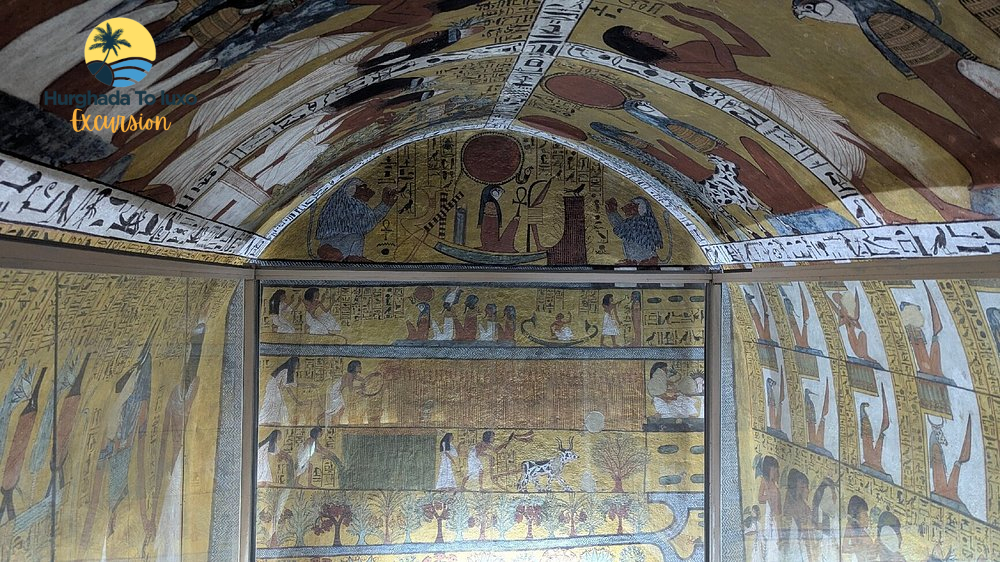
Deir el-Medina is the best-preserved ancient Egyptian village in existence — the home of the craftsmen and artists who built and painted the royal tombs for 400 years. Their own tombs are small but decorated with imagery found nowhere else in Egyptian art: scenes from the Book of Gates and Amduat rendered in a more personal, vivid style than the royal tombs they worked on professionally. The Tomb of Sennedjem is the finest — painted with remarkable freshness by the head of the royal tomb-building team. The adjacent Ptolemaic temple of Hathor preserves beautiful reliefs from a completely different era. This is one of the truly hidden treasures of Luxor — visited by a fraction of the tourists who crowd the Valley of the Kings 1 km away.
🍽️
15:00 – 16:15 PM — Nile-View Lunch
Rest and Reflect After a Remarkable Day
Lunch at a quality Nile-view restaurant selected by your guide for quality, never commission. Egyptian mezze, grilled dishes, fresh juices. Vegetarian, halal, and child-friendly always available. The West Bank cliffs visible across the water in the afternoon light.
🏛️
16:15 – 17:15 PM — Optional: Luxor Museum or Karnak Temple
East Bank Add-On — Real Egyptian Artefacts in Context
Luxor Museum (~€10 extra) — the finest small museum in Egypt, housing the Thutmose III statue (greatest royal portrait in Egyptian art) and two Royal Mummies. Alternatively, Karnak Temple at 16:00 when significantly quieter than the morning rush — the Great Hypostyle Hall, Sacred Lake, and Avenue of Ram-Headed Sphinxes in 60 minutes. Either option connects the day’s tombs to the living temples of the East Bank.
🚗
17:30 – 20:30 PM — Private Return to Hurghada
Door-to-Door Return as the Desert Turns Gold
Your private vehicle drives directly to your Hurghada hotel — no shared stops, no coach schedule. The 3-hour return crosses the Red Sea Mountains at sunset, amber and copper. You arrive at approximately 20:30–21:00 with a full evening ahead and the greatest day of your trip behind you.
Private Tours Only — Beyond the Standard Tourist Trail
Secure your Luxor Tombs Tour from Hurghada — Valley of the Kings + Nobles’ Tombs + Deir el-Medina + Hatshepsut. The hidden treasures of ancient Thebes revealed by a dedicated Egyptologist.
⚰️ Book Luxor Tombs Tour — From €95
Free cancellation up to 24 hours before departure
Valley of the Kings — Complete Tomb Guide
The Valley of the Kings contains 63 tombs but only a rotating selection of approximately 12–18 are open to visitors at any given time. Your guide selects based on what is open, what is best preserved, and what interests your group most. Here is the complete guide to the most important Luxor tombs in the Valley.
⭐ KV62 — Tutankhamun
~€15 extra · Most recommended
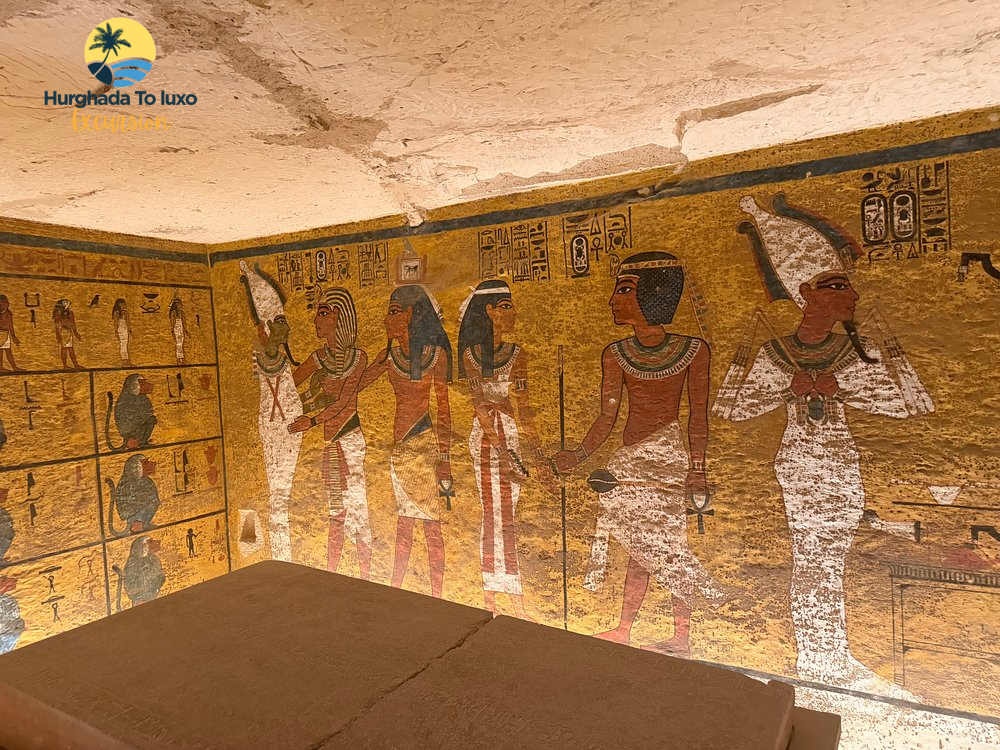
The only intact royal burial found in the Valley. Tutankhamun’s mummy still rests in his quartzite sarcophagus. The antechamber layout exactly as Howard Carter described “wonderful things” in 1922. The smallest royal tomb — but the most emotionally powerful.
⭐ KV9 — Ramesses VI
~€8 extra · Best astronomical ceiling
The most elaborately decorated tomb in the Valley — the complete astronomical ceiling mapping the ancient Egyptian sky in gold on deep blue. The two corridors are covered in versions of the Book of Gates, the Book of Caverns, and the Book of the Earth.
⭐ KV11 — Ramesses III
Standard ticket · Largest open tomb
One of the largest tombs at 168 metres deep — with extraordinary side chambers depicting musical instruments (the “Harper’s Tomb”), foreign prisoners, food preparation, and ships. The only tomb in the Valley with a complete programme of daily life imagery.
⭐ KV35 — Amenhotep II
Standard ticket · Original sarcophagus
A multi-level burial chamber with dramatic spatial sequences and the original red quartzite sarcophagus still in situ. This tomb was used as a royal mummy cache in antiquity — when it was cleared, it contained the mummies of nine other pharaohs including Thutmose IV and Amenhotep III.
⭐ KV17 — Seti I
~€25 extra · Most beautiful reliefs
The longest tomb in the Valley (137 metres) and the most beautifully painted — discovered by Belzoni in 1817. The reliefs are of extraordinary quality and many retain vivid colour after 3,200 years. The astronomical ceiling of the burial chamber influenced European art in the 19th century.
⭐ KV62 Alternative — KV34 Thutmose III
Standard ticket · Most remote tomb
Hidden at the end of a steep rocky path — the most dramatically inaccessible tomb in the Valley. The burial chamber’s oval cartouche-shaped walls and stick-figure illustrations from the Amduat (the oldest version of this text) are unlike anything in any other tomb.
The Hidden Tombs — Beyond the Valley of Kings
The Valley of the Kings is famous — but the real hidden treasures of the Luxor necropolis lie in the less-visited tomb areas that most group tours never include. Here is your private guide’s complete breakdown of what lies beyond the famous valley.
🎨 Nobles’ Tombs (Sheikh Abd el-Qurna)
Over 500 tombs of Theban nobles, officials, and priests — the most vivid daily-life paintings in ancient Egypt. Almost completely absent from standard group tours. Your private guide knows which tombs are currently open and best preserved.
Best open tombs: TT52 (Nakht), TT69 (Menna), TT100 (Rekhmire), TT55 (Ramose), TT96 (Sennefer)
🏘️ Deir el-Medina (Artisans’ Village)
The tombs of the craftsmen who built and painted all the royal tombs. Their own tombs contain unique imagery found nowhere else. Sennedjem’s tomb (TT1) is the finest — completely intact when found in 1886. The adjacent Ptolemaic temple adds an extra historical layer.
Key tombs: TT1 (Sennedjem), TT3 (Pashedu), TT290 (Irinefer)
👸 Valley of the Queens (Ta Set Neferu)
Over 90 tombs of royal wives, daughters, and princes. The Tomb of Nefertari (QV66) is the most beautiful painted space in the ancient world — strictly limited access, must be pre-booked. ~€25 extra per person.
Key tombs: QV66 (Nefertari), QV44 (Prince Khaemwaset), QV55 (Amunherkhepshef)
🔬 Valley of the Kings — Recent Discoveries
KV63 (2006) and KV64 (2011) — the two most recent tomb discoveries in the Valley. Ground-penetrating radar beneath KV62 suggesting possible additional chambers adjacent to Tutankhamun’s burial room. Your guide covers all current research.
Active excavations: University of Basel Egyptian Mission, Earl of Carnarvon Foundation
Tour Details — Duration, Pickup Times & Languages
| Detail |
Information |
| ⏱️ Total Duration |
Approximately 15–16 hours door to door (05:30 AM departure → 20:30–21:00 PM return) |
| 🕔 Pickup Time |
05:00–06:00 AM depending on hotel location. Confirmed 24 hours before departure. |
| ⏱️ Time at Valley of the Kings |
2 hours (3 standard tombs + optional Tutankhamun) |
| ⏱️ Time at Nobles’ Tombs |
1.5 hours — Nakht, Menna, + 1–2 others based on your interests |
| ⏱️ Time at Deir el-Medina |
1 hour — Sennedjem’s tomb + Ptolemaic temple |
| 🌍 Guide Languages |
English (standard) · Arabic · French · German · Italian · Spanish — request at booking |
| 👥 Group Type |
Private — your group only. Minimum 2 persons. Solo supplement +25%. |
| 🚗 Vehicle |
Private air-conditioned car (2–4 persons) or minivan (5–12 persons) |
| 📍 Pickup Locations |
All Hurghada hotels · El Gouna · Sahl Hasheesh · Makadi Bay · Soma Bay |
| ❌ Cancellation |
Free cancellation up to 24 hours before departure |
2026 Pricing — What Is Included & What Is Not
Starting from
€95
per adult · approx. £81 per person
✓ Private Vehicle · ✓ Egyptologist Guide · ✓ All Entrance Fees · ✓ Lunch · ✓ Nile Crossing
Children (0–12): €50 · Solo supplement: +25%
| ✓ Included in Your Luxor Tombs Tour |
| ✓ |
Private round-trip air-conditioned vehicle (Hurghada ↔ Luxor) — your group only |
| ✓ |
Licensed English-speaking Egyptologist guide — dedicated to your group all day |
| ✓ |
Valley of the Kings entrance (3 standard tombs) |
| ✓ |
Nobles’ Tombs (Sheikh Abd el-Qurna) — Nakht + Menna + others |
| ✓ |
Deir el-Medina artisans’ village tombs + Ptolemaic temple |
| ✓ |
Temple of Hatshepsut & Colossi of Memnon |
| ✓ |
Private Nile motorboat crossing (East Bank → West Bank → East Bank) |
| ✓ |
1 lunch at a quality Nile-view restaurant |
| ✓ |
Bottled water throughout the day |
| ✓ |
Zero shopping stops — guaranteed in writing |
| ✕ Not Included — Optional Extras |
| ✕ |
Tutankhamun’s tomb (KV62) — ~€15 extra · highly recommended |
| ✕ |
Tomb of Nefertari (QV66) — ~€25 extra · must be pre-booked · most beautiful tomb in Egypt |
| ✕ |
Luxor Museum — ~€10 extra · highly recommended afternoon add-on |
| ✕ |
Seti I tomb (KV17) — ~€25 extra · longest and most beautifully painted tomb in the Valley |
| ✕ |
Tips for guide and driver (optional — €10–€15 total appreciated) |
| ✕ |
Personal purchases and souvenirs |
The Luxor Tombs Tour connects naturally to a wider Egyptian journey. Here are the tours that build on your day in the tombs — extending north to Cairo and the Grand Egyptian Museum, south to Abu Simbel and Aswan, or along the quiet Red Sea coast south of Hurghada.
🏛️ Luxor → Cairo → Abu Simbel — Extend North & South
🏺
From €360 · Overnight in Luxor 5-Star
Day 1: East Bank — Karnak Temple + Luxor Temple by night in amber floodlighting. Day 2: Full West Bank including Valley of the Kings + Nobles’ Tombs + Deir el-Medina + Hatshepsut. Overnight in 5-star Nile hotel.
🏛️
From €145 · Cairo / Giza · 460 km
The world’s largest archaeological museum — all 5,000+ Tutankhamun artefacts displayed together for the first time. Giza Pyramids and Sphinx in the morning. The ultimate complement to your Luxor tombs day.
🗽
From €290 · Overnight Luxor or Aswan
Day 1: Full Luxor West Bank tombs programme. Day 2: Drive to Aswan (Philae Temple, High Dam) + Abu Simbel twin rock temples of Ramesses II and Nefertari. The most complete Upper Egypt tour from Hurghada.
🌙
From €85 · Evening return
Karnak by day + Luxor Temple illuminated at night in amber floodlighting. Combine with this tombs tour as a 2-day Luxor programme — tombs by day, illuminated temples by night.
🌊 Hurghada → Marsa Alam → El Quseir — Red Sea South
🐢
Marsa Alam Snorkelling Day Trip
From €65 · 2.5 hours south of Hurghada
Marsa Abu Dabbab — resident sea turtles and dugongs in crystal water. The finest snorkelling site on the Egyptian Red Sea — coral gardens better preserved than Hurghada’s. Traditional Bedouin lunch on return.
🏰
El Quseir Ottoman Fortress Day Trip
From €55 · 1.5 hours south of Hurghada
El Quseir — the best-preserved Ottoman Red Sea port in Egypt, the ancient Leukos Limen of the Ptolemies. 16th-century fortress overlooks turquoise sea. Almost no tourists. Combined with snorkelling at pristine nearby reefs.
🌿
Wadi El Gemal National Park
From €75 · Full day from Hurghada
Egypt’s southernmost protected coastal area — pristine coral reefs, mangrove forests, and desert mountains. One of the last genuinely unspoilt Red Sea environments. Private jeep from Hurghada.
10 Insider Tips from Our Egyptologist Guides
Tip 1 — Visit the Nobles’ Tombs — the real hidden treasure of Luxor. Every Hurghada tour includes the Valley of the Kings. Almost none include the Nobles’ Tombs (Sheikh Abd el-Qurna). The Tomb of Nakht (TT52) contains the finest banquet scene in ancient Egyptian art — three musicians playing lute, oboe, and harp rendered with extraordinary delicacy around 1400 BCE. Standing in this intimate chamber is a completely different experience from the vast royal tombs. It is the hidden treasure of Luxor that professional Egyptologists consistently recommend above any site in the Valley.
Tip 2 — Photography is prohibited inside all Valley of the Kings tombs. This is strictly enforced — guards monitor constantly. Cameras and phones must remain in bags inside the tomb corridors. The ban protects irreplaceable painted surfaces. Exterior photography at the Valley is permitted. The Nobles’ Tombs and Deir el-Medina allow photography — another advantage of this expanded tombs tour.
Tip 3 — Add Tutankhamun’s tomb (~€15 extra) without hesitation. At €15, the Tomb of Tutankhamun (KV62) is the most worthwhile optional on any Luxor tour. The young pharaoh’s mummy still rests in his quartzite sarcophagus exactly where Howard Carter found him in 1922. No museum exhibit can replicate the experience of standing in the actual burial chamber where the 3,300-year seal was broken.
Tip 4 — Deir el-Medina is almost always empty. While the Valley of the Kings has hundreds of visitors by 10:00 AM, Deir el-Medina — just 1 km away — often has fewer than 20. The Tomb of Sennedjem (TT1) is frequently visited by only your group. Standing alone in this perfectly preserved chamber, looking at paintings that have been in darkness for 3,300 years with no one else present, is one of the most extraordinary experiences available at any ancient site in the world.
Tip 5 — Pre-book the Tomb of Nefertari if you want to add it. QV66 in the Valley of the Queens has a strictly limited daily entry — walk-in tickets are frequently unavailable. Tell us at booking that you want to include it (~€25 extra per person) and we arrange access in advance. It is the most beautifully decorated space in ancient Egypt and the absolute pinnacle of any Luxor tombs tour.
Tip 6 — The tombs are cool underground at any time of year. Both the Valley of the Kings and the Nobles’ Tombs maintain a natural temperature of approximately 20°C regardless of outside temperature. In summer (June–August) when Luxor reaches 42°C+, descending into the tombs is a relief. In winter, carry a light layer for inside the tomb corridors.
Tip 7 — Ask your guide about the most recent archaeological discoveries. The Valley of the Kings and the Nobles’ Tombs area are active archaeological zones. New finds are made regularly. Your guide knows which excavations are currently active, which new chambers have recently been opened to visitors, and what the latest ground-penetrating radar surveys have suggested beneath KV62.
Tip 8 — The Tomb of Rekhmire (TT100) in the Nobles’ Tombs is worth asking for. Rekhmire was Vizier of Thutmose III and his tomb contains the most detailed painted record of foreign tribute and craftsmanship in all of Egyptian art — foreign envoys from Punt, Nubia, the Aegean, and the Near East bringing tribute in scenes of extraordinary ethnographic detail. If your guide has time, this is a bonus hidden treasure of Luxor that most visitors never find.
Tip 9 — The Luxor Museum afternoon add-on (~€10) is significantly underrated. After a full day in the tombs, 90 minutes in the Luxor Museum gives you the finest individual artefacts from the Theban area — with context your guide provides to connect them directly to what you saw in the tombs. The Thutmose III statue (widely considered the greatest royal portrait in Egyptian art) is particularly extraordinary.
Tip 10 — The best Luxor tombs experience is with 2 days, not 1. A single-day Luxor Tombs Tour from Hurghada covers the essential programme. But the real depth of the necropolis — adding the Valley of the Queens, the Medinet Habu Temple, the Ramesseum, and a full East Bank (Karnak + Luxor Temple by night) — requires the 2-Day Luxor Tour with Hotel. If you have never been to Luxor, consider two days. You will not regret it.
Real Reviews from Travellers
★★★★★
“The Nobles’ Tombs were the most unexpected highlight of our entire Egypt trip. Our guide took us to the Tomb of Nakht — three musicians painted 3,400 years ago with such delicacy that I genuinely gasped. I had no idea this existed. Every Hurghada tour that doesn’t include the Nobles’ Tombs is missing the greatest thing on the West Bank. This private tour includes them and it makes all the difference.”
Rachel & James T. — London, UK · March 2026
★★★★★
“We visited Deir el-Medina and the Tomb of Sennedjem was completely empty — just us and our guide in a perfectly preserved ancient tomb that nobody else seemed to know existed. The guide told us the complete story of the artisan community that built the Valley of the Kings tombs. Extraordinary. Zero shopping stops as promised.”
Michael P. — Edinburgh, UK · April 2026
★★★★★
“I added Tutankhamun’s tomb for €15 and it was the best €15 I have ever spent. Standing in the actual burial chamber where Howard Carter made his discovery in 1922, with the mummy in his sarcophagus exactly as found — there are no words. Our guide explained the entire discovery story from outside the tomb. The most moving experience I have had in 40 years of travelling.”
Patricia H. — Manchester, UK · February 2026
Frequently Asked Questions
Is there still undiscovered treasure in Egypt?
Yes — significantly so. Egypt’s Minister of Antiquities has stated that less than 30% of what lies beneath Egyptian soil has been found. In the Valley of the Kings, KV63 was discovered in 2006 (the first new tomb since Tutankhamun in 1922) and KV64 in 2011. Ground-penetrating radar beneath Tutankhamun’s tomb has suggested possible sealed adjacent chambers. New tombs are discovered regularly across the Nobles’ Tombs area of the Theban West Bank, where excavations continue actively. Egypt’s sand continues to yield extraordinary discoveries every year.
Is it worth going to Luxor from Hurghada?
Yes — absolutely. Luxor is the single most rewarding excursion available from any Red Sea resort in Egypt. The 260 km drive takes 3 hours each way but puts you in the world’s greatest concentration of ancient monuments — one-third of all ancient Egyptian monuments are in Luxor. Most travellers who complete a Luxor day trip from Hurghada describe it as the best day of their entire Egypt holiday. The key is the format: private tour with a dedicated Egyptologist, not a group bus.
Does Luxor have real Egyptian artefacts?
Yes — Luxor is one of the rare places where you encounter genuine ancient Egyptian artefacts in their original context. The painted walls of the tombs have never been removed. The sarcophagus of Amenhotep II (KV35) is still in his burial chamber. Tutankhamun’s mummy still rests in KV62. The Luxor Museum houses hundreds of authentic objects found in the Theban area, including two Royal Mummies and the finest royal portrait in Egyptian art (Thutmose III). Unlike a conventional museum where objects are removed from context, Luxor’s tombs preserve artefacts exactly where they were placed thousands of years ago.
What are the best tombs to visit in Luxor?
The best tombs in Luxor depend on your interests. For royal grandeur: KV9 (Ramesses VI) — finest astronomical ceiling; KV11 (Ramesses III) — largest with unique daily life side chambers; KV62 (Tutankhamun) — only royal mummy in the Valley (+€15 extra). For the hidden treasures of Luxor: TT52 (Nakht) in the Nobles’ Tombs — finest banquet scene in Egyptian art; TT69 (Menna) — best agricultural scenes; TT1 (Sennedjem) at Deir el-Medina — most completely preserved artisan’s tomb. For beauty: QV66 (Nefertari) in the Valley of the Queens — the most beautifully painted space in ancient Egypt (+€25, pre-booking essential).
What are the Nobles’ Tombs and why are they special?
The Nobles’ Tombs (Sheikh Abd el-Qurna) are over 500 tombs of Theban viziers, scribes, priests, and officials cut into the hillside above the West Bank plain. Unlike the royal tombs which depict the pharaoh’s theological afterlife journey, the Nobles’ Tombs contain the most vivid scenes of ancient Egyptian daily life anywhere in Egypt — banquets with musicians and dancers, agricultural surveys, fowling, grape-treading, and funerary processions. Almost no group tour from Hurghada includes them, yet Egyptologists consistently rate them among the finest painted spaces in ancient Egypt. This private tour includes them as a central highlight.
What is Deir el-Medina and why visit?
Deir el-Medina is the best-preserved ancient Egyptian village in existence — the home of the craftsmen who built and painted the royal tombs of the Valley of the Kings for 400 years. Their own small tombs contain imagery found nowhere else in Egyptian art, rendered in a more personal style than the royal tombs they built professionally. The Tomb of Sennedjem (TT1) is the most remarkable — a perfectly preserved painted chamber, completely intact when discovered in 1886. Most tourists who visit the Valley of the Kings are unaware that Deir el-Medina exists just 1 km away and is almost always empty of other visitors.
How much does the Luxor Tombs Tour from Hurghada cost?
From €95 per adult (approximately £81). Children aged 0–12 pay €50. Solo supplement +25%. Included: private vehicle, Egyptologist guide, Valley of the Kings (3 tombs), Nobles’ Tombs (Nakht + Menna), Deir el-Medina, Hatshepsut Temple, Colossi of Memnon, Nile crossing, lunch, bottled water. Optional extras: Tutankhamun’s tomb (+€15), Nefertari’s tomb (+€25, pre-book), Luxor Museum (+€10). Zero shopping stops guaranteed.
Can you photograph inside the Luxor tombs?
Photography rules differ by site. Inside the Valley of the Kings tombs: strictly prohibited — guards enforce this consistently. Outside the Valley (paths, landscape): fully permitted. Nobles’ Tombs: photography permitted in most tombs. Deir el-Medina: photography permitted throughout, including inside the Sennedjem tomb. Hatshepsut Temple: fully permitted. This is another advantage of the expanded tombs tour — Deir el-Medina and the Nobles’ Tombs allow the photography that the Valley of the Kings prohibits.
Is the Luxor Tombs Tour suitable for families with children?
Yes, for children aged 8 and above. The Valley of the Kings involves steps and narrow descending passages — manageable for most children over 8. The Nobles’ Tombs and Deir el-Medina are less claustrophobic and children respond well to the colourful daily-life scenes. The guide uses age-appropriate storytelling to bring Tutankhamun’s discovery and the artisans’ village alive. Children aged 0–12 pay €50. Child seats available at booking. Departure 05:30 AM — most children sleep through the 3-hour drive.
Book Your Luxor Tombs Tour — Discover Hidden Treasures
Private vehicle · Licensed Egyptologist guide · Valley of the Kings · Nobles’ Tombs · Deir el-Medina · Hatshepsut · Nile crossing · Lunch. Zero shopping stops guaranteed. Free cancellation 24 hours before.
⚰️ Book Now — From €95 Per Person
Final Thoughts — The Hidden Treasures of Luxor Are Real
The Luxor Tombs Tour from Hurghada goes beyond the standard programme to reveal what most tourists from Hurghada never discover: the Nobles’ Tombs with their extraordinary daily-life paintings, the artisans’ village of Deir el-Medina where the builders of the royal tombs were buried, and the complete story of the Theban Necropolis told by an Egyptologist with time to read every wall.
The hidden treasures of Luxor are not metaphorical — they are literal. New discoveries are made every year. The tombs visited by almost no one (Deir el-Medina, the Nobles’ Tombs) preserve paintings of equal or greater beauty to the famous royal tombs and can be experienced in complete solitude. Book your Luxor Tombs Tour today and discover the hidden treasures of ancient Egypt that most Hurghada visitors never find.