🏛️ Private Excursion · Egyptologist Guide · No Shopping Stops
Medinet Habu Temple Tour from Hurghada Private Excursion
📅 Updated: June 2026 | ⏱️ 18 min read | 💶 From €95 / person | ⭐ 4.9/5 | 🏛️ Full West Bank Day
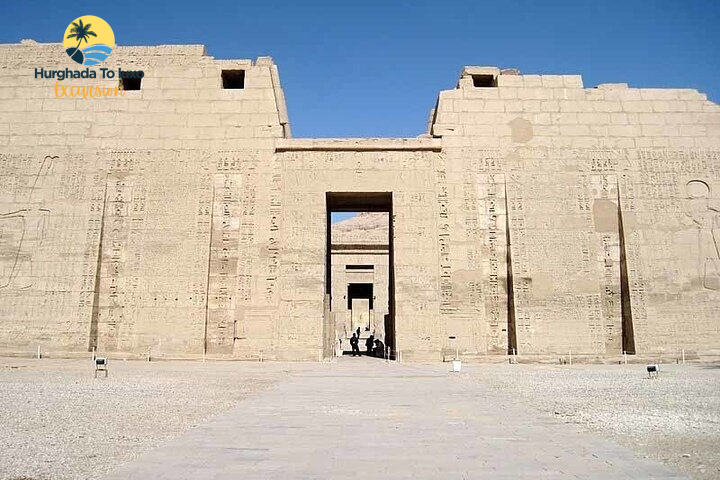
The Medinet Habu Temple tour from Hurghada gives you access to one of the most spectacular and best-preserved ancient temples in all of Egypt — a site that most Hurghada tourists never reach, yet which many Egyptologists consider the finest surviving mortuary temple on the West Bank. The temple of Ramesses III stands with its 63-metre First Pylon still carrying vivid painted reliefs after more than 3,100 years — the best-preserved colours of any large Egyptian temple in existence.
This complete guide answers every question: Is Medinet Habu worth visiting? How long to spend there? What excursions exist from Hurghada? How much is a taxi from Hurghada to Luxor? Where exactly is Medinet Habu and what makes it unique? Whether visiting for the first time or returning to explore the West Bank in depth, this is the most comprehensive resource on a Medinet Habu private excursion from Hurghada available in 2026.
🏛️ Why Medinet Habu is the West Bank’s best-kept secret: While the Valley of the Kings receives 5,000–8,000 visitors daily, Medinet Habu sees a fraction of that number — yet preserves reliefs of extraordinary quality including the world’s first recorded naval battle (Sea Peoples 1177 BCE), the unique Syrian Gate, and painted walls retaining original colour across vast surfaces that no other large Egyptian temple can match.
Is Medinet Habu Worth Visiting?
Yes — emphatically. Among Egyptologists, Medinet Habu is frequently cited as the single most impressive and best-preserved mortuary temple on the West Bank. Karnak is larger and more famous, but receives enormous crowds and many reliefs are damaged. The Ramesseum is atmospheric but mostly ruined. Medinet Habu is intact to a degree that neither can match — the First Pylon stands at full height, the painted reliefs cover vast areas with original colours still vivid, and the interior rooms preserve painted ceilings that most visitors to Egypt never see.
🎨
Best Preserved Colours in Egypt
Original blue, red, gold, and green paint applied 3,100 years ago still shines across enormous wall surfaces. No other large temple in Egypt preserves colour to this degree.
⚓
World’s First Recorded Naval Battle
The north wall records the Sea Peoples invasion (1177 BCE) — the earliest naval battle in history, depicting Egyptian ships engaging the enemy fleet in extraordinary detail.
🤫
Fraction of the Crowds
When the Valley of the Kings has 5,000 visitors, Medinet Habu has 200–300. A private tour feels genuinely intimate — you walk ancient corridors in near-silence.
👁️
Window of Appearances
The only surviving royal palace Window of Appearances in Egypt — standing inside it gives a unique first-person experience of pharaonic ceremonial power available nowhere else.
🔑 The honest verdict: Medinet Habu is the most complete, best-coloured, and least-visited major temple on the West Bank. With a private Egyptologist who has time to read the walls, it is frequently described by returnees as the highlight of their entire Luxor experience — surpassing even the Valley of the Kings.
What Is the Temple of Medinet Habu?
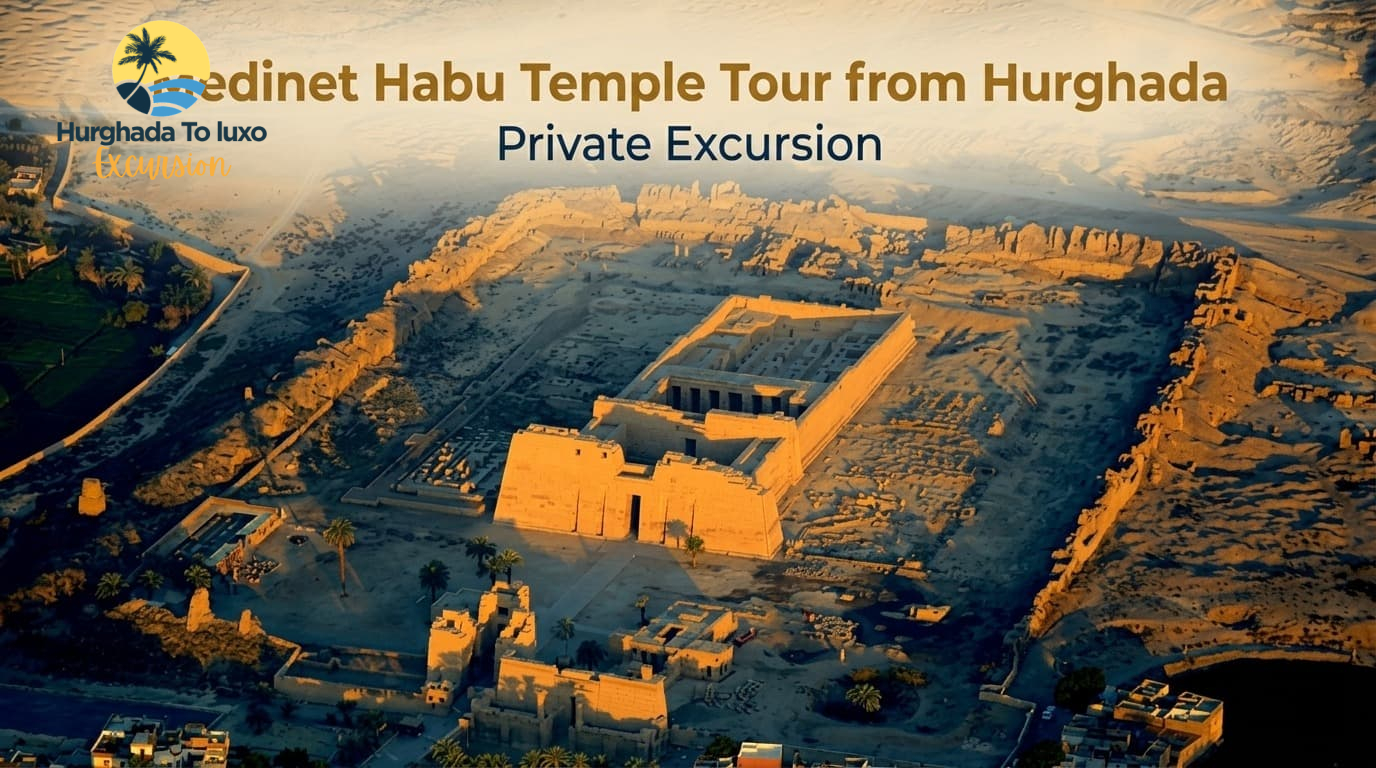
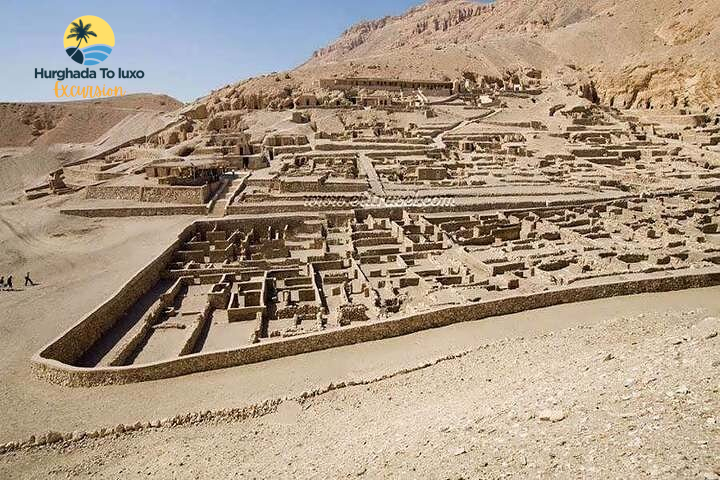
Medinet Habu is the Arabic name for the ancient complex centring on the Mortuary Temple of Ramesses III — the last great pharaoh of the New Kingdom (1186–1155 BCE). The complex covers 210 by 310 metres inside massive 9-metre mudbrick walls. It contains: the main mortuary temple, a small Amun chapel begun by Hatshepsut and Thutmose III (one of the oldest standing structures on the West Bank), a royal palace, administrative buildings, granary remains, and the extraordinary Syrian Gate — a fortified entrance modelled on Near Eastern military towers and unique in all of Egyptian architecture.
| Key Facts |
Detail |
| Built by |
Ramesses III (1186–1155 BCE) + earlier Hatshepsut/Thutmose III Amun chapel |
| Purpose |
Mortuary temple + administrative headquarters of the entire West Bank |
| First Pylon |
63 metres wide — largely intact at original height with vivid painted reliefs |
| Key historical reliefs |
Sea Peoples naval battle (1177 BCE), Libyan Wars, Nubian campaigns |
| Unique features |
Syrian Gate (unique in Egypt), Window of Appearances, Royal Palace, Hatshepsut Amun chapel |
| Colour preservation |
Best of any large temple in Egypt — original pigments vivid across enormous areas |
| Photography |
✓ Permitted throughout — no restrictions or extra charge |
| Opening hours |
06:00 AM – 17:00 PM daily |
Where Is Medinet Habu Located?
Medinet Habu is on the West Bank of Luxor, 3 km south of the Valley of the Kings and 1 km south of the Ramesseum — at the southern edge of the Theban Necropolis where the Nile flood plain meets the desert. GPS: 25.7191° N, 32.6010° E. From Hurghada: 260 km desert highway (3 hours) + Nile motorboat crossing (10 minutes) + 5 km across the West Bank agricultural plain.
📏 From Hurghada
260 km · ~3 hours private air-conditioned vehicle via Red Sea Mountains highway
🗺️ West Bank Position
3 km south of Valley of the Kings · 1 km south of Ramesseum · 6 km from East Bank ferry
🚗 Between West Bank Sites
15 min from Valley of Kings · 10 min from Ramesseum · 5 min from Hatshepsut Temple
📍 GPS Coordinates
25.7191° N, 32.6010° E — southernmost major temple on the West Bank
How Long to Spend at Medinet Habu?
The time needed varies significantly depending on how you visit. On this private tour, you have 1.5–2 hours — enough to cover the complete temple properly. Photographers can request 2.5 hours at booking.
| Visit Type |
Recommended Time |
What You Can See |
| Standard group tour |
30–45 min |
First Pylon exterior only — rushed, surface-level |
| Self-guided visit |
1–1.5 hours |
Exterior walls and courts — no historical context |
| Private tour — our programme |
1.5–2 hours |
Complete temple — all courts, reliefs, palace, Syrian Gate, astronomical ceiling |
| Photography-focused visit |
2.5–3 hours |
Complete temple + extended time for the extraordinary colour reliefs |
What Excursions Are There from Hurghada?
Hurghada’s location puts you within striking distance of Egypt’s greatest historical sites and the Red Sea’s finest marine environments. Here is the complete 2026 overview.
🏛️ Historical Day Trips — Luxor, Cairo & Beyond
🏛️
Medinet Habu Temple Tour
West Bank Luxor · From €95 · This article
Best-preserved painted reliefs in Egypt. Sea Peoples naval battle. Syrian Gate unique in Egypt. Valley of the Kings + Hatshepsut included.
🌅
From €95 · Departs 02:00 AM
Karnak Temple at opening (06:00 AM) — golden silence before any crowds. Valley of the Kings + Hatshepsut. The finest light conditions of any Luxor tour.
🌙
From €85 · Evening return
Karnak by day + Luxor Temple illuminated at night in amber floodlighting. Only possible for late-return visitors. Optional Karnak Sound & Light Show.
👸
From €95 · Nefertari Tomb available
Nefertari’s Tomb — Sistine Chapel of ancient Egypt. Valley of the Kings + Hatshepsut + Colossi. Pre-book Nefertari access in advance.
🏺
From €95 · Ozymandias Colossus
The fallen colossus that inspired Shelley’s Ozymandias. Battle of Kadesh reliefs. Astronomical ceiling. One of the West Bank’s most atmospheric ruins.
🏛️
From €145 · Cairo / Giza · 460 km
World’s largest archaeological museum — all 5,000+ Tutankhamun objects. Giza Pyramids and Sphinx in the morning. Complete Cairo-Giza private day from Hurghada.
🌊 Red Sea & Desert Excursions
🤿 Red Sea Snorkelling & Diving
Orange Bay, Giftun Island — full-day boat trips with snorkelling, beach, and BBQ lunch on board.
🐬 Dolphin Watch Boat Trip
Shaab El Erg dolphin house — swim with wild spinner dolphins in their natural habitat.
🏜️ Desert Safari & Quad Biking
Eastern Desert sunset safari. Bedouin village, camel ride, dinner under the stars.
🐢 Marsa Alam & El Quseir Day Trip
Marsa Alam pristine coral (sea turtles, dugongs) + Ottoman port of El Quseir. Private vehicle, full day.
How Much Is a Taxi from Hurghada to Luxor?
One of the most frequently searched questions by independent travellers. Here is the complete, honest picture — including why a private licensed tour delivers better value than an unregistered taxi.
| Transport Option |
Approx. Cost |
What’s Included |
Verdict |
| Unregistered street taxi |
€40–€70 each way |
Driver only — no guide, no entrances, no lunch |
Not recommended |
| Registered car + driver (no guide) |
€80–€120 per car |
Driver only — pay entrances independently |
Feasible but poor value |
| Group bus (hotel booking desk) |
€40–€60 per person |
Shared coach + guide, some entrances, often shopping stops |
Budget option only |
| Private tour with Egyptologist (our tours) |
From €95 per person |
Private vehicle + licensed guide + all entrances + lunch + Nile crossing. Zero shopping stops. |
✓ Best total value |
💡 The taxi calculation: A street taxi round-trip costs €80–€140 for transport alone — no guide, no entrances (~€30), no lunch (~€18). The DIY total reaches €160–€240 per couple. Our private tour at €95 per person (€190 per couple all-inclusive) is genuinely better value — and a dramatically better experience.
10 Highlights of the Medinet Habu Temple Tour from Hurghada
🏛️
1. First Pylon — 63m of Vivid Painted Reliefs
The entrance pylon carries battle scenes in colour unlike anything in any other large Egyptian temple. Blue gods, gold headdresses, red garments — in strong afternoon light the effect is breathtaking.
⚓
2. Sea Peoples Naval Battle (1177 BCE)
The north wall carries the world’s earliest recorded naval battle — Egyptian ships engaging the Sea Peoples fleet. The hieroglyphic captions identify the invading groups, some appearing nowhere else in ancient records.
🏰
3. The Syrian Gate
A fortified entrance modelled on Near Eastern migdol towers — unique in all of Egyptian architecture. Upper chambers show Ramesses III at leisure. Your guide accesses the interior rooms and views from the top.
👁️
4. Window of Appearances
The only surviving royal Window of Appearances in Egypt — from which Ramesses III appeared to his subjects. Standing inside the palace and looking through this window gives a unique first-person experience of pharaonic power.
🌌
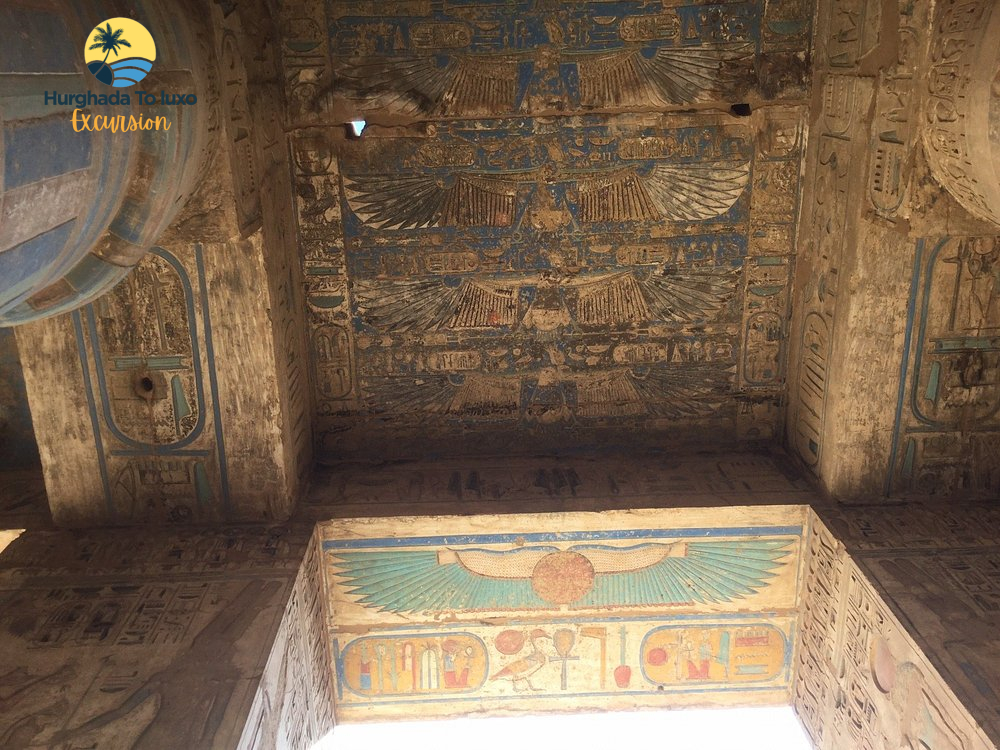
5. Astronomical Ceiling — Hypostyle Hall
Deep blue painted ceiling with golden stars, Egyptian calendar months, and divine figures. The columns carry offering scenes in vivid reds, yellows, blues, and greens — the finest surviving painted colour in any Egyptian hypostyle hall.
👑
6. Valley of the Kings (Morning)
Combined with the Valley of the Kings — 3 tombs included. Your guide includes KV11 (Ramesses III’s own tomb) — seeing the pharaoh’s burial place in the morning and his mortuary temple in the afternoon completes the full story.
👸
7. Temple of Hatshepsut
Three-terraced mortuary temple of Egypt’s greatest female pharaoh — built 300 years before Medinet Habu and in direct architectural contrast. Your guide uses the comparison to show the evolution of royal mortuary design.
🗿
8. Colossi of Memnon
Twin 18-metre quartzite guardians — first sight after the Nile crossing. Famous in Roman times for producing a musical sound at dawn. Your guide explains their context as entrance pylons to the largest mortuary temple ever built.
🛥️
9. Private Nile Motorboat Crossing
The private motorboat crossing from East to West Bank — the symbolic journey between the living city and the city of the dead, made by ancient Egyptians for 4,000 years. Your guide explains its cosmological meaning as you cross.
🍽️
10. Nile-View Lunch (Included)
Quality Nile-view restaurant — selected by your guide for quality, never commission. Egyptian mezze, grilled dishes, fresh juices. Vegetarian, halal, and child-friendly always available.
Full Itinerary — Hour by Hour from Hurghada to Medinet Habu
The complete Medinet Habu Temple private excursion from Hurghada — every stage from hotel pickup to return. Because this is a private tour, the schedule can be adjusted to your preferences at booking.
05
05:00 – 06:00 AM — Private Hotel Pickup
Your Private Vehicle at Your Hotel Lobby
Your fully air-conditioned private vehicle collects you directly from your hotel — Hurghada, El Gouna, Sahl Hasheesh, Makadi Bay, or Soma Bay. Exact pickup time confirmed 24 hours in advance. Bottled water and USB charging ports from the first moment. No shared pickups, no waiting for other passengers.
⛰️
05:30 – 08:30 AM — Hurghada to Luxor (260 km)
The Desert Highway — Private Historical Briefing
The 3-hour drive crosses the Red Sea Mountains via the desert highway. Your licensed Egyptologist guide travels with you from departure, using this time for a private briefing: the complete history of the West Bank, the reign and military campaigns of Ramesses III, the extraordinary Sea Peoples invasion, and what makes Medinet Habu architecturally unique in all of Egypt. The desert sunrise over the Eastern Desert begins around 05:45 AM — a spectacular visual bonus of the early departure.
🛥️
08:30 – 09:00 AM — Arrival & Nile Motorboat Crossing
The Nile in Morning Light — East to West Bank
You arrive in Luxor as the morning fully establishes itself. A private motorboat crossing of the Nile — the Theban Hills rising ahead through the morning haze. Your guide explains the ancient Egyptian cosmological significance of this east-west crossing as you make it. Your private driver meets you on the western shore and the West Bank programme begins immediately.
🗿
09:00 – 09:20 AM — Colossi of Memnon
First Sight of the West Bank — The Twin Guardians
The twin 18-metre quartzite colossi of Amenhotep III — first ancient monument after the Nile crossing. In antiquity these were among the most famous objects in the known world, visited by Roman emperors who came to hear the “singing” of the cracked northern colossus at dawn. Your guide explains their original context and the restoration that silenced them. A 15-minute photography stop with the Theban cliffs behind.
👑
09:20 – 11:30 AM — Valley of the Kings ⭐⭐⭐
Royal Necropolis — Including KV11, Tomb of Ramesses III
The Valley of the Kings in the morning — before the peak of the coach party arrivals. Standard ticket includes 3 tombs. Your guide includes KV11 — the tomb of Ramesses III, the pharaoh whose mortuary temple at Medinet Habu you visit this afternoon. Seeing the king’s burial place in the morning and his mortuary cult temple in the afternoon tells the most complete biographical story available on the West Bank. Optional: Tutankhamun’s tomb (~€15 extra, highly recommended — the only royal mummy still in the Valley).
👸
11:30 AM – 12:30 PM — Temple of Hatshepsut
Deir el-Bahari — The Elegant Contrast to Medinet Habu
Hatshepsut’s three-terraced mortuary temple — built 300 years before Medinet Habu and in direct architectural contrast: where Hatshepsut’s temple harmonises with the natural cliff formation behind it, Medinet Habu dominates through sheer mass. Your guide draws this contrast explicitly to illuminate the evolution of royal mortuary ideology across three centuries of the New Kingdom.
🏛️
12:30 – 14:30 PM — Medinet Habu Temple ⭐⭐⭐
The Mortuary Temple of Ramesses III — West Bank’s Greatest Painted Temple
The centrepiece of the entire tour. You approach through the Syrian Gate — the remarkable fortified entrance modelled on Near Eastern military towers, unique in all of Egypt. The outer walls carry the most vivid surviving painted battle reliefs in the ancient world: the Sea Peoples naval battle, the Libyan campaigns, the Nubian expedition — all in extraordinary preserved colour. The First Pylon rises at full height. Inside the first court, the Window of Appearances of the royal palace gives a unique first-person experience of pharaonic ceremony. The hypostyle hall’s astronomical ceiling retains original blue and gold painting. The inner sanctuary rooms preserve painted scenes of rare quality. Your guide narrates the complete history of Ramesses III’s reign, three major military victories, and the assassination conspiracy recorded in the trial papyrus found nearby.
🍽️
14:30 – 16:00 PM — Nile-View Lunch
Rest and Reflect After an Extraordinary West Bank Day
Lunch at a quality Nile-view restaurant selected by your guide for quality, never commission. Egyptian mezze, grilled fish and chicken, fresh salads and juices. Vegetarian, halal, and child-friendly always available. The West Bank cliffs visible across the water in the afternoon light.
🏛️
16:00 – 17:00 PM — Optional: Karnak or Luxor Temple
East Bank Add-On — Complete Ancient Thebes
For those with remaining energy, Karnak Temple at 16:00 is significantly quieter than the morning rush — a 60–90 minute visit to the Great Hypostyle Hall and Sacred Lake. Alternatively Luxor Temple in afternoon light. Entrance ~€10 extra per person. Mention at booking to build into the schedule.
🚗
17:30 – 20:30 PM — Private Return to Hurghada
Door-to-Door Return as the Desert Turns Gold
Your private vehicle drives directly to your Hurghada hotel — no shared stops, no coach schedule. The 3-hour return crosses the Red Sea Mountains at sunset, the desert turning amber and copper. You arrive at approximately 20:30–21:00 with a full evening ahead.
Private Tours Only — Your Group, Your Schedule
Secure your Medinet Habu Temple private excursion from Hurghada. Licensed Egyptologist guide, full West Bank programme, zero shopping stops guaranteed.
🏛️ Book Medinet Habu Tour — From €95
Free cancellation up to 24 hours before departure
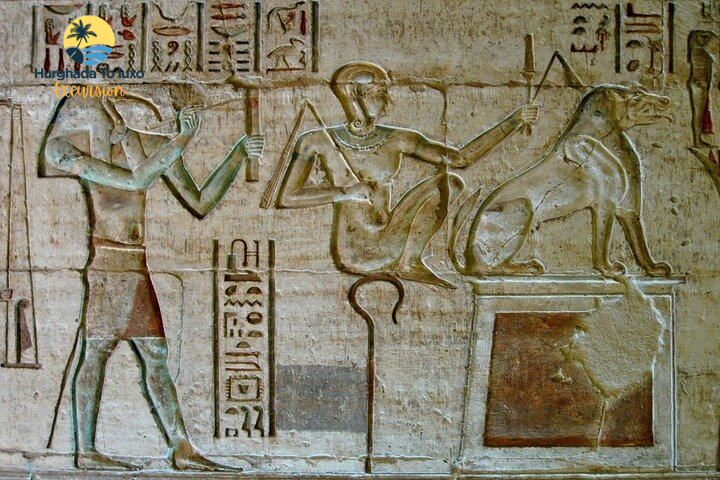
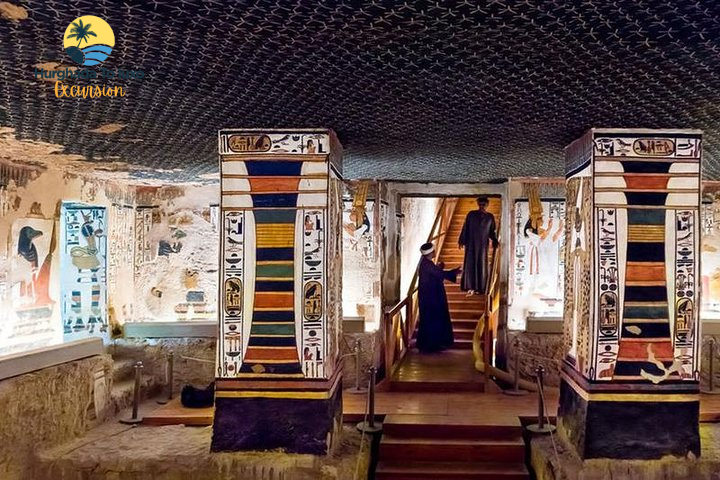
Medinet Habu Temple — Room by Room Guide
A complete guide to what you will see inside Medinet Habu with your Egyptologist guide — from the outer approach to the innermost sanctuary.
🏰 Syrian Gate (Northern Approach)
The unique fortified entrance modelled on Near Eastern migdol towers. Upper chambers retain painted decoration showing Ramesses III at leisure — private scenes of royal life unlike anything in other temples. Your guide accesses the interior rooms on the upper level.
🏛️ First Pylon — Outer Face
Both faces carry painted smiting scenes and military victory lists. Southern tower: Libyan campaign reliefs. Northern tower: Sea Peoples and Nubian campaigns. The vertical channels for flagpoles are still visible — the original flags were visible from across the Nile.
👁️ First Court — Palace & Osirid Colonnade
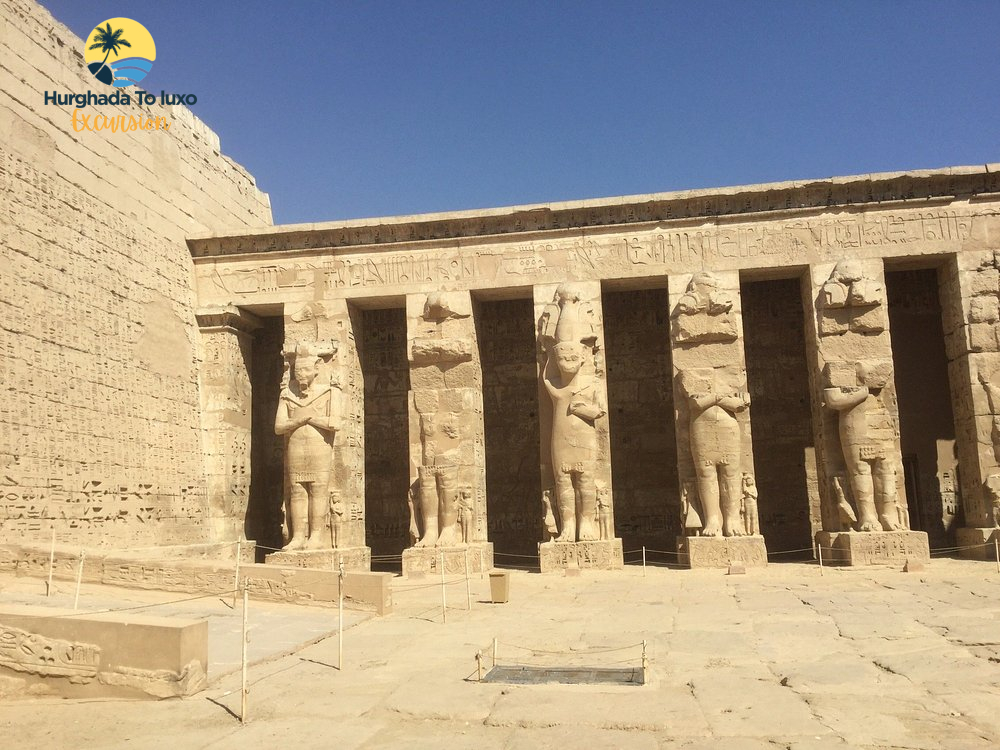
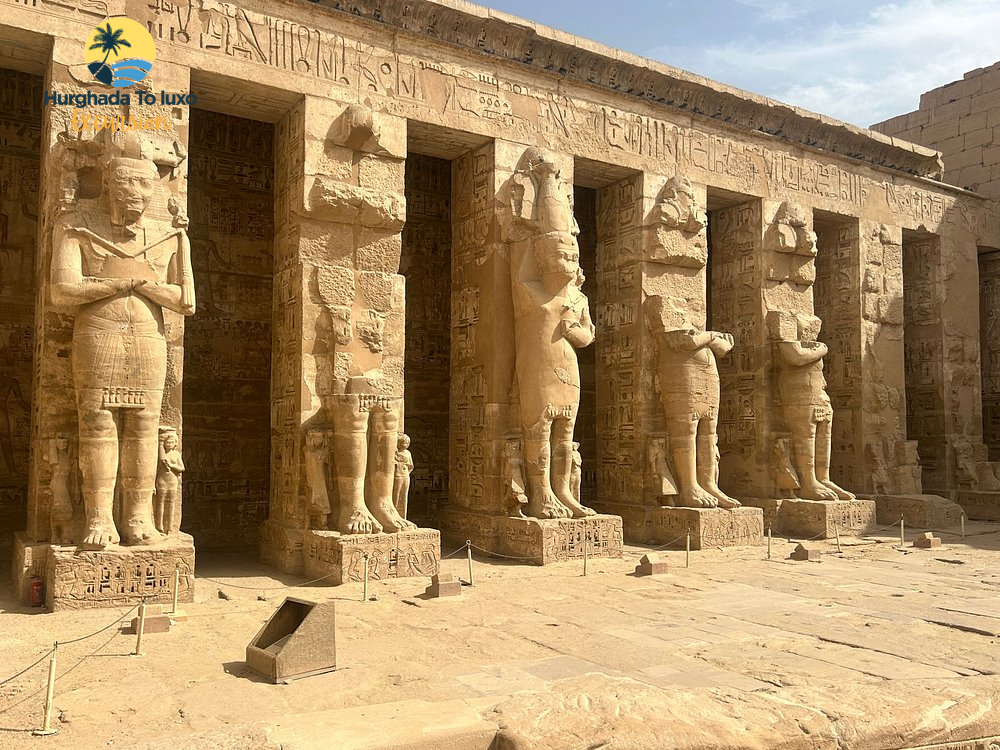
Osirid colonnade with mummiform Ramesses III statues on the south side, and the royal palace entrance to the south. The Window of Appearances opens onto this court — you can stand on both sides of this ceremonial window.
🌊 North Wall — Sea Peoples Naval Battle
The most historically significant relief in the temple — Egyptian warships engaging the Sea Peoples fleet, soldiers fighting on deck, prisoners dragged from the water. Your guide reads the hieroglyphic text recording the victory and identifying the invading groups.
🏛️ Second Court — Festival Scenes
Largely intact with reliefs of the Sokar Festival and Min Festival — elaborate processions of god statues carried by priests. The painted columns of the colonnade retain vivid original colour that stops visitors in their tracks.
🌌 Hypostyle Hall — Astronomical Ceiling
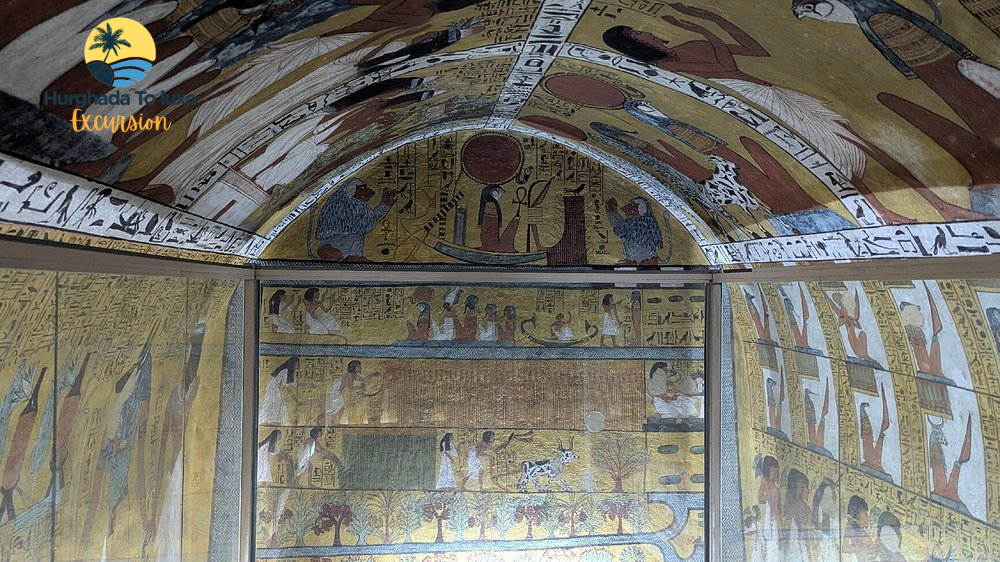
The main hypostyle hall retains sections of its painted astronomical ceiling — deep blue with golden stars, divine figures, and calendar months. The columns carry offering scenes in vivid colours representing the finest surviving painted hypostyle in any Egyptian temple.
⛩️ Inner Sanctuary Rooms
The innermost sanctuary suite — the most sacred area — preserves painted barque sanctuary, chamber of the divine ennead, and storage rooms with decoration that was invisible to all but the highest-ranking priests in antiquity.
🏯 Hatshepsut/Thutmose III Amun Chapel
The small Amun chapel in the northeast corner predates the main temple by 300 years — one of the oldest standing structures on the West Bank and the founding sacred structure around which the entire Medinet Habu complex later developed.
Tour Details — Times, Languages & Duration
| Detail |
Information |
| ⏱️ Total Duration |
Approximately 15–16 hours door to door (05:30 AM departure → 20:30–21:00 return) |
| 🕔 Pickup Time |
05:00–06:00 AM depending on hotel location. Confirmed 24 hours before departure. |
| ⏱️ Time at Medinet Habu |
1.5–2 hours (extendable to 2.5 hours for photographers — request at booking) |
| 🌍 Guide Languages |
English (standard) · Arabic · French · German · Italian · Spanish — request at booking |
| 👥 Group Type |
Private — your group only. Minimum 2 persons. Solo supplement +25%. |
| 🚗 Vehicle |
Private air-conditioned car (2–4 persons) or minivan (5–12 persons) |
| 📍 Pickup Locations |
All Hurghada hotels · El Gouna · Sahl Hasheesh · Makadi Bay · Soma Bay |
| ❌ Cancellation |
Free cancellation up to 24 hours before departure |
2026 Pricing — What Is Included & What Is Not
Starting from
€95
per adult · approx. £81 per person
✓ Private Vehicle · ✓ Egyptologist Guide · ✓ All Entrance Fees · ✓ Lunch · ✓ Nile Crossing
Children (0–12): €50 · Solo supplement: +25%
| ✓ Included in Your Tour |
| ✓ |
Private round-trip air-conditioned vehicle (Hurghada ↔ Luxor) — your group only, no sharing |
| ✓ |
Licensed English-speaking Egyptologist guide — dedicated to your group for the entire day |
| ✓ |
Medinet Habu Temple entrance (full complex including Syrian Gate interior and royal palace) |
| ✓ |
Valley of the Kings entrance (3 standard tombs — guide includes KV11, tomb of Ramesses III) |
| ✓ |
Temple of Hatshepsut & Colossi of Memnon |
| ✓ |
Nile motorboat crossing (East Bank → West Bank → East Bank) |
| ✓ |
1 lunch at a quality Nile-view restaurant |
| ✓ |
Bottled water throughout the day |
| ✓ |
Zero shopping stops — guaranteed in writing |
| ✕ Not Included — Optional Extras |
| ✕ |
Tutankhamun’s tomb (~€15 extra — highly recommended) |
| ✕ |
Karnak or Luxor Temple East Bank add-on (~€10 extra — optional afternoon) |
| ✕ |
Karnak Sound and Light Show (~€20 extra — evening, if overnight in Luxor) |
| ✕ |
Tips for guide and driver (optional — €10–€15 total appreciated) |
| ✕ |
Personal purchases and souvenirs |
Medinet Habu is the perfect starting point for a deeper exploration of Egypt. Here are the tours that combine naturally — from extending to Cairo and Abu Simbel, to exploring the quiet Red Sea coast south of Hurghada.
🏛️ Luxor → Cairo → Abu Simbel
🏺
From €360 per adult · Overnight in Luxor
Day 1: East Bank — Karnak + Luxor Temple by night in full floodlighting. Day 2: Full West Bank including Medinet Habu, Valley of the Kings, Hatshepsut. 5-star Nile hotel overnight.
🏛️
From €145 per adult · Cairo / Giza day trip
World’s largest museum — all 5,000+ Tutankhamun objects + Giza Pyramids and Sphinx. Private vehicle 460 km from Hurghada. The ultimate Cairo day from the Red Sea coast.
🗽
From €290 per adult · Overnight Luxor or Aswan
Day 1: Full West Bank including Medinet Habu. Day 2: Drive to Aswan (Philae Temple) + Abu Simbel twin rock temples of Ramesses II. Most complete Upper Egypt tour from Hurghada.
🌙
From €85 per adult · Evening return
Karnak by day + Luxor Temple illuminated in amber floodlighting after dark. Combine with this tour as a 2-day Luxor programme for the complete East and West Bank experience.
🌊 Hurghada → Marsa Alam → El Quseir
🐢
Marsa Alam Snorkelling Day Trip
From €65 per adult · 2.5 hr south of Hurghada
Marsa Abu Dabbab — resident sea turtles and dugongs. The finest snorkelling site south of Hurghada, with coral gardens significantly better preserved than the northern Red Sea. Includes traditional Bedouin lunch.
🏰
El Quseir Ottoman Fortress Day Trip
From €55 per adult · 1.5 hr south of Hurghada
The best-preserved Ottoman Red Sea port in Egypt — the ancient Leukos Limen of the Ptolemies. 16th-century fortress overlooking turquoise sea. Almost no tourists. Combined with snorkelling at nearby pristine reefs.
🌿
Wadi El Gemal National Park
From €75 per adult · Full day from Hurghada
Egypt’s southernmost protected coastal area — pristine coral, mangrove forests, and desert mountains meeting the sea. One of the last unspoilt Red Sea environments. Private jeep from Hurghada.
10 Insider Tips from Our Egyptologist Guides
Tip 1 — Ask your guide to explain the Sea Peoples question. The identity of the Sea Peoples — who they were, where they came from, why they destroyed the Bronze Age civilisations of the Mediterranean around 1200 BCE and were halted by Ramesses III — is one of the great unsolved mysteries of ancient history. The reliefs at Medinet Habu are the primary evidence for the entire event. Your guide can spend 20 minutes on this wall alone, connecting the Egyptian reliefs to the simultaneous collapse of the Hittite Empire and the burning of Mycenae.
Tip 2 — Look at the colour everywhere, not just the scenes. First-time visitors focus on the narrative reliefs and miss the colour. At Medinet Habu the original paint survives across vast areas — full-saturation blues, reds, greens, and golds applied 3,100 years ago. In strong afternoon light, sections of the First Pylon and the inner room ceilings carry colour as vivid as any medieval illuminated manuscript. Budget time purely for looking at the paint.
Tip 3 — The Syrian Gate upper rooms are accessible — ask your guide to take you up. Many guides skip the Syrian Gate interior, but the upper chambers contain intimate decoration showing Ramesses III in private scenes with female attendants. The view from the top back toward the main temple and the West Bank agricultural plain is one of the finest panoramic views available at any West Bank site.
Tip 4 — Photography is permitted throughout — plan your time accordingly. Unlike the Valley of the Kings tombs, Medinet Habu allows cameras everywhere with no restrictions. If photography is important, request 2.5 hours at booking. The afternoon light on the First Pylon’s painted reliefs (approximately 13:00–14:30) produces extraordinary photographs.
Tip 5 — Connect KV11 (Ramesses III’s tomb) to Medinet Habu deliberately. Your guide includes KV11 in the morning Valley visit — seeing the king’s tomb in the morning and his mortuary temple in the afternoon is the most complete biographical story available on the West Bank. Ask your guide to emphasise this connection at both sites.
Tip 6 — Ask about the Harem Conspiracy. Ramesses III was assassinated — poisoned and throat-cut by a conspiracy organised by one of his queens who wanted to put her son on the throne. The full trial is recorded in the Turin Judicial Papyrus. CT scanning of his mummy has confirmed the assassination. Your guide narrates the complete story beside the palace attached to the temple where it happened — one of the most extraordinary biographical narratives in ancient Egyptian history.
Tip 7 — Medinet Habu is virtually empty in early afternoon. Between 12:30 and 14:30, even the small number of visitors who come have usually left. This is when the courtyard and hypostyle hall are often completely empty — one of the few times in Luxor when you experience a major ancient temple in genuine solitude.
Tip 8 — Compare Medinet Habu to Karnak deliberately. Both are temple complexes of comparable scale — Karnak is larger but more damaged; Medinet Habu is smaller but far better preserved. Your guide uses Medinet Habu’s completeness to help you understand what Karnak looked like in its prime — a transformative comparison.
Tip 9 — The agricultural setting around the temple is historically authentic. Medinet Habu sits at the edge of West Bank farmland irrigated by Nile floods for 4,000 years. Walking to the temple entrance through green fields and date palms is a connection to ancient Egyptian daily life that no urban temple site provides.
Tip 10 — Add Medinet Habu to your 2-Day Luxor Tour. The best way to experience Medinet Habu is as part of our 2-Day Luxor Tour — Day 1: East Bank (Karnak at sunrise + Luxor Temple by night), Day 2: Full West Bank including Medinet Habu, Valley of the Kings, Hatshepsut, and the Ramesseum, with a 5-star Nile hotel in between. With two full days, you experience ancient Thebes the way it deserves.
Real Reviews from Travellers
★★★★★
“Medinet Habu was the highlight of our entire Egypt holiday — and we visited Karnak, the Valley of the Kings, and the Grand Egyptian Museum. The painted reliefs retain their original colours in a way that makes every other Egyptian temple look bleached by comparison. Our guide spent 30 minutes on the Sea Peoples naval battle alone. Absolutely extraordinary.”
Jonathan & Clare F. — Cambridge, UK · April 2026
★★★★★
“We had done two previous group tours from Hurghada. The private tour was completely different — our guide connected KV11 (Ramesses III’s tomb) to Medinet Habu in the afternoon and made it the most coherent historical experience we’ve ever had. The assassination story told beside the palace Window of Appearances was extraordinary.”
David & Anna P. — Bristol, UK · March 2026
★★★★★
“I am an architect and Medinet Habu is the most complete surviving example of Egyptian temple architecture I have visited. The Syrian Gate is unique — nothing like it anywhere else. Standing inside the first court in near-silence with the painted columns and the Window of Appearances — one of the great architectural experiences of my life. Zero shopping stops as promised.”
Sarah L. — London, UK · February 2026
Frequently Asked Questions
Is Medinet Habu worth visiting?
Yes — emphatically. Medinet Habu is the most complete and best colour-preserved major mortuary temple on the West Bank of Luxor. It contains the world’s first recorded naval battle reliefs (Sea Peoples 1177 BCE), the unique Syrian Gate, the Window of Appearances royal palace, and painted walls retaining original pigments across enormous surfaces. It receives far fewer visitors than the Valley of the Kings, making it one of the most atmospheric ancient sites in Egypt — especially with a private Egyptologist guide.
What is the temple of Medinet Habu?
Medinet Habu is the mortuary temple complex of Ramesses III (1186–1155 BCE) on the southern West Bank of Luxor. The 210 x 310 metre complex includes the main mortuary temple (with 63-metre First Pylon), a royal palace with Window of Appearances, a unique Syrian Gate, an ancient Amun chapel begun by Hatshepsut, granaries, and massive mudbrick enclosure walls. It is the last great royal mortuary temple of the New Kingdom and is celebrated for the extraordinary quality and preservation of its painted reliefs, including the world’s earliest recorded naval battle.
How long to spend at Medinet Habu?
With a private Egyptologist guide, 1.5–2 hours is optimal to cover the complete temple at a pace allowing genuine engagement. Photographers should request 2.5 hours at booking. Group tours typically allow 30–45 minutes — enough only for the First Pylon exterior. Self-guided visits average 60–90 minutes but miss the historical significance of the reliefs.
Where is Medinet Habu located?
Medinet Habu is on the West Bank of Luxor, approximately 3 km south of the Valley of the Kings and 1 km south of the Ramesseum. GPS: 25.7191° N, 32.6010° E. From Hurghada: 260 km drive via the Red Sea Mountains highway (3 hours) + 10-minute private Nile motorboat crossing + 5-minute drive across the West Bank agricultural plain to the temple entrance. Total travel time from your Hurghada hotel: approximately 3.5 hours.
What excursions are there from Hurghada?
Historical excursions from Hurghada include: Medinet Habu Temple + full West Bank (this tour, from €95), Luxor Sunrise Tour (Karnak at dawn, from €95), Luxor Temple Night Tour (€85), Valley of the Queens Tour (€95), Ramesseum Temple Tour (€95), Grand Egyptian Museum + Giza Pyramids (€145), 2-Day Luxor + Aswan + Abu Simbel (€290). Red Sea excursions include: Giftun Island snorkelling, dolphin house at Shaab El Erg, desert safari, Marsa Alam sea turtles and dugongs, El Quseir Ottoman fortress, and Wadi El Gemal National Park.
How much is a taxi from Hurghada to Luxor?
An unregistered street taxi costs approximately €40–€70 each way, making the round-trip €80–€140 for transport only — no guide, no entrance fees, no lunch. Adding a licensed guide (€30–€50), entrance fees for Medinet Habu + Valley of the Kings + Hatshepsut (~€30), and lunch (~€18) brings the DIY total to €160–€240 per couple. Our private tour at €95 per person (€190 per couple all-inclusive) is better value with a dramatically better experience.
Is photography allowed at Medinet Habu?
Yes — photography is permitted throughout Medinet Habu without any restriction or extra charge. This is a significant advantage over the Valley of the Kings, where photography inside all tombs is strictly prohibited. The First Pylon, outer walls, courts, hypostyle hall, astronomical ceiling sections, Syrian Gate interiors, Window of Appearances, and the granary remains are all freely photographable. If photography is a priority, mention it at booking and we extend your time at the temple.
Can you visit Abu Simbel from Luxor on the same day as Medinet Habu?
No — Abu Simbel is approximately 500 km south of Luxor. It cannot be combined with a Medinet Habu day trip from Hurghada. The best option is our 2-Day Luxor + Aswan + Abu Simbel Tour: Day 1 covers the full Luxor West Bank including Medinet Habu, overnight in Luxor or Aswan, Day 2 visits Aswan’s Philae Temple and Abu Simbel before returning to Hurghada. Contact us at
[email protected] or WhatsApp +20 100 925 5585 to arrange this.
Is the Medinet Habu tour suitable for families with children?
Yes. Medinet Habu is excellent for families — it is an open-air site with no claustrophobic passages, photography is permitted throughout, and the scale and vivid colour of the reliefs are immediately impressive to children. The Sea Peoples naval battle with ships, soldiers, and combat is particularly engaging for older children. The guide uses age-appropriate storytelling. Children aged 0–12 pay €50. The 05:30 AM departure means most children sleep through the 3-hour drive.
Book Your Medinet Habu Temple Private Excursion
Private vehicle, licensed Egyptologist guide, Medinet Habu + Valley of the Kings + Hatshepsut + Colossi of Memnon. Nile crossing and lunch included. Zero shopping stops guaranteed. Free cancellation 24 hours before.
🏛️ Book Now — From €95 Per Person
Final Thoughts — The West Bank’s Greatest Secret
Medinet Habu is the temple that regular Luxor visitors do not know they missed until they return and finally visit properly. It is the West Bank’s best-preserved, most colour-saturated, and least-visited major monument — where the reliefs of the Sea Peoples invasion record events that changed ancient civilisation, where original paint applied 3,100 years ago still shines in the afternoon sun, and where a pharaoh’s assassination conspiracy is recorded in stone beside the very window where it was planned.
A private Medinet Habu Temple excursion from Hurghada with a dedicated Egyptologist gives you the time, the knowledge, and the silence to experience all of this properly. Book your tour today and discover the West Bank’s greatest secret.